 Food History & Origins
What Is Chirashi Sushi?
Published On 13-11-2026
Published by Restaurant Listings Editorial Team
If you have ever opened a sushi menu and seen a bowl described as "chirashi," you have found one of the best values and most beautiful dishes in Japanese cuisine. Instead of fish pressed onto individual rice mounds or rolled in seaweed, chirashi arrives as a bowl of seasoned sushi rice topped with an artful arrangement of sliced fish, seafood, egg, and vegetables. It offers the flavors of a sushi platter in a single, generous bowl.
This guide explains what chirashi sushi is, where it comes from, the main styles, what toppings to expect, how to eat it, how it differs from poke and other rice bowls, and how to order it.
Chirashi sushi, or chirashizushi, means "scattered sushi." It is a bowl or box of vinegared sushi rice topped with an assortment of sliced raw fish, seafood, and garnishes such as tamago (sweet omelet), cucumber, pickles, and nori. In Japan, a home style version called bara chirashi mixes cooked and seasoned ingredients into the rice and is a traditional celebration dish, especially for Hinamatsuri, the Girls' Day festival on March 3.
Chirashi comes from the Japanese verb chirasu, meaning "to scatter." The name describes how the toppings are scattered over a bed of rice. Because it uses sushi rice seasoned with vinegar, sugar, and salt, chirashi is considered a type of sushi, even though nothing is rolled or shaped by hand. Our guide to nigiri versus sashimi explains why the seasoned rice, not the raw fish, is what makes a dish sushi.
Sushi began as a way to preserve fish in fermented rice and evolved over centuries into the fresh, vinegared sushi of Edo era Tokyo. Our article on where sushi originated tells the full story. Scattered sushi developed alongside nigiri as a home and celebration dish. In many regions, families mixed seasoned vegetables, mushrooms, lotus root, and cooked seafood into the rice and decorated the top with thin strips of egg and colorful garnishes.
A popular story from the Edo period says that when authorities restricted extravagant meals, people hid their fine toppings beneath the rice and flipped the dish over to reveal them during celebrations. Whether or not every detail is true, the tale reflects how chirashi became a festive, family centered dish. One theory about sushi bar chirashi holds that it began as a smart way to use beautiful trimmings of fish left over after cutting nigiri and sashimi, giving diners a generous bowl at a fair price.
| Style | What it is | Where you find it |
|---|---|---|
| Edomae or sashimi chirashi | Sushi rice topped with neatly arranged slices of raw fish, shellfish, roe, and tamago | Sushi bars in Japan and the United States |
| Bara chirashi (gomoku chirashi) | Rice mixed with cooked, seasoned vegetables and seafood, topped with shredded egg, snow peas, and shrimp | Japanese homes and celebrations |
| Bara chirashi with diced fish | Raw fish diced into small cubes, sometimes marinated, mixed with toppings over rice | Sushi bars and modern Japanese restaurants |
| Regional festival styles | Elaborate scattered sushi with local seafood and vegetables, such as the matsuri zushi of Okayama | Regional Japan |
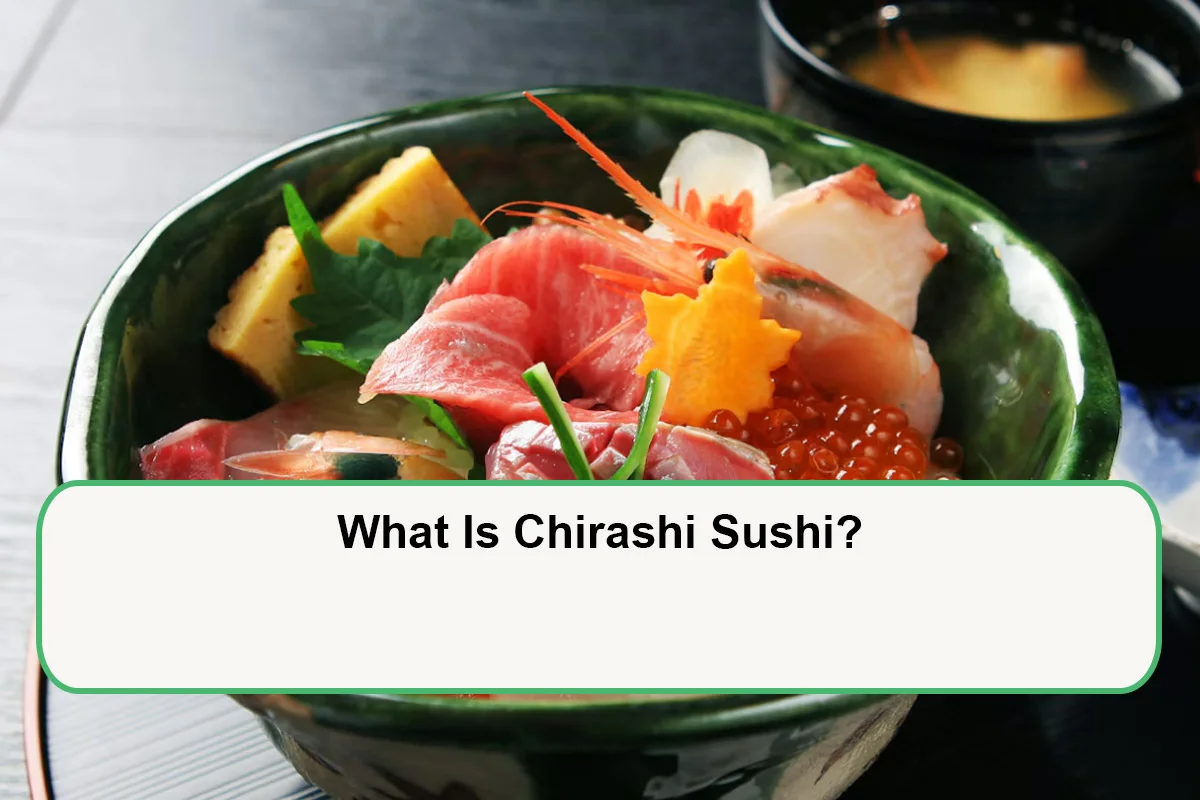
The version most Americans know is sushi bar chirashi, sometimes called Edomae chirashi or a "chirashi bowl." The chef fills a lacquered bowl or box with sushi rice and arranges slices of tuna, salmon, yellowtail, white fish, shrimp, and other seafood on top, along with tamago, cucumber, pickled ginger, and wasabi. Some restaurants add ikura (salmon roe), uni (sea urchin), or scallop. The arrangement is often as beautiful as a sashimi platter.
In Japan, bara chirashi, also called gomoku chirashi ("five ingredient scattered sushi"), is a homemade dish. Cooks simmer shiitake mushrooms, carrots, lotus root, burdock root, and sometimes fried tofu in a sweet soy broth, then fold them into the warm sushi rice. The top is decorated with kinshi tamago (finely shredded thin omelet), snow peas, shrimp, salmon roe, and nori strips. It is a colorful, festive dish that can be made ahead and served at room temperature.
Chirashi is closely tied to Hinamatsuri, the Girls' Day or Doll Festival held on March 3, when families display ornamental dolls and pray for their daughters' health and happiness. Colorful bara chirashi topped with pink, yellow, and green ingredients is a traditional dish for the festival, along with clam soup. Chirashi is also served at birthdays, graduations, and other family celebrations because it is beautiful, easy to share, and can feed a crowd.
Our guides to identifying fresh seafood and wild caught versus farm raised seafood help you judge quality.
| Dish | Rice | Toppings | Origin |
|---|---|---|---|
| Chirashi | Vinegared sushi rice | Sliced raw fish, seafood, egg, garnishes | Japan |
| Kaisendon | Usually plain steamed rice | Raw seafood piled generously | Japan |
| Donburi | Plain steamed rice | Cooked toppings such as tempura, chicken and egg, or beef | Japan |
| Poke bowl | Plain or seasoned rice, sometimes greens | Cubed raw fish marinated in soy, sesame, and onions, plus many add ons | Hawaii |
The key difference is the rice: chirashi uses seasoned sushi rice, while most donburi and kaisendon use plain steamed rice. Poke features marinated cubed fish and a build your own approach rather than a chef's arrangement.
A chirashi bowl and a sushi or sashimi platter feature similar fish, but chirashi is often a better value. Because the chef does not shape individual pieces of nigiri, chirashi requires less labor, and it can use a wider variety of cuts. A generous chirashi bowl typically includes eight to twelve or more pieces of fish over a full portion of rice, making it a filling and economical way to sample many types of seafood.
Chirashi is a balanced meal: protein and healthy fats from fish, carbohydrates from rice, and small amounts of vegetables. Sushi rice contains added sugar and salt, and soy sauce adds sodium, so dip lightly; our guide to lower sodium meals has more tips. For gluten free diners, ask for gluten free tamari, since regular soy sauce contains wheat, and check whether any toppings are marinated in soy based sauces.
Raw fish should come from reputable restaurants with careful sourcing and handling. Many fish served raw in American restaurants are frozen first to control parasites. Pregnant people, young children, older adults, and anyone with a weakened immune system should talk with a doctor about eating raw seafood, and they can ask for a cooked version such as bara chirashi with cooked shrimp, eel, and egg. If you have a shellfish or fish allergy, tell your server before ordering; our guide to handling food allergies when dining out explains what to ask.
Chirashi is just one corner of Japan's rich food culture. Explore our history of Japanese cuisine, our guide to what an izakaya is, and our guide to mazemen, Japan's brothless ramen.
Chirashi sushi is "scattered sushi": a bowl of vinegared sushi rice topped with an assortment of sliced fish, seafood, egg, and garnishes. Sushi bars serve a raw fish version, while Japanese families make bara chirashi with cooked, seasoned ingredients for celebrations like Hinamatsuri. It is beautiful, balanced, and often one of the best values on a sushi menu. Dip toppings lightly in soy sauce rather than pouring it over the bowl, and enjoy. For more food basics, explore our food knowledge collection.
Reviewed and verified by the Restaurant Listings Editorial Team for accuracy and relevance. Our content is researched using official restaurant sources, public records, government agencies, and recognized food safety and hospitality industry resources.
Last reviewed: November 2026