
 Food Knowledge
Gluten-Free Pizza at Restaurants: Dedicated Ovens vs Shared...
Published On 15-10-2026
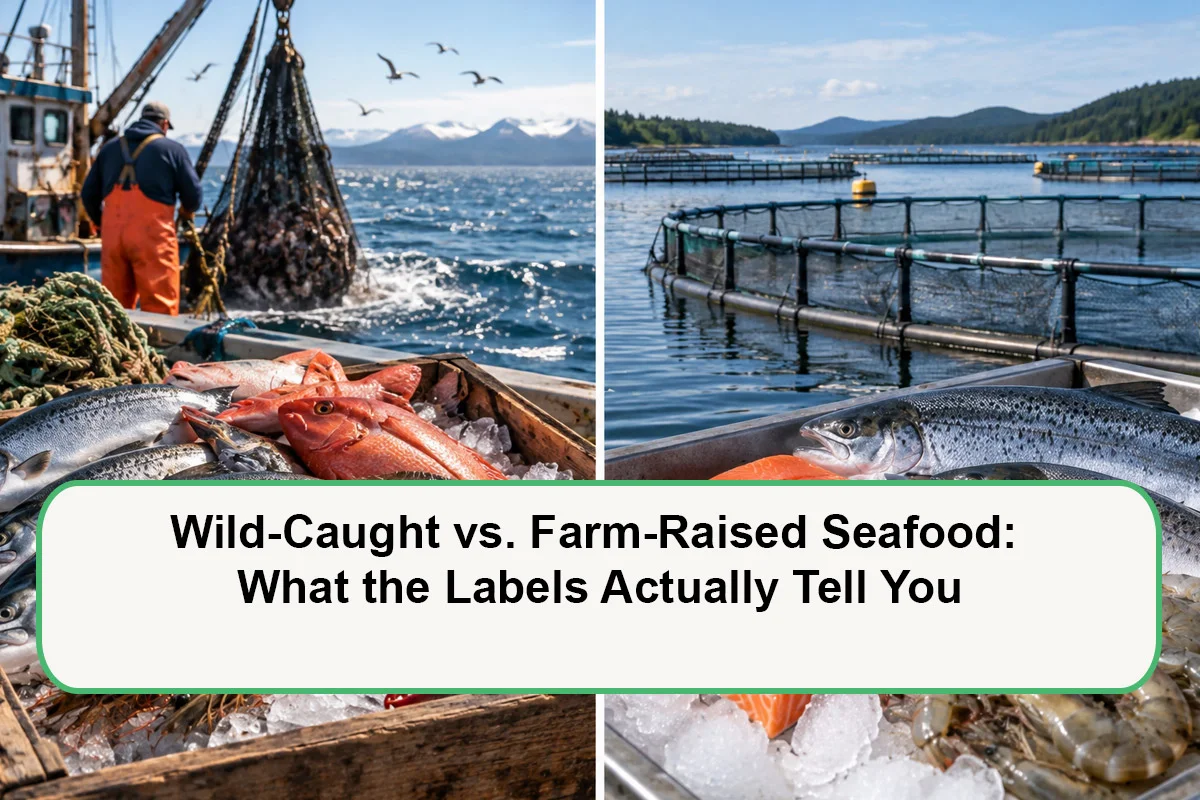
Wild-caught seafood carries an image of pristine ocean waters and natural diets, while farm-raised still struggles against decades old associations with crowded pens and murky water. Modern aquaculture has changed considerably since that reputation formed, and the actual research on nutrition and safety is a lot closer than the marketing on either side suggests. The real answer depends less on wild versus farmed as categories, and more on how a specific fish was actually caught or raised.
Wild-caught seafood is harvested directly from its natural environment, oceans, rivers, and lakes, using commercial or recreational fishing methods. Farm-raised seafood, produced through aquaculture, is bred and raised in controlled environments, ranging from ocean net pens to land based tanks, and now accounts for a substantial and growing share of the seafood Americans eat, driven largely by rising global demand that wild fisheries alone can't sustainably meet.
Despite strong opinions on both sides, most nutrition experts describe wild-caught and farmed seafood as offering broadly similar nutritional value, with a few specific, measurable differences:
| Factor | Wild-Caught | Farm-Raised |
|---|---|---|
| Saturated fat | Generally slightly lower | Slightly higher |
| Omega-3 fatty acids | Variable, tied to natural diet | Can be slightly higher in some species, due to fortified feed |
| Sodium | Generally lower | Can be slightly higher |
| Trace minerals | Often higher, from a varied natural diet | Depends on feed quality and formulation |
| Shellfish specifically | Minimal nutritional difference either way | Minimal nutritional difference either way |
Looking specifically at salmon, one of the most commonly compared species, farmed salmon tends to have slightly more omega-3s due to its higher overall fat content, while wild salmon is leaner, lower in calories, and generally firmer in texture with a bolder flavor. Neither version is a clearly superior nutritional choice; the differences are real but modest enough that most nutrition experts say the specific sourcing and species matter more than the wild versus farmed label alone.
The clearest throughline in the nutrition research is that a fish's diet, not simply whether it's wild or farmed, is what most directly shapes its nutritional profile. Wild fish generally eat a varied, natural diet suited to their species and environment, while farmed fish eat whatever feed formulation their specific operation provides, which can range from high quality, fortified feed to lower quality, less nutritious alternatives depending on how the farm is run. This is exactly why "farm-raised" as a single category can't be judged uniformly: a well managed, responsibly fed aquaculture operation produces a genuinely different product than a poorly run one, even though both carry the same basic label.
Contaminant risk is one of the more genuinely nuanced parts of this comparison. Some studies have found farm-raised seafood carries higher levels of certain contaminants, along with a higher incidence of disease tied to farming conditions in less well managed operations. At the same time, mercury contamination isn't unique to either category, it stems primarily from industrial pollution that enters both wild waterways and, in some cases, farming environments, meaning both wild and farmed fish can carry mercury depending on the water source and the specific species involved.
Species and position in the food chain matter more than farming method when it comes to mercury specifically. Large, predatory fish, whether wild or farmed, tend to accumulate the most mercury over their lifespan, since mercury concentrates as it moves up the food chain. Pregnant women and children are generally advised to avoid the highest mercury species altogether, including shark, swordfish, king mackerel, and tilefish, regardless of whether those fish are wild-caught or farmed.
Neither wild-caught nor farm-raised seafood gets a clean sustainability win, and the honest picture depends heavily on management practices within each category:
The clearest, most reliable signal for sustainability isn't the wild versus farmed label itself, it's third-party certification. The Marine Stewardship Council's blue and white logo indicates certified sustainable wild-caught seafood, while similar certification programs exist specifically for responsibly farmed aquaculture, giving shoppers a more concrete signal than the general category alone.
Here's a detail that catches a lot of shoppers off guard: the USDA does not regulate or certify organic seafood in the United States. Unlike land based organic farming, which has a clearly defined federal certification standard, there's no equivalent official organic standard for seafood, whether wild-caught or farmed. That means a label reading "organic salmon" carries no legally enforced meaning the way "USDA organic" does for produce or land raised meat, and shoppers should treat that specific claim with real skepticism rather than assuming it carries the same weight. For more on how organic certification actually works for other food categories, see our guide to organic versus locally sourced food.
Every seafood product sold in the U.S. is required to carry Country of Origin Labeling (COOL), identifying where the product came from and whether it's wild-caught or farm-raised. A few details are worth knowing to avoid being misled:
For general freshness evaluation once you've got seafood in hand, see our guide to how to identify fresh seafood.
A few trends are likely to keep shaping how wild-caught and farm-raised seafood are produced and marketed:
Reviewed and verified by the Restaurant Listings Editorial Team for accuracy and relevance. Our content is researched using official restaurant sources, public records, government agencies, and recognized food safety and hospitality industry resources.
Last reviewed: September 2026
