
 Food Knowledge
Gluten-Free Pizza at Restaurants: Dedicated Ovens vs Shared...
Published On 15-10-2026
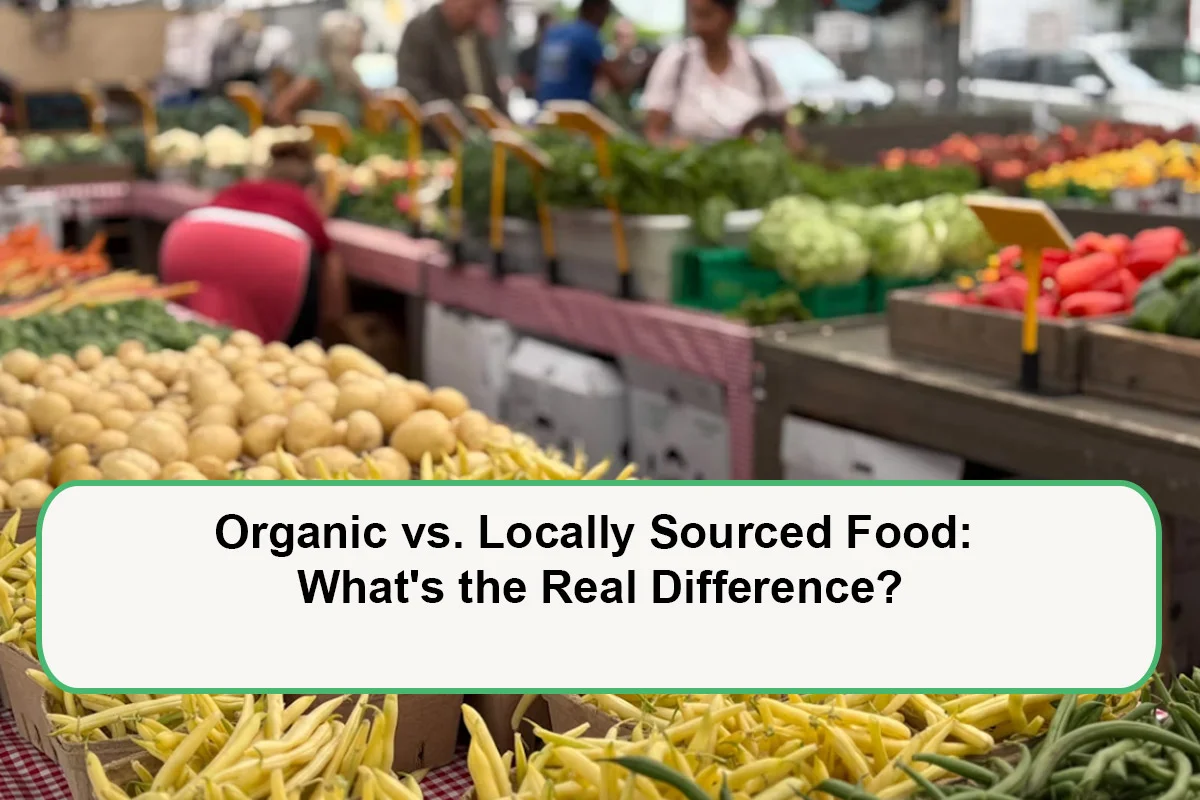
Menus and grocery aisles love to put "organic" and "locally sourced" right next to each other, as if they're two flavors of the same basic virtue. They're not. One is a federally regulated legal designation with inspectors, paperwork, and criminal penalties for misuse. The other has no legal definition at all. Understanding that difference changes how much weight either label should actually carry the next time you see it on a menu.
In the United States, "organic" isn't a marketing suggestion, it's a regulated legal claim. The USDA organic label indicates that a food or agricultural product was produced according to the USDA's National Organic Program standards, which govern practices meant to cycle resources, conserve biodiversity, and preserve ecological balance. Those standards prohibit synthetic fertilizers, most conventional pesticides, irradiation, and genetically modified organisms, and they set specific additional rules depending on whether the product is a crop, livestock, or a processed food.
Critically, this isn't a self applied label. Organic farms and businesses must be certified and inspected by USDA accredited certifiers, with specially trained inspectors visiting every certified operation at least annually to confirm continued compliance. Certified operations are also subject to additional unannounced inspections and testing on top of that yearly review. Because the USDA organic seal is a registered trademark, the agency can pursue criminal penalties against businesses that falsely use the seal without certification, a level of legal enforcement that simply doesn't exist for a term like "locally sourced."
Here's the detail that surprises a lot of diners: "local" or "locally sourced" has no federal legal definition or certification requirement at all. A restaurant or grocery store can use the word "local" on a menu or product label with essentially no outside verification, no required radius, and no inspection process behind it. In practice, many food programs and individual restaurants define "local" using a rough radius, commonly somewhere between 100 and 150 miles, but that's an informal industry convention, not a legal standard enforced by any government agency.
This doesn't mean local sourcing claims are automatically meaningless. Plenty of restaurants take the concept seriously, naming specific farms directly on the menu and building genuine, long term purchasing relationships. But it does mean the burden of verification falls entirely on the restaurant's own transparency and the diner's own skepticism, rather than on any outside regulatory body.
| Factor | Organic | Locally Sourced |
|---|---|---|
| Legal definition | Yes, federally regulated by the USDA | No official federal definition |
| Certification required | Yes, annual inspection plus unannounced audits | No standard certification process |
| What it actually restricts | Synthetic pesticides, fertilizers, GMOs, irradiation | Nothing specific; refers only to geographic distance |
| Guarantees freshness | Not necessarily; organic food can travel long distances | Often, though not guaranteed without transparency |
| Guarantees small scale or sustainable farming | Not automatically | Not automatically, though often associated with it |
The single biggest misconception about these two labels is assuming they're basically describing the same thing. They're not, and the gap matters. Organic certification says nothing whatsoever about geographic distance: a product can be grown thousands of miles away, shipped internationally, and still legitimately carry the USDA organic seal, provided the growing and handling practices meet the federal standard. As one organic farming resource puts it plainly, organic produce can still come from across the globe, and supporting nearby farms directly is really the only reliable way to ensure genuinely fresh, local food.
The reverse gap matters just as much. A locally grown tomato from a farm twenty miles away could easily have been raised using conventional synthetic pesticides and fertilizers, meaning "local" tells you nothing at all about farming method or chemical use. A restaurant could serve entirely local, entirely non organic produce, or entirely organic, entirely non local produce, and both claims would be completely accurate and completely different from what many diners assume they mean.
Recent consumer research points to a genuine shift in preference. Heading into 2026, food industry analysts have documented a clear trend of consumers gravitating toward local food over organic labeling specifically, driven by a perception that local food is fresher and higher quality, along with growing interest in supporting nearby farms and reducing the environmental footprint associated with long distance transportation. Local sourcing is also increasingly tied to smaller scale farming practices, which many consumers associate with more sustainable, community focused agriculture, even though that association isn't guaranteed by the term itself.
It's worth knowing that "organic" isn't a single, universally agreed upon standard even within the certification world itself. The Real Organic Project, a nonprofit certification program, was founded specifically in response to pushback against certain USDA rulings, particularly ones that allow hydroponically grown crops raised without soil, and animals raised in confinement rather than on pasture, to still qualify for USDA organic certification under specific circumstances. This disagreement over what genuinely counts as "organic" remains one of the more significant ongoing debates within the sustainable agriculture community, and it's a useful reminder that even a legally regulated label can still involve real, unresolved disagreement about what the underlying standard should actually require.
Beyond "organic" and "local," a handful of other certifications show up regularly on menus and packaging, each covering a genuinely different aspect of food production:
Each of these labels answers a different question. None of them, including organic, answers all of them at once.
Given how differently these terms actually function, a few practical habits help diners evaluate sourcing claims more accurately:
For more on how restaurants actually build their supply chains, including how local sourcing claims get made and verified in practice, see our guide to how restaurants source ingredients.
A few trends are likely to keep shaping how organic and local claims are used and understood going forward:
Reviewed and verified by the Restaurant Listings Editorial Team for accuracy and relevance. Our content is researched using official restaurant sources, public records, government agencies, and recognized food safety and hospitality industry resources.
Last reviewed: September 2026
