
 Food History & Origins
Cincinnati Chili: Regional Styles and Local Restaurants
Published On 30-10-2026
Published by Restaurant Listings Editorial Team
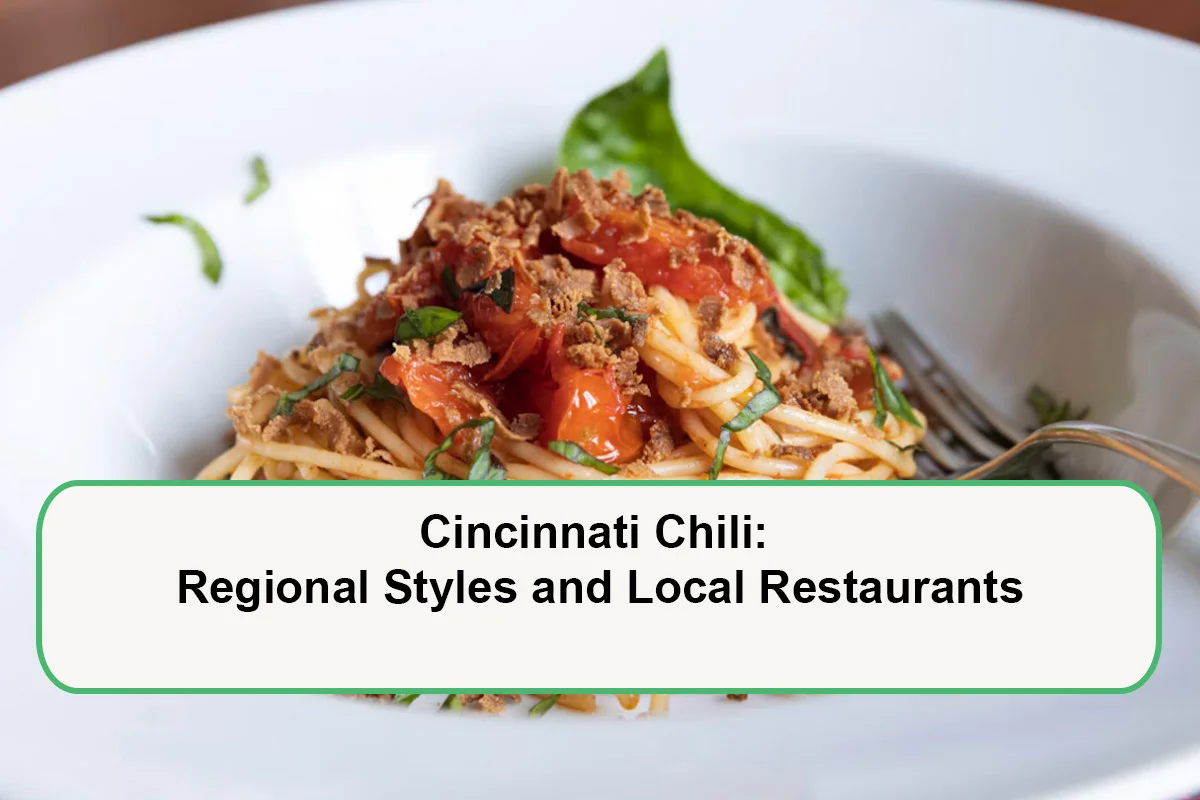
Cincinnati chili is one of the most distinctive regional foods in America, and one of the most misunderstood. It is not the thick, chunky chili of Texas or the Southwest. It is a thin, finely ground meat sauce seasoned with warm spices such as cinnamon, allspice, cloves, and cumin, served over spaghetti or hot dogs and piled with mountains of finely shredded cheddar. Cincinnati has more than 250 chili parlors, and locals order with a vocabulary all their own: three way, four way, five way, and coney.
This guide explains the history of Cincinnati chili, how the "way" system works, the major chains and beloved independent parlors, and where to try it.
Cincinnati chili was created in 1922 by Macedonian immigrant brothers Tom and John Kiradjieff at their Empress chili stand. It is served over spaghetti in "ways" (a three way adds cheese; four ways add onions or beans; a five way adds both) or on small hot dogs called coneys. Try it at Skyline Chili or Gold Star Chili, the largest chains, or at independent parlors such as Camp Washington Chili, a James Beard America's Classics honoree.
Tom and John Kiradjieff emigrated to the United States in 1921 from a village in the region of Macedonia, in present day Greece. In 1922 they opened a small stand next to the Empress burlesque theater in Cincinnati and named their business after it. They sold hot dogs topped with a spiced meat sauce, called coneys, and Tom soon began serving the sauce over spaghetti, creating chili spaghetti. The flavor drew on the spice blends of Greek and Balkan cooking, especially cinnamon and allspice, rather than the chili con carne of the Southwest. Our history of Greek cuisine explains the culinary traditions behind those spices.
Many of the city's later chili parlors were founded by Greek and Macedonian immigrants who had worked at Empress. Nicholas Lambrinides, a former Empress employee, founded Skyline Chili in 1949. In 1965, four Jordanian born brothers founded Gold Star Chili. Independent parlors multiplied across the city and Northern Kentucky, and today the Cincinnati area has more than 250 chili parlors. Empress, once the largest chain, has dwindled to a couple of locations, including one in Alexandria, Kentucky.
Despite a popular myth, Cincinnati chili is not made with chocolate. Its dark color and warm flavor come from spices and long simmering.
| Order | What you get |
|---|---|
| Two way | Spaghetti topped with chili |
| Three way | Spaghetti, chili, and a mound of finely shredded cheddar |
| Four way | Three way plus either diced onions or beans |
| Five way | Three way plus both onions and beans |
| Coney | A small hot dog topped with chili, mustard, and onion |
| Cheese coney | A coney topped with shredded cheese |
Ways are served in a shallow oval dish with oyster crackers and a bottle of mild hot sauce on the table. Locals eat a way like a casserole, cutting down through the layers with the side of a fork rather than twirling the spaghetti. Plain bowls of chili are rarely ordered. For background on the hot dog side of the story, see our article on where hot dogs originated, and for the noodles, where pasta originated.
Every parlor's chili tastes a little different, and locals have fierce loyalties. Some chilis are sweeter and more cinnamon forward, others spicier or meatier, and some are thicker. Cheese varies too, from fluffy, finely shredded mounds to slightly coarser cuts. Parlors also differ in what they serve alongside chili: some are classic diners with breakfast, double decker sandwiches, and Greek dishes, while others focus tightly on ways and coneys.
Camp Washington Chili, at 3005 Colerain Avenue, is a decades old institution that won a James Beard Foundation America's Classics award in 2000. Smithsonian named it one of the most iconic food destinations in America in 2013. It is a classic diner with chili, coneys, double deckers, and breakfast, and it keeps very long hours, open around the clock on several weekdays. Check current hours before late night visits.
Skyline has dozens of locations, but many locals and visitors seek out the longtime Clifton parlor at 290 Ludlow Avenue near the University of Cincinnati, a cozy corner restaurant with a classic diner feel. It stays open late, until 1 or 2 a.m. most nights.
Gold Star has many locations across the region, including downtown Cincinnati. Order a cheese coney and a three way to compare it with Skyline.
At 4920 Glenway Avenue on the West Side, Price Hill Chili is a family restaurant serving chili, double decker sandwiches, breakfast, and Greek dishes, with a loyal neighborhood following. It opens early for breakfast, when you can also try goetta, the Cincinnati breakfast sausage made with pork and oats.
Blue Ash Chili, at 9525 Kenwood Road in suburban Blue Ash, is known for its chili, coneys, big sandwiches, and creative burgers. It is closed on Sundays.
Across the Ohio River at 733 Monmouth Street in Newport, Kentucky, Dixie Chili is a late night favorite that stays open until 1 a.m. most nights and later on weekends. Its coneys have passionate fans, and it offers a vegetarian chili option.
To taste the brand that started it all, visit Empress Chili at 7934 Alexandria Pike in Alexandria, Kentucky, one of its last remaining locations. It is closed on Sundays.
Cincinnati chili sits beside Texas chili con carne, New Mexico's green chile stews, and Detroit's coney sauce as one of America's great regional chili traditions. What makes it unique is its Mediterranean spice profile and its role as a topping rather than a standalone stew. Our history of Texas barbecue explores another regional meat tradition with its own fierce loyalties.
Cincinnati chili travels. Skyline and Gold Star sell their chili in grocery stores, and some independent parlors, such as Dixie Chili, sell canned chili too. Many former Cincinnatians keep a few cans on hand, and the chains have restaurants outside the Cincinnati area. If you make it at home, serve it the local way, over spaghetti with finely shredded cheddar, diced onions, beans, and oyster crackers.
While you are in town, look for goetta, a pork and oat breakfast sausage with German roots, and the double decker sandwich, a towering parlor favorite. Many chili parlors serve both.
Cincinnati chili itself is a relatively lean meat sauce, but the mountains of cheese, spaghetti, and multiple coneys add up. If you are watching calories or sodium, order a smaller size, ask for light cheese, choose a four way with beans for extra fiber, or pair a single coney with a side salad. Our guide to lower sodium meals at popular chains offers general strategies.
Chili parlors are casual and fast. Many have counters where regulars eat quickly, and servers move at a brisk pace. Know your order, use the local terms, and tip as you would at any diner; our guide to how much to tip covers the basics.
A Cincinnati chili crawl pairs well with the city's other specialties, including goetta for breakfast and German heritage dishes in neighborhoods like Over the Rhine; our history of German cuisine explains that influence. Use our American restaurants near you directory to find more classic diners and comfort food wherever you travel.
Cincinnati chili began in 1922 when Macedonian immigrants Tom and John Kiradjieff opened the Empress chili stand, and it grew into a citywide tradition of more than 250 parlors. Order it in ways over spaghetti or on cheese coneys, eat it with oyster crackers and hot sauce, and try more than one parlor, from the big chains Skyline and Gold Star to independents like Camp Washington, Price Hill, Blue Ash, Dixie, and the original Empress. For more regional food stories, explore our American food history collection.
Reviewed and verified by the Restaurant Listings Editorial Team for accuracy and relevance. Our content is researched using official restaurant sources, public records, government agencies, and recognized food safety and hospitality industry resources.
Last reviewed: October 2026
Food History & Origins
 Food History & Origins
 Food History & Origins