
 Food History & Origins
Chicago Tavern-Style Pizza: Neighborhood Traditions and Wher...
Published On 15-10-2026
Published by Restaurant Listings Editorial Team
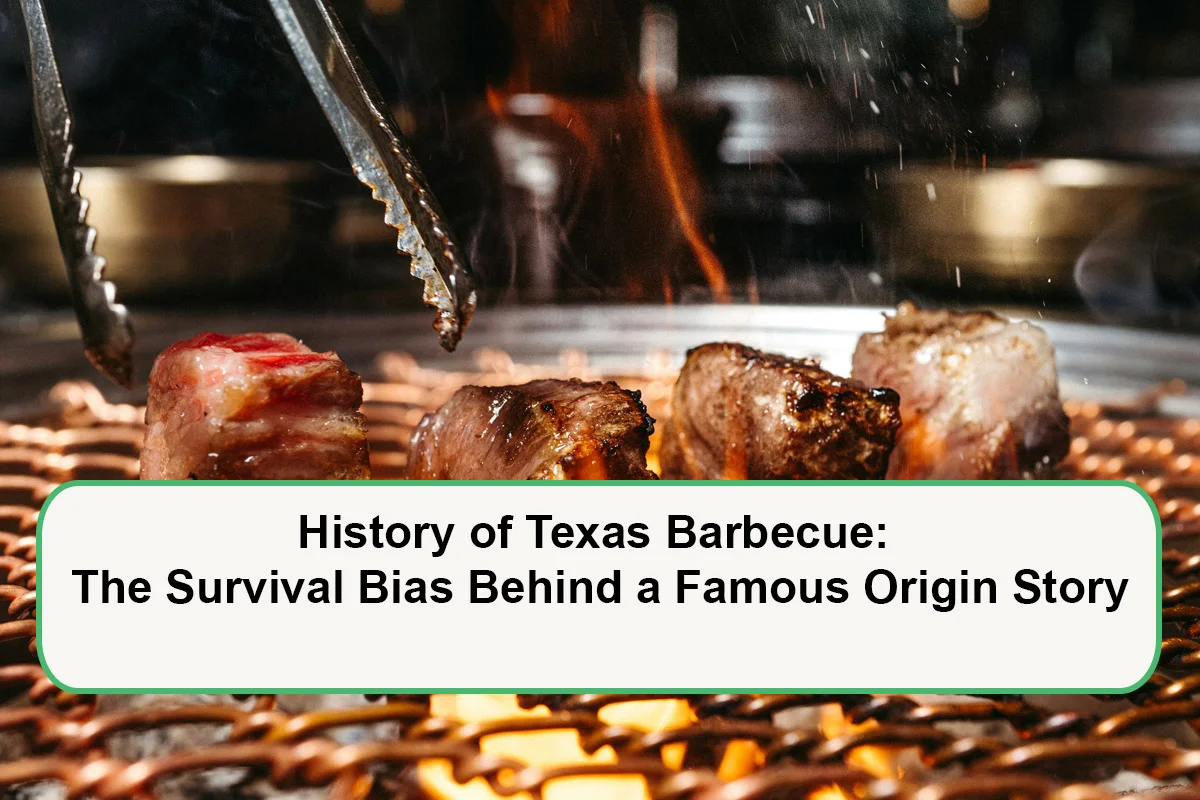
The standard story of Texas barbecue credits German and Czech immigrant butchers almost entirely, and it's not wrong, exactly, it's just incomplete in a specific, well documented way. According to Texas Monthly's own historical research, that story gets repeated so often largely because a handful of those original meat markets happened to survive into the present day, while other equally important strands of Texas barbecue history, particularly African American and Mexican contributions, never got the same lasting brick and mortar monuments to keep their stories alive.
Central Texas barbecue's most famous version traces directly to German and Czech immigrants who settled in the Texas Hill Country during the mid to late 1800s. These immigrants opened butcher shops, including Kreuz Market in Lockhart, Southside Market in Elgin, and Prause Meat Market in La Grange, and the barbecue tradition grew out of pure practical necessity: before refrigeration existed, any meat that didn't sell by the end of the week risked spoiling entirely. Butchers began smoking that unsold meat to extend its shelf life and grinding scraps into sausage rather than absorbing a total loss. Customers would buy the smoked meat by the pound, eating it straight off butcher paper with a knife and perhaps some crackers or pickles on the side, a service style so central to the tradition that many of the most historic Central Texas barbecue joints still feel more like meat markets than conventional restaurants today.
Charles Kreuz Sr. acquired a meat market in Lockhart in 1900 and introduced brick lined pits specifically for smoking beef, an early and influential step in institutionalizing the practice across Central Texas. His model, post oak smoked brisket sold by the pound and served on butcher paper without utensils or sauce, streamlined service for growing crowds while preserving the immigrant smoking and sausage-making techniques that defined the style from the start.
Texas Monthly's own historical reporting makes a specific, pointed argument: the German and Czech immigrants behind Kreuz, Southside, and Prause were genuine barbecue pioneers, but their stories get outsized attention largely because those particular businesses are still operating today. Their continued existence reinforces a simplified origin narrative, when the actual birth of commercial Texas barbecue covered considerably more ground than that single strand suggests. This is a genuinely important historical point: survival into the present, not necessarily historical importance alone, has shaped which parts of Texas barbecue's founding story get told and repeated most often.
A parallel, equally foundational thread in Texas barbecue history involves African American pitmasters, whose influence became especially pronounced following emancipation. Formerly enslaved cooks brought a rich, distinct tradition of open pit cooking, particularly involving pork, using low and slow techniques specifically suited to transforming tougher, less desirable cuts of meat into something tender and flavorful. That influence became the defining backbone of East Texas barbecue specifically, a style built around hickory smoke, fall off the bone tenderness, and a sweet, tangy tomato based sauce, a genuinely different tradition from Central Texas's sauce free, salt and pepper approach.
One of the more sobering details in Texas barbecue's real history involves how segregation directly shaped the meat market service style still associated with the state today. Mexican and African American cotton workers, who were barred from eating inside many local restaurants under segregation, frequently ordered ribs and sausage from butcher shops instead, eating the food outside on butcher paper rather than at a table. Because so many customers came specifically for that smoked meat, some butcher shops shifted their focus toward barbecue as a standalone business rather than a side offering, meaning the exclusion these communities faced directly shaped the commercial trajectory of Texas barbecue as a whole, not just their own dining experience.
"Texas barbecue" isn't a single style at all, it's a genuine patchwork of at least four regional traditions, each shaped by a different population and history:
| Region | Defining Characteristics | Primary Influence |
|---|---|---|
| Central Texas | Salt and pepper rub, post oak smoke, no sauce, served on butcher paper | German and Czech immigrant meat markets |
| East Texas | Hickory smoke, fall off the bone tenderness, sweet tomato based sauce | African American pitmasters, Southern tradition |
| West Texas | Direct heat grilling over mesquite, cowboy style cooking | Ranching and cattle drive culture |
| South Texas | Thick marinades, influence from barbacoa | Mexican and Tejano culinary tradition |
Of these four, East Texas and Central Texas styles became the most commercialized before World War II, and for much of the 20th century, East Texas style was actually the version most commonly found in the state's urban and suburban areas, not the Central Texas style now most associated with Texas barbecue nationally.
Beef's central role in Texas barbecue traces back to a specific post-Civil War economic reality. Following Texas's independence and the rapid growth of open range cattle ranching, beef became abundant and genuinely inexpensive by the mid-1800s. Brisket specifically was a tough, undervalued cut compared to premium steaks, making it an ideal candidate for the same long, slow smoking process butchers were already using to salvage unsold meat, transforming a cheap, difficult cut into the dish now considered the definitive centerpiece of Texas barbecue.
Beyond commercial meat markets, barbecue in Texas has deep roots as a communal, civic event that predates the state itself. Large, typically free barbecue gatherings became a fixture of Texas political rallies starting in the 1840s, with candidates hosting massive pit roasts of whole animals specifically to draw crowds and voters in rural areas, cementing barbecue's role in Texas community life well before any of the state's now-famous meat markets opened their doors.
A few trends are likely to keep shaping the tradition going forward:
Reviewed and verified by the Restaurant Listings Editorial Team for accuracy and relevance. Our content is researched using official restaurant sources, public records, government agencies, and recognized food safety and hospitality industry resources.
Last reviewed: September 2026
Food History & Origins
 Food History & Origins
 Food History & Origins