Walk into a sushi counter in Midtown Manhattan, a strip mall in Austin, or a quiet corner of Atlanta, and you'll likely hear the same word whispered between diners studying the menu: omakase. It's become shorthand across the country for "trust me, this is going to be good," but the term carries a much deeper meaning than a trendy tasting menu. Understanding omakase changes how you order, how you budget, and what actually separates a good sushi meal from an award-worthy one.
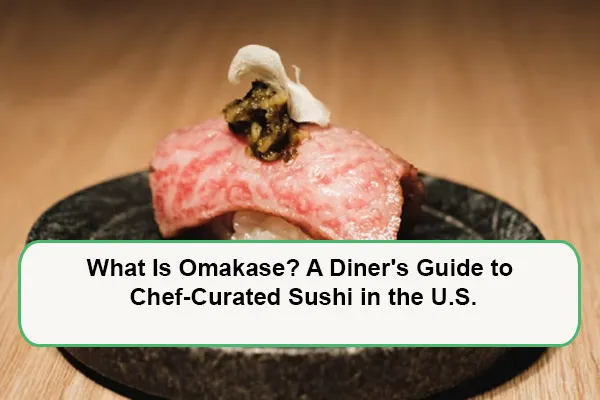
Omakase (pronounced oh-mah-KAH-seh) comes from the Japanese phrase "o-makase shimasu," which translates roughly to "I leave it up to you." Instead of scanning a menu and picking rolls, you hand the decision-making over to the chef. They choose what's freshest that day, decide the order dishes arrive in, and build a meal designed to showcase both the ingredients and their own technique.
This isn't a gimmick borrowed for marketing purposes. In traditional Edomae-style sushi houses, the chef's judgment has always been central to the experience. What's changed across American cities is that omakase has moved from a niche, insider-only practice to a dining category diners actively seek out, book months in advance for, and compare against each other city by city.
If you've never sat through an omakase dinner, the format can feel unfamiliar at first. Regardless of city, the general rhythm tends to hold:
- Seating at the counter: Omakase is typically served directly across from the chef, not at a regular table. This isn't just for atmosphere it lets the chef read your reactions and pace the meal accordingly.
- A light opening course: Many meals begin with a small appetizer, such as a seasonal vegetable dish or a delicate seafood starter, to prepare the palate.
- A progression of nigiri or sashimi: Pieces usually move from milder, leaner fish toward richer, fattier cuts, and often finish with something like uni, toro, or a hand roll.
- Occasional narration: Strong chefs will name the fish, mention where it was sourced, and sometimes explain the technique used aging, curing, or a specific cut.
- A closing note: Meals often end with a light soup, tamago (sweet egg), or a small dessert.
The number of courses varies widely. A quick lunch omakase might be eight to ten pieces in under an hour, while a dedicated dinner experience at a destination-level restaurant can stretch to twenty or more courses over several hours.
The difference isn't just "you don't get a menu." Ordering à la carte means you control quantity, pacing, and cost, but you're also limited to what you already know you like. Omakase flips that: you give up control, but in exchange you often get access to fish and preparations that never make it onto the printed menu, because there wasn't enough of it to sell as a standing item, or because the chef wanted to feature something unusual that day.
This is also why omakase has become such a common category for "best of" lists and dining awards. Because the format hinges on execution rather than a fixed set of dishes, it tends to expose the difference between a competent kitchen and an exceptional one far more clearly than a standard menu does.
Omakase has taken root well beyond the coastal cities most associated with it. A few patterns show up consistently in national rankings and guides:
- New York and Los Angeles remain benchmark markets. Multiple Michelin-starred counters in each city, often seating fewer than fifteen guests per service, set the standard many other restaurants are measured against.
- Mid-size and Southern cities are catching up fast. Cities like Austin and Atlanta have seen Michelin-recognized or critically awarded omakase restaurants open in the last few years, signaling the format's spread far outside traditional coastal hubs.
- Suburban and regional scenes are growing too. Areas like New Jersey now have their own locally awarded omakase spots, often run by chefs who trained under more established city counters before opening independently.
- Non-sushi omakase is expanding. Kaiseki-style, yakitori-focused, and even wagyu-centered "chef's choice" menus are increasingly marketed under the omakase label, broadening what the category covers.
For a restaurant listings platform, this spread matters: omakase is no longer a single-city phenomenon that only warrants coverage in a handful of major metros. It's a nationwide dining category with meaningful regional variation in price, format, and quality.
Cost is one of the most common points of confusion for first-timers, and it varies more by restaurant tier than by region. In most U.S. markets, omakase pricing generally falls into a few tiers:
| Tier |
Typical Price Range (per person) |
What You Get |
| Casual / Lunch Omakase |
$40 - $80 |
8 - 12 pieces, shorter format, often no reservation required |
| Standard Dinner Omakase |
$100 - $200 |
12 - 16 courses, full seasonal progression, reservation required |
| Premium / Destination Omakase |
$250 - $400+ |
Extended courses, rare or imported ingredients, wagyu or specialty add-ons, often Michelin-recognized |
These numbers typically don't include drinks, tax, or gratuity, and sake pairings or premium add-ons (extra uni, toro, or wagyu) can add significantly to the final bill.
Not every restaurant that offers omakase is doing it at a level worth recognizing. A few factors consistently distinguish the restaurants that end up on serious "best of" lists and win dining awards:
- Sourcing discipline. Top-tier omakase kitchens have direct relationships with fish purveyors, often importing specific cuts from Japan on a set schedule rather than relying on generic seafood distributors.
- Consistency across seatings. A one-off great meal isn't enough. Award-caliber restaurants deliver the same level of execution whether you're seated at 5:30pm or 9pm on a Saturday.
- Chef-to-guest engagement. The best experiences involve real interaction the chef explaining a dish, adjusting pacing to the table, or accommodating a guest's preferences without breaking the flow of the meal.
- Seating limits. Nearly every nationally recognized omakase restaurant seats a small number of guests per service, often under fifteen, which allows tighter quality control than a high-volume dining room.
- Menu evolution. Restaurants that adjust their omakase seasonally, or even day to day, tend to outperform those running a fixed, unchanging course list.
These are useful criteria for diners comparing restaurants, and they're also the kind of detail that separates a surface-level listing from a genuinely useful one.
Omakase rewards a bit of preparation. A few missteps tend to come up repeatedly among newer diners, regardless of which city they're in:
- Not mentioning allergies or dislikes ahead of time. Since the chef is choosing for you, silence is assumed to mean "I'll eat anything." Speak up before the meal starts, not mid-course.
- Adding excessive soy sauce or wasabi. Most pieces are already seasoned by the chef. Dipping heavily, or adding extra wasabi, can mask the specific flavor they intended you to taste.
- Treating it like a rushed meal. Omakase is paced intentionally. Trying to speed through courses undercuts the point of the format.
- Skipping the reservation. Most omakase counters seat small numbers of guests. Walk-ins are frequently turned away, especially for dinner service at higher-rated spots.
- Assuming it's always raw fish. Depending on the chef, courses may include cooked items, vegetables, or broths woven throughout the meal.
A few trends are shaping the next phase of omakase across the U.S.:
- Hybrid formats. More restaurants are offering flexible tiers quick, mid-length, and full experiences to widen the audience beyond special-occasion diners.
- Non-sushi omakase growth. The "leave it to the chef" concept is expanding into kaiseki, yakitori, and even non-Japanese tasting menus borrowing the format's structure.
- Recognition spreading beyond flagship cities. As guides and award bodies expand coverage into new metro areas, expect more mid-size cities to produce nationally recognized omakase restaurants.
- Greater price transparency. As omakase becomes more mainstream, more restaurants are publishing set pricing upfront rather than leaving cost as a surprise at the end of the meal.
Frequently asked questions
No. While omakase is most associated with sushi and sashimi, the concept applies to any meal where the chef chooses the courses. You'll increasingly see it used for kaiseki, yakitori, and other tasting-style formats across the country.
It depends on the restaurant and tier. Casual or express versions can run under an hour, while full dinner omakase experiences at destination-level counters often last two to four hours.
Yes, and you should do it before the meal begins, ideally when booking your reservation. Since the chef is selecting every course, they need advance notice to plan safe substitutions.
Generally yes, since you're paying for curated, often premium ingredients and the chef's expertise. That said, many restaurants now offer lower-cost lunch or "petite" omakase options that are closer in price to a standard sushi meal.
Some flexibility is usually fine letting the chef know you dislike a certain ingredient, for example. But omakase is built around trusting the chef's sequence, so heavy customization defeats the purpose and isn't typically encouraged.
Sourcing quality, consistency across seatings, direct chef engagement, and limited seating all tend to distinguish top-tier omakase restaurants from restaurants simply offering the format as a menu option.
Reviewed and verified by the Restaurant Listings Editorial Team for accuracy and relevance. Our content is researched using official restaurant sources, public records, government agencies, and recognized food safety and hospitality industry resources.
Last reviewed: July 2026
Related articles

 World Cuisines