
 Food History & Origins
Chicago Tavern-Style Pizza: Neighborhood Traditions and Wher...
Published On 15-10-2026
Published by Restaurant Listings Editorial Team
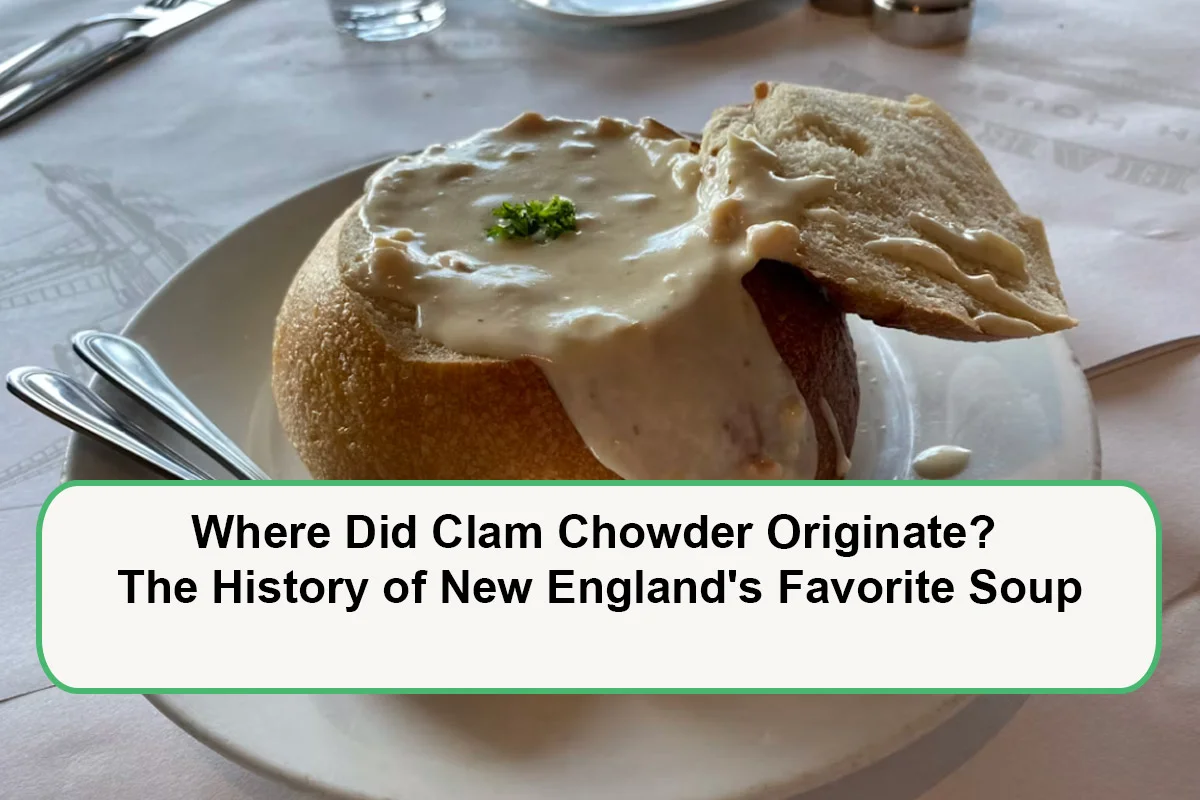
Clam chowder is the taste of the New England coast: a steaming bowl of clams, potatoes, onions, and salt pork, eaten with oyster crackers on a cold harbor day. It is also one of the most argued about dishes in American food. Is it white or red? Should it contain milk? Tomatoes? Thickener? In 1939, a Maine legislator even tried to make one version of it illegal.
So where did clam chowder originate? It grew out of European fishermen's stews brought to the coasts of Canada and New England, then became distinctly American through local clams, colonial cooks, nineteenth century cookbooks, and a good deal of regional pride. Here is the full story, plus a guide to the styles you will see on menus today.
The most common explanation for the word "chowder" is the French chaudière, meaning a large cooking pot or cauldron. Along the French Atlantic coast, fishermen are said to have shared a portion of their catch and cooked it together in one big pot, and the name of the pot came to mean the meal. As French and Breton sailors fished the rich waters off Newfoundland and Nova Scotia, the practice traveled with them, and the word was eventually shortened to "chowder" in English.
A second theory points to Cornwall in England, where the dialect word "jowder" was used for a fish seller. Both explanations may contain some truth. What is certain is that chowder began as a fisherman's dish, cooked with whatever was cheap and on hand: fish, salted pork, onions, and ship's biscuits to thicken it. If you are interested in the cooking traditions that shaped the coastal French kitchen, our history of French cuisine covers that broader story.
The earliest known printed chowder recipe in America appeared in the Boston Evening Post in 1751, written as an anonymous poem. It instructed the cook to layer fish, salt pork, onions, and biscuits in a pot, add wine and water, and avoid stirring. Food historian Paul Freedman has suggested the poem was partly a parody of the era's craze for verse, which implies Bostonians already knew chowder well by then.
Notice what is missing: clams and potatoes. Early chowders were usually made with fish, especially cod, and thickened with hard ship's biscuits (hardtack) rather than potatoes. Through the early 1800s, fish chowder and clam chowder coexisted on the coast. In 1829, Lydia Maria Child's popular cookbook The Frugal Housewife included potatoes and crackers, dropped the wine, and listed clams as an optional add in.
New England's shores were full of hard shell clams, known as quahogs, which Indigenous peoples of the region, including the Wampanoag, had harvested for thousands of years. Quahogs were cheap, plentiful, and flavorful, and they slowly became the main ingredient. By the time Herman Melville published Moby-Dick in 1851, clam chowder was famous enough that his narrator Ishmael chooses it over cod chowder at a Nantucket inn, describing a dish of clams, ship biscuits, and salt pork. The chapter is simply titled "Chowder."
Milk and cream were not always part of the dish. Cookbooks well into the 1800s treated milk as optional, relying on crackers and potatoes for body. By 1880, Miss Parloa's New Cookbook still called milk optional but recommended boiling the chowder before serving, a step toward the smooth soup we know today. In the 1880s, the Colonial Revival movement, fueled by the nation's centennial, turned chowder into a nostalgic symbol of old New England, and the creamy white version became the classic.
Boston's restaurants helped cement that identity. The Union Oyster House, which has served diners since 1826 and is often called the oldest continuously operating restaurant in the United States, has long been a stop for chowder lovers visiting the city. For tips on what fresh shellfish should look and smell like before it reaches your bowl, see our guide on how to identify fresh seafood.
Tomato based chowders appear in American publications from around the mid 1800s. They are often linked to Portuguese immigrant communities in Rhode Island and to Italian cooks in New York, both of whom used tomatoes freely. The red, milk free version eventually took the name "Manhattan clam chowder," a label that did not appear in print until 1934. One theory holds that the name came from fishermen's trips to New York's Fulton Fish Market.
New Englanders did not take kindly to it. In 1939, Maine State Representative Cleveland Sleeper of Rockland drafted a bill to ban putting tomatoes in chowder. His proposed penalty was memorable: offenders would have to dig a barrel of clams at high tide. The bill never reached a vote, but it remains one of the most quoted episodes in American food rivalry.
| Style | Base | Where you will find it | What to expect |
|---|---|---|---|
| New England | Milk or cream | Boston, coastal Maine, and nationwide | Thick, white, with potatoes, onions, and salt pork or bacon |
| Manhattan | Tomato broth | New York and the mid Atlantic | Red, thin, often with carrots, celery, and herbs |
| Rhode Island | Clear clam broth | Rhode Island and coastal Connecticut | No dairy and no tomato, tasting strongly of the sea |
| Long Island | Half tomato, half cream | Long Island, New York | A compromise between red and white |
| Minorcan | Tomato with hot datil peppers | St. Augustine, Florida | Spicy, reflecting the city's Minorcan settlers |
| Pacific Northwest | Cream, sometimes with smoked salmon | Seattle and the Oregon coast | Rich, often served in sourdough bread bowls on the West Coast |
Chowder spread with American fishermen and cooks wherever there were clams. In San Francisco, New England style chowder served in a hollowed sourdough bread bowl became a Fisherman's Wharf signature. In the Pacific Northwest, cooks use local razor clams and smoked salmon. In St. Augustine, Florida, descendants of settlers from the Spanish island of Minorca make a fiery tomato chowder seasoned with the local datil pepper. Along the Outer Banks of North Carolina, "Hatteras style" chowder is a clear broth with bacon and potatoes, close to the Rhode Island version.
Chowder is also a big business. Seafood restaurants across the country rely on it as a signature item, and chowder cook offs are common at summer festivals in New England. If you are curious about where restaurant clams come from today, our guide to wild caught versus farm raised seafood explains the trade offs, and our look at how restaurants source ingredients covers the supply chain behind your bowl.
Most New England chowder is made with quahogs, the hard shell clams of the Atlantic coast. Quahogs are sold by size under different names. The smallest are littlenecks, the next size up are topnecks and cherrystones, and the largest are simply called chowders or chowder clams. Those big clams are too tough to enjoy raw or steamed, but they have deep flavor, which is why they are chopped and simmered in the pot. Restaurants may also use soft shell clams, often called steamers, or canned and frozen chopped clams with bottled clam juice to keep costs and consistency under control.
None of these choices is wrong, but they do change the bowl. Freshly shucked quahogs give a brinier, more complex broth, while canned clams can taste flat and become chewy. When a menu says a chowder is made with fresh local clams, it usually signals a kitchen willing to do the extra shucking and cleaning work. That attention to sourcing is a theme of the broader farm to table movement, which has encouraged many coastal restaurants to name their shellfish suppliers.
Chowder's story is still being written. In March 2026, the Christian Science Monitor reported that parts of Boston Harbor had become clean enough for recreational shellfishing for the first time in about a century, the result of decades of water cleanup after the harbor's notorious pollution in the late 1900s. For a city so tied to chowder, the idea of local residents digging their own clams again is a remarkable turnaround.
Whether you prefer white, red, or clear, these signs point to a well made bowl:
If you have a shellfish allergy, chowder is one of the dishes to approach with care, since clam broth may also appear in other soups and sauces. Our guide on how to handle food allergies when dining out explains what to ask your server.
Clam chowder originated as a European fishermen's stew, carried to the North Atlantic by French and Breton sailors and adapted by New England colonists who had abundant fish, salt pork, and quahogs. The first American recipe appeared in Boston in 1751, clams overtook cod in the 1800s, and cream became standard by the late 19th century. Tomato versions followed, sparking a rivalry that is still alive in every argument over red versus white. For more stories behind America's regional dishes, explore our American food history collection.
Reviewed and verified by the Restaurant Listings Editorial Team for accuracy and relevance. Our content is researched using official restaurant sources, public records, government agencies, and recognized food safety and hospitality industry resources.
Last reviewed: October 2026
Food History & Origins
 Food History & Origins
 Food History & Origins