
 Food History & Origins
Cincinnati Chili: Regional Styles and Local Restaurants
Published On 30-10-2026
Published by Restaurant Listings Editorial Team
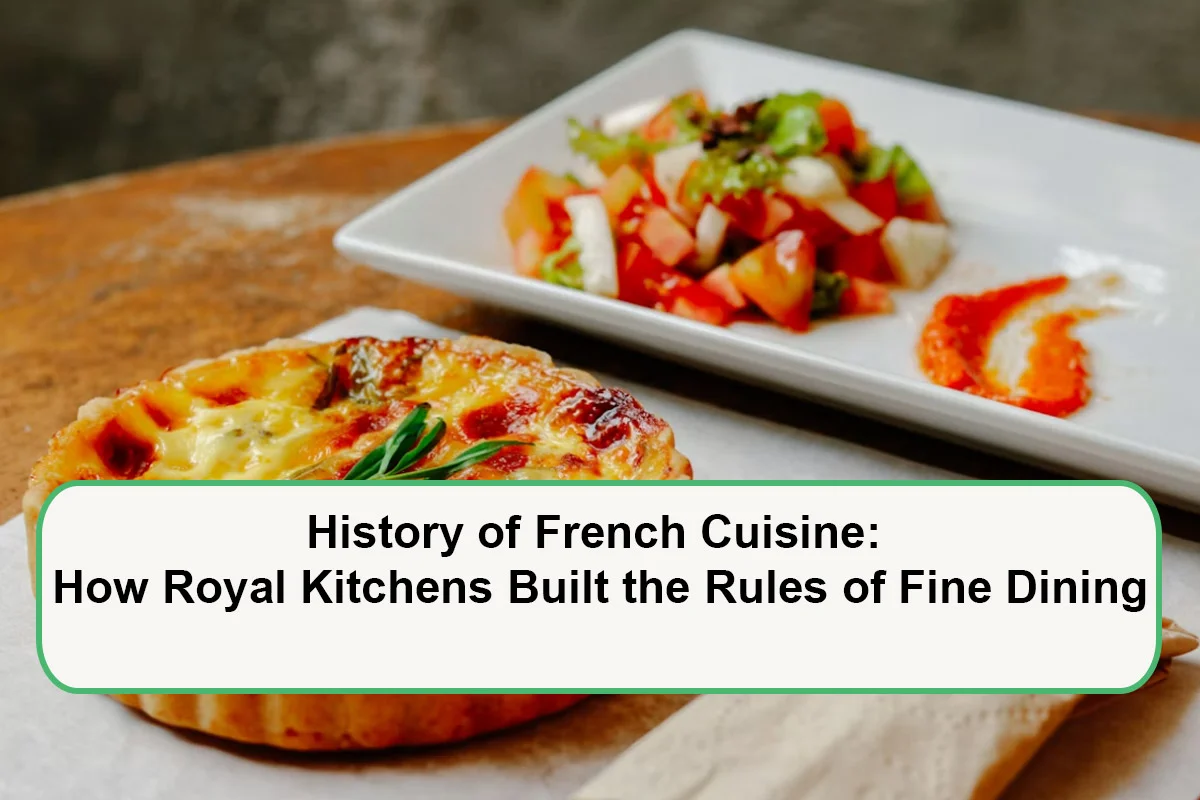
Nearly every structural convention of professional cooking traces back to France: the kitchen hierarchy that still organizes restaurant kitchens worldwide, the very concept of a restaurant as a public dining establishment, and the codified techniques taught in culinary schools on every continent. French cuisine's influence isn't really about a specific set of dishes; it's about the fact that France essentially wrote the operating manual for how professional cooking works, a history that runs directly from royal banquet halls to the modern restaurant kitchen.
French cuisine's documented history as a distinct, codified tradition generally starts with François Pierre La Varenne, who published "Le Cuisinier François" in 1651. This is widely credited as the first true French cookbook, and it marked a genuine turning point: La Varenne introduced increasingly complex sauces and refined cooking techniques, and critically, wrote them down in a form other cooks could actually study and replicate. Before this point, elite culinary knowledge had largely been passed down through direct apprenticeship rather than published, shareable technique.
French cuisine's reputation for luxury and elaborate presentation crystallized during the reign of Louis XIV, when food at court became a genuine display of wealth, power, and refinement. It was during this period that French cooking began to be systematically documented and codified in earnest, laying the groundwork for what would eventually be known as haute cuisine, literally "high cuisine." This wasn't simply about better-tasting food; it represented a philosophical shift from an emphasis on sheer abundance and quantity toward moderation, precision, and quality, a shift that would come to define French culinary identity for centuries.
One of the most consequential, and least appreciated, moments in French culinary history has nothing to do with a specific dish or technique: it's the French Revolution's role in essentially creating the modern restaurant. Before the Revolution, elite French cooking was produced almost exclusively within private aristocratic households, governed by strict guild systems that tightly controlled who could prepare and sell specific types of food.
The Revolution dismantled those guild restrictions and, with the fall of the aristocracy, left many highly trained chefs suddenly without noble employers. These chefs responded by opening their own establishments, making genuinely elite-level cooking available to a paying public for the first time, rather than reserved exclusively for royal and aristocratic households. This transformation, sometimes credited in part to earlier innovations by a chef known as Boulanger, effectively democratized fine dining and created the commercial restaurant model that the entire world now takes for granted.
In the early 19th century, chef Marie-Antoine Carême became one of the most influential figures in formalizing what's often called "grande cuisine," building directly on the codification that had begun under Louis XIV. Carême is credited with systematizing French sauce-making, developing what would become known as the "mother sauces," and elevating food presentation to an architectural level of precision and grandeur. His work laid much of the technical and philosophical foundation that later chefs, most notably Escoffier, would go on to refine and modernize.
Georges Auguste Escoffier, known in France as the "roi des cuisiniers et cuisinier des rois" ("king of chefs and chef of kings"), is widely regarded as the father of modern French cuisine. Working alongside hotelier César Ritz across Paris, London, and Monte Carlo, Escoffier dominated Europe's culinary scene at the turn of the 20th century and, critically, made haute cuisine considerably more accessible and executable at scale.
Escoffier's most enduring contribution wasn't a specific dish; it was structural. He streamlined and simplified Carême's more elaborate formulas, and he created the brigade de cuisine, a hierarchical kitchen organization system that assigns specific French-language titles and responsibilities to each kitchen role, from chef de cuisine down to commis and plongeur. Terms like sous-chef, chef de partie, and garde-manger all originate directly from this system, and the brigade structure remains the standard organizational model in professional kitchens worldwide, regardless of the cuisine actually being cooked. Escoffier also introduced the concept of mise en place, organizing and preparing ingredients before service begins, another practice now considered fundamental to professional cooking everywhere.
French culinary history is often told almost entirely through its male chefs, but Eugénie Brazier, known as "la mère Brazier," holds a genuinely singular place in it. She became the first person, man or woman, to hold three Michelin stars at two different restaurants simultaneously, and she's credited with developing Lyonnaise cuisine as something of a regional counterpoint to the more formal, aristocratic haute cuisine centered in Paris. Her more grounded, ingredient-forward approach is now recognized as a direct precursor to the nouvelle cuisine movement that would emerge decades later, and she trained several chefs who went on to shape French cooking in their own right.
By the mid-20th century, a new generation of chefs, most prominently Paul Bocuse, a student of Brazier's, began pushing back against what they saw as the overwrought complexity of classical haute cuisine. This movement, known as nouvelle cuisine, emerged around the 1960s with the explicit goal of simplifying, lightening, and refining French cooking, favoring shorter cooking times, lighter sauces, and more precise, minimalist plating over the heavier, more elaborate presentations of earlier eras.
Bocuse's influence extended well beyond his own kitchen. He helped establish Lyon as a globally recognized culinary destination, founded the prestigious Bocuse d'Or international cooking competition, and created a culinary institute that continues training chefs in classical and modern French technique today. Nouvelle cuisine's emphasis on precision presentation also had a lasting effect on fine dining more broadly, shaping how food is plated in high-end restaurants worldwide, well beyond specifically French cuisine.
French cuisine's development wasn't a one-directional story of France influencing the world; the reverse happened too. As France colonized territories across Asia, Africa, North America, and the Caribbean throughout the 1700s and 1800s, French cooking absorbed new ingredients and flavor influences from those regions. More recently, culinary exchange with countries like Japan has continued to shape contemporary French technique and presentation, part of why French cuisine's modern identity reflects genuine synthesis rather than a fixed, unchanging tradition.
Across all these historical shifts, a few core principles have remained remarkably consistent in what distinguishes serious French cooking:
French technique and kitchen organization became foundational to American professional cooking largely through 20th-century culinary education and influential figures like Julia Child, who helped popularize French technique for American home cooks, alongside generations of American chefs trained directly in Escoffier-based culinary methodology. The brigade system, French culinary vocabulary, and classical technique remain embedded in American culinary school curricula and professional kitchen structure today, regardless of what cuisine a given American restaurant actually serves.
A few trends are likely to keep shaping how French cuisine and technique continue evolving:
Reviewed and verified by the Restaurant Listings Editorial Team for accuracy and relevance. Our content is researched using official restaurant sources, public records, government agencies, and recognized food safety and hospitality industry resources.
Last reviewed: August 2026
Food History & Origins
 Food History & Origins
 Food History & Origins