 Food Knowledge
Restaurant Menus with Plant-Based Protein Alternatives: Nutr...
Published On 30-10-2026
Ordering a salad at a restaurant feels like the healthy choice, but salads fail in two opposite ways. Some are little more than a bowl of lettuce that leaves you hungry an hour later. Others are loaded with fried chicken, bacon, cheese, croutons, and creamy dressing until they contain more calories than a burger and fries. A salad that makes a complete meal sits in between: satisfying, balanced, and built to keep you full.
This guide explains what turns a restaurant salad into a complete meal, how to build one at almost any restaurant, which toppings help and which ones quietly add up, and how to order salads at chains and independent restaurants.
Nutrition figures in this guide are based on the chains' published nutrition information at the time of writing and are rounded. Recipes and portions change, so check each restaurant's current nutrition information before you order.
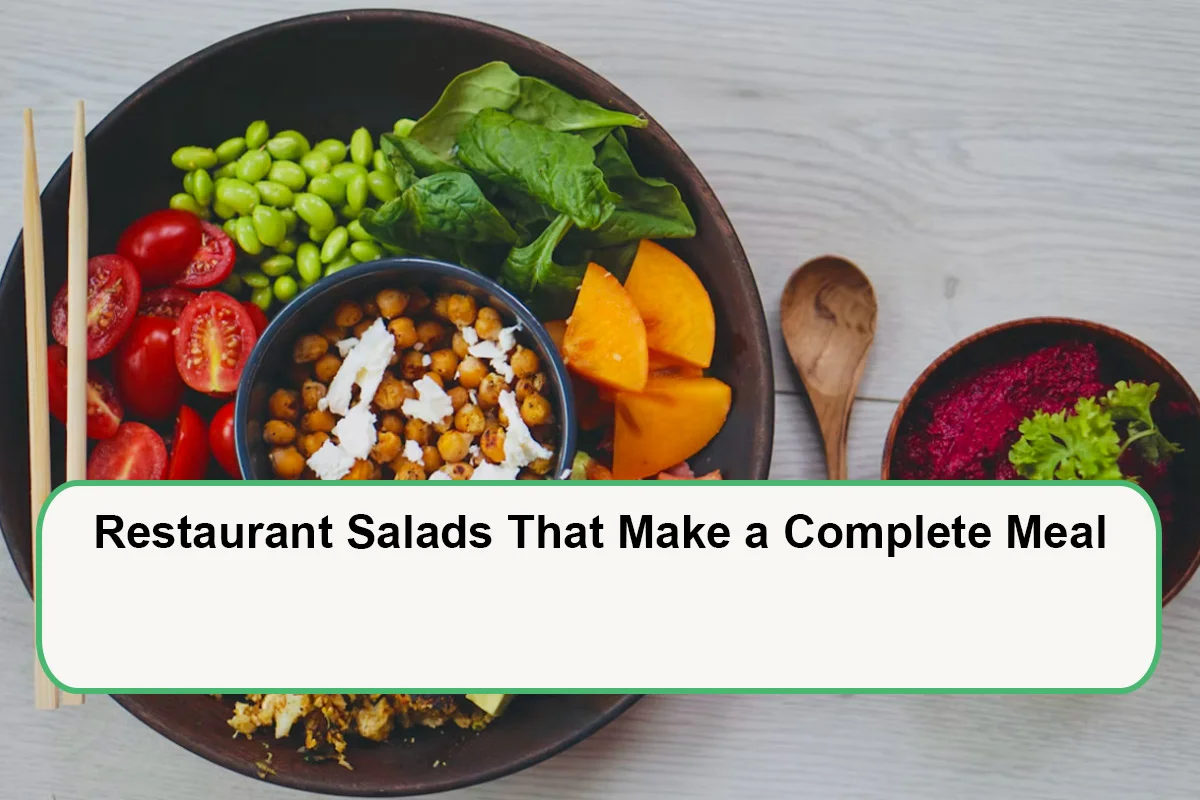
A restaurant salad becomes a complete meal when it includes a solid portion of protein, a source of fiber rich carbohydrates such as beans, grains, or fruit, a moderate amount of healthy fat, and plenty of vegetables. Aim for roughly 25 grams of protein or more, choose one rich topping rather than several, and ask for dressing on the side.
When all five are present, a salad feels like dinner rather than a diet.
| Topping | Effect | Tip |
|---|---|---|
| Grilled chicken, salmon, shrimp, or tofu | Adds protein with modest calories | Choose grilled over crispy |
| Beans, lentils, chickpeas | Adds protein and fiber | One of the best value toppings |
| Quinoa, farro, brown rice | Adds energy and some fiber | A half scoop is often enough |
| Avocado, nuts, seeds | Healthy fats, calorie dense | Pick one |
| Cheese | Flavor, protein, saturated fat, sodium | Ask for half or choose a strong cheese |
| Bacon, salami | Adds sodium and saturated fat | Use as an accent, not a base |
| Fried chicken, crispy shrimp | Adds breading, oil, and calories | Swap for grilled |
| Croutons, tortilla strips, crispy onions | Adds refined carbohydrates and oil | Use a small amount |
| Dried fruit, candied nuts | Adds sugar | Choose fresh fruit or plain nuts |
| Creamy dressing | Can add 100 to 200 calories per serving | Order on the side |
Dressing can make or break a salad. Creamy dressings such as ranch, blue cheese, Caesar, and creamy Italian are often high in calories, fat, and sodium, and restaurants frequently pour on more than a standard serving. Vinaigrettes are usually lighter, though some are sweetened. Three simple habits make a big difference:
A classic Cobb, with chicken, egg, avocado, tomato, bacon, and blue cheese, has plenty of protein and fat. To keep it balanced, ask for light bacon and cheese and vinaigrette on the side, and add beans or a small portion of grains if you want more fiber.
Greek salads with tomatoes, cucumbers, olives, onion, and feta make a strong base. Add grilled chicken, shrimp, or chickpeas for protein, and a side of whole wheat pita or a scoop of grains. Browse our Greek restaurants near you directory for options.
A greens based bowl with chicken or steak, black or pinto beans, fajita vegetables, salsa, and a little avocado is one of the most complete salads available. Skip the fried tortilla shell. At Chipotle, supergreens are about 15 calories, fajita vegetables and fresh salsa about 20 each, and beans about 120, while a side of chips adds about 570. See our guide to healthier Mexican restaurant orders.
Salads with edamame, grilled chicken or tofu, cabbage, carrots, and sesame dressing can be excellent meals. Watch fried wonton strips and sweet dressings.
Grain bowls blur the line between salad and entree. A half grain, half greens base with lean protein and vegetables is often the most satisfying salad meal of all.
Caesar dressing is rich and the salad is often light on vegetables and protein. Add grilled chicken or salmon, ask for light dressing, and go easy on croutons and cheese.
Salad bars and build your own counters give you full control, but they also make it easy to overdo it. Start by filling half the bowl with greens and raw vegetables before you reach the richer items. Add one protein scoop, one carbohydrate such as beans or grains, and one fat such as avocado, nuts, or cheese. Prepared salads at the bar, like pasta salad, potato salad, and creamy slaws, are usually dressed with mayonnaise and add calories quickly, so treat them as a small side. Finally, use the smallest ladle for dressing, or choose oil and vinegar from the cruets.
Chain salads vary widely. Chick-fil-A's Market Salad, for example, ranges from roughly 210 to 450 calories depending on the protein and toppings you choose, which shows how much choices matter. Subway's No Bready Bowls turn sandwich fillings into salads, such as the Turkey Breast bowl at about 160 calories, a lighter base you can round out with vegetables. Most chains publish full nutrition for salads and dressings; our guide to restaurants with full nutrition information online explains how to use these tools. For more chain comparisons, see our guides to healthy fast food meals and healthier fast casual lunches.
Choose double protein, add eggs or beans, and pick protein rich toppings such as edamame or chickpeas.
Combine beans or lentils with tofu, tempeh, or quinoa, and add nuts or seeds for fat. A plant based salad with two protein sources is as filling as one with meat.
Prioritize protein, fiber, and healthy fat, keep grains moderate, and avoid sweet dressings and dried fruit. Our guide on eating out with diabetes has more ideas.
Salads hide nuts, cheese, sesame, and egg in dressings and toppings. Check allergen information and read our guide to hidden dairy in restaurant meals.
Salads travel well if they are packed properly. Ask for dressing and crunchy toppings on the side so the greens do not wilt, and add them just before eating.
The best restaurant salads use fresh, crisp greens, properly seasoned and well cooked protein, a balance of textures, and dressing that coats rather than drowns the leaves. Restaurants that source seasonal produce often make the most memorable salads; our guides to farm to table dining and how restaurants source ingredients explain what to look for.
A restaurant salad makes a complete meal when it combines vegetables, a solid serving of protein, a fiber rich carbohydrate, a moderate amount of healthy fat, and bright flavor. Choose grilled over crispy, pick one rich topping, and keep dressing on the side. Built this way, a salad can be one of the most satisfying and nourishing meals on any menu. For more practical dining advice, explore our food knowledge collection.
Reviewed and verified by the Restaurant Listings Editorial Team for accuracy and relevance. Our content is researched using official restaurant sources, public records, government agencies, and recognized food safety and hospitality industry resources.
Last reviewed: October 2026