
 Food Knowledge
Restaurant Menus with Plant-Based Protein Alternatives: Nutr...
Published On 30-10-2026
Mexican food is one of America's favorite restaurant cuisines, and it can be one of the healthiest. Traditional Mexican cooking is built on beans, corn, chiles, tomatoes, lean grilled meats, fresh herbs, and lime. The challenge is that many American Mexican restaurants add generous amounts of cheese, sour cream, fried tortillas, refried beans, and sweet margaritas. With a few smart choices, you can enjoy a satisfying Mexican meal that fits a healthy diet.
This practical guide explains what to order, what to limit, and how to customize at sit down Mexican restaurants, taquerias, and fast casual chains.
Nutrition figures in this guide are based on the chains' published nutrition information at the time of writing and are rounded. Recipes and portions change, so check each restaurant's current nutrition information before you order.
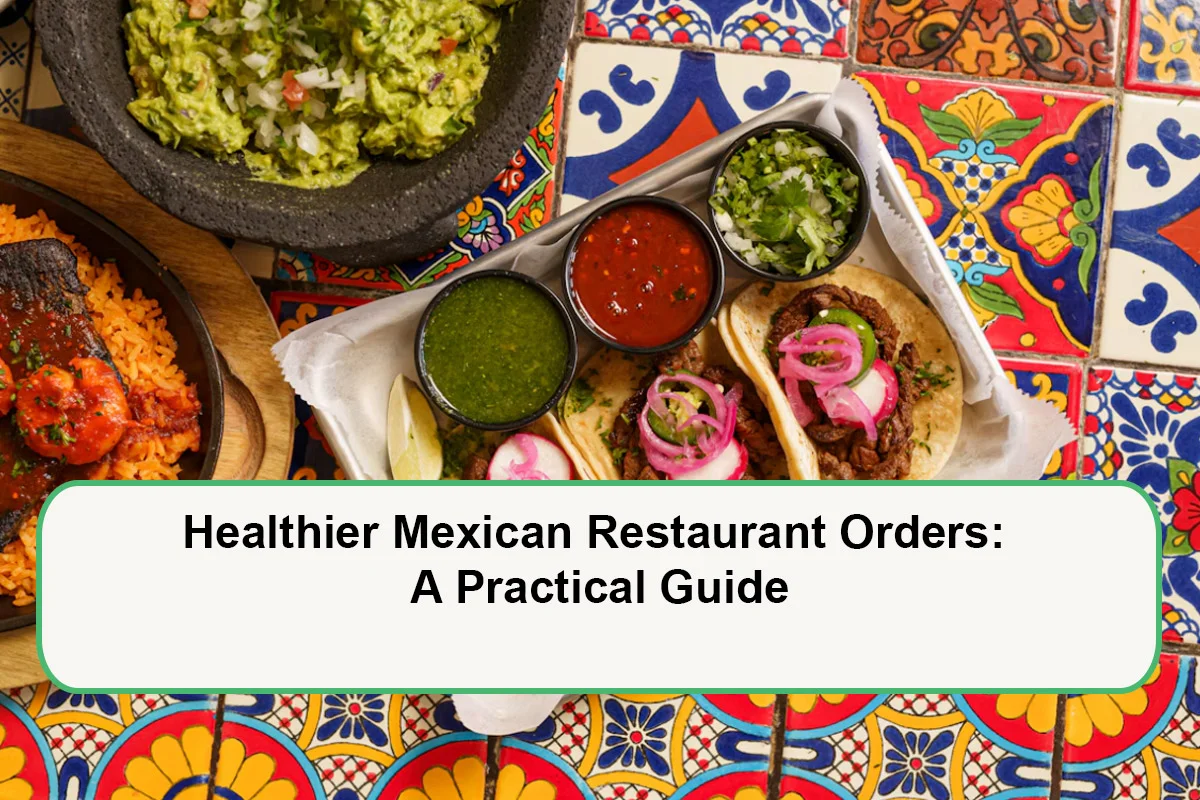
The healthiest Mexican restaurant orders center on grilled proteins, beans, vegetables, corn tortillas, and fresh salsa: chicken or shrimp fajitas, tacos al carbon on corn tortillas, burrito bowls on greens, ceviche, and broth based soups like pozole or tortilla soup. Limit the chip basket, queso, sour cream, fried shells, and large margaritas.
The free chips and salsa at many Mexican restaurants can add several hundred calories before your meal arrives. At Chipotle, a side of chips is about 570 calories. Salsa itself is one of the healthiest things on the table, so the trick is to manage the chips: take a small portion on a plate, ask the server to bring the basket with your meal, or skip it and order a cup of soup instead.
Build your own chains make healthy Mexican food easy to customize. Based on Chipotle's published nutrition, supergreens are about 15 calories, fajita vegetables and fresh tomato salsa about 20 each, and black or pinto beans about 120, while cheese adds about 100, sour cream about 120, and guacamole about 150. A supergreens bowl with chicken, beans, fajita vegetables, and salsa is a balanced, high fiber meal. At Taco Bell, simpler items are lighter: a Crunchy Taco is about 170 calories and Black Beans and Rice about 170, compared with about 530 for a Crunchwrap Supreme or Mexican Pizza.
| Item | Approximate calories | Tip |
|---|---|---|
| Chipotle supergreens, fajita veggies, or fresh salsa | About 15 to 20 each | Load up |
| Chipotle black or pinto beans | About 120 | Adds fiber and protein |
| Chipotle guacamole | About 150 | Pick guacamole or cheese |
| Chipotle chips (side) | About 570 | Share or skip |
| Taco Bell Crunchy Taco | About 170 | Simple and lighter |
| Taco Bell Black Beans and Rice | About 170 | Good side |
| Taco Bell Crunchwrap Supreme | About 530 | Richer choice |
| Taco Bell Nachos BellGrande | About 720 to 740 | Share it |
Exploring traditional Mexican dishes is one of the best ways to eat both well and adventurously. Look for sopa de lima from the Yucatan, aguachile and ceviche from the Pacific coast, grilled fish Veracruz style with tomatoes, olives, and capers, nopales (cactus) salads, and chicken tinga tacos. Our history of Mexican cuisine explains how these regional traditions developed. Arizona and the Southwest also have their own styles; our guide to Mexican food in Phoenix covers Sonoran cooking.
Mexican restaurant meals can be high in sodium because of seasoned meats, cheese, refried beans, salty chips, and soups. Choose fresh salsas and grilled proteins, limit cheese, and skip extra chips. Our guide to lower sodium meals has more tips.
Mexican food is naturally friendly to many diets. Corn tortillas are naturally gluten free, but fried chips may share fryers with flour tortilla items, so ask before ordering if you have celiac disease; see our guide to shared fryers. For dairy free diners, skip cheese, crema, and queso, and ask whether rice or beans are made with butter or cheese. Plant based diners can build excellent meals from beans, vegetables, guacamole, and sofritas or grilled vegetables.
Salsas are where Mexican food gets much of its flavor, and most are very light. Pico de gallo, salsa verde made with tomatillos, salsa roja, and pickled onions add brightness for few calories. Mole sauces are rich and complex, often made with nuts, seeds, and chocolate, so enjoy them in moderate portions. Cream based sauces, queso, and crema are the richest options and are easy to request on the side.
Different kinds of Mexican restaurants call for slightly different strategies. Taquerias and street style spots often serve small corn tortilla tacos with grilled meats, onion, cilantro, and salsa, which are naturally light; order two or three and add beans or a salad. Sit down Tex-Mex restaurants tend to serve larger combination plates with rice, refried beans, and cheese, so consider ordering a la carte or sharing a platter. Fast casual chains let you build exactly what you want, and their published nutrition makes it easy to compare. Regional Mexican restaurants are often the most rewarding of all, with seafood, soups, and grilled dishes that rarely rely on heavy cheese.
Mexican breakfasts can be hearty and healthy. Huevos rancheros with black beans and salsa, eggs with nopales or peppers, and breakfast tacos on corn tortillas with eggs and vegetables all combine protein and fiber. Chilaquiles, made with fried tortilla chips simmered in salsa and topped with cheese and crema, are delicious but richer, so treat them as a weekend indulgence. For more ideas, see our guide to healthy restaurant breakfasts with fiber and protein.
Ordering several dishes to share, such as a plate of fajitas, a ceviche, a side of grilled vegetables, and a few tacos, lets everyone taste more while keeping portions reasonable. Ask for tortillas on the side so each person can take what they want.
From neighborhood taquerias to regional Mexican restaurants, our directory makes it easy to find a great meal. Browse Mexican restaurants near you and look for menus with grilled meats, seafood, fresh salsas, and corn tortillas made in house.
Mexican restaurants offer some of the healthiest meals on any menu when you focus on grilled proteins, beans, vegetables, corn tortillas, and fresh salsa. Manage the chip basket, choose fajitas, tacos, bowls, ceviche, and broth based soups, and limit fried items, cheese, queso, and sugary margaritas. For more practical dining advice, explore our food knowledge collection.
Reviewed and verified by the Restaurant Listings Editorial Team for accuracy and relevance. Our content is researched using official restaurant sources, public records, government agencies, and recognized food safety and hospitality industry resources.
Last reviewed: October 2026