
 American Food History
The History of Buffalo Wings: A Late Night Snack That Became...
Published On 17-09-2026
Published by Restaurant Listings Editorial Team
Most iconic dishes come with three or four competing legends, murky dates, and historians throwing up their hands at the question of who really deserves credit. Nachos are the genuine exception. We know the man's name, the exact restaurant, the year, and even the specific improvised ingredients that made up the very first plate. It's an unusually well documented origin story for a dish this famous, and it's worth telling properly, including the part where the inventor's own son later discovered there was nothing legally left to claim.
Ignacio Anaya García was born on August 15, 1895, in Manuel Benavides, Chihuahua, Mexico. Orphaned young, he was raised by a woman who fed him quesadillas, tortillas with melted cheese, a childhood flavor memory that food anthropologist Dr. Mario Montaño has directly connected to the dish Anaya would later invent. By 1943, Anaya was working as maître d' at the Victory Club, a restaurant in Piedras Negras, Coahuila, sitting just across the border from Eagle Pass, Texas, and popular with American servicemen and their families from the nearby Fort Duncan Air Base during World War II.
The story is consistent enough across multiple documented sources to be treated as genuinely reliable, not folklore. One evening in 1943, after the restaurant's kitchen had already wound down for the night, a group of American military wives from Fort Duncan crossed the border into Piedras Negras and stopped at the Victory Club looking for something to eat. The restaurant's chef was nowhere to be found, and rather than turn the women away, Anaya went into the kitchen himself and improvised with whatever was on hand.
According to his son, Ignacio Anaya Jr., who later recounted the story to a reporter, his father grabbed tostadas, grated Wisconsin Colby cheese over them, and placed the dish under a salamander broiler. After a few minutes, once the cheese had melted, he topped the whole thing with sliced pickled jalapeños. When the delighted women asked what the dish was called, Anaya reportedly named it after his own nickname: Nacho's Special. "Nacho" is a common Mexican nickname for Ignacio, which is exactly why the dish carries that name today.
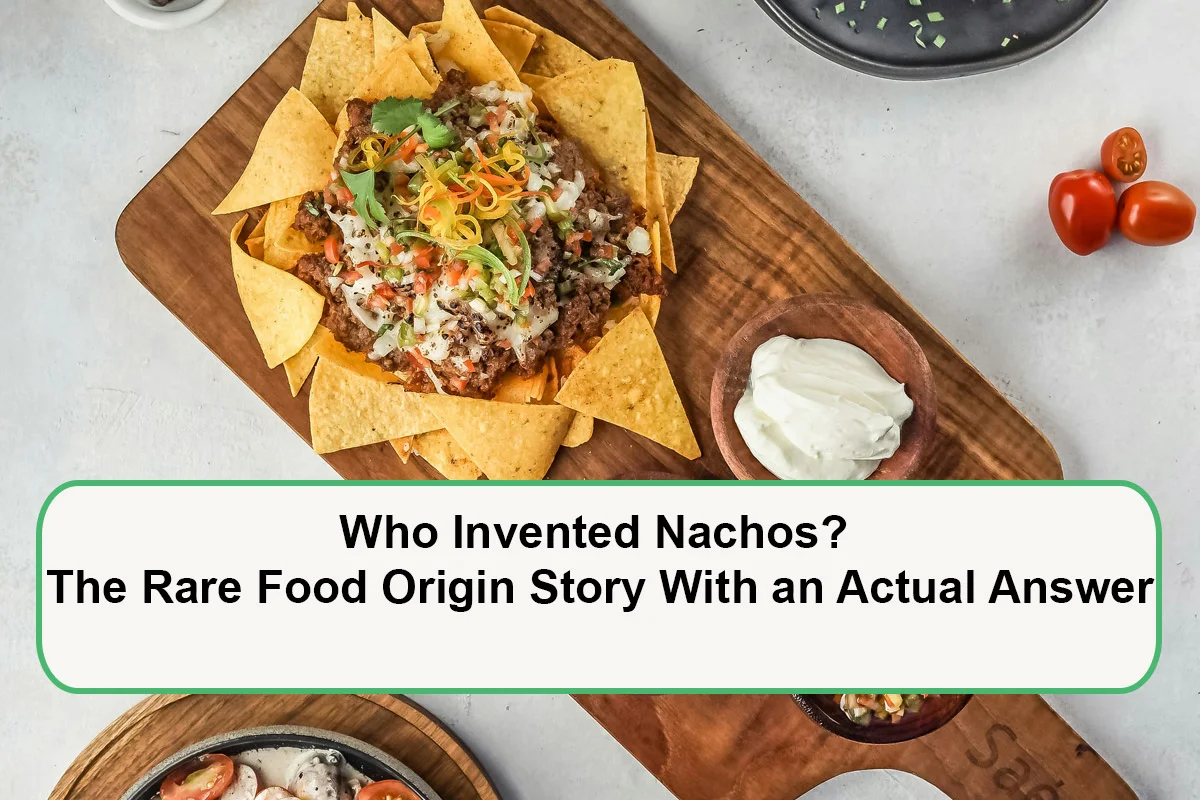
It's worth being specific about what the original nachos actually were, because the modern version bears only a loose resemblance. Food writer and culinary historian Adán Medrano has described the original as a thoughtful, carefully balanced combination of exactly three ingredients: corn tortilla chips, Longhorn or Colby cheese, and pickled jalapeño slices, prepared using a layering technique that let each ingredient's flavor come through clearly. That's a meaningfully different dish from the towering, cheese drenched mound of chips loaded with a dozen toppings that most people picture when they hear the word "nachos" today. Medrano has gone so far as to argue that using "nachos" to describe that later, heavily piled version is something of a misnomer, given how far it's drifted from Anaya's original, restrained recipe.
A few specific sources give this origin story real credibility compared to most disputed food histories:
Anaya died on November 9, 1975, and in his honor, October 21 was later declared International Day of the Nacho.
Here's a detail that adds real weight to just how much nachos took off commercially without benefiting their original inventor's family. In 1960, Ignacio Anaya Jr. looked into formally claiming ownership of the nacho on his father's behalf. He consulted a lawyer in San Antonio, who told him plainly that there wasn't much that could be done after seventeen years, since the dish and its name had already fallen into the public domain. By the time anyone considered protecting the Anaya family's claim to the dish, it was already too late, a genuinely bittersweet postscript to an otherwise well credited invention.
Nachos moved from Piedras Negras into Texas fairly naturally, given how close the Victory Club sat to the border and how many of Anaya's original customers were American. The dish spread gradually through Tex-Mex restaurants along the border region throughout the following decades. The real explosion in nachos' American popularity, though, came through a specific commercial innovation: in 1976, entrepreneur Frank Liberto adapted the dish for sale at Arlington Stadium, home of the Texas Rangers, introducing a shelf stable, pumpable liquid cheese sauce specifically designed for fast, high volume concession stand service.
This is a genuinely important distinction worth keeping straight: Liberto didn't invent nachos, and he isn't generally credited as such. What he did was adapt Anaya's original concept into a format built for speed and mass distribution, using a fundamentally different, shelf stable cheese product rather than the freshly melted Longhorn cheese in Anaya's 1943 original. That single commercial adaptation is largely responsible for nachos becoming a fixture of American ballparks, movie theaters, and concession stands nationwide.
| Element | Anaya's 1943 Original | Modern Concession Stand Version |
|---|---|---|
| Chips | Fried tostadas or tortilla triangles | Mass produced tortilla chips |
| Cheese | Freshly grated Longhorn or Colby, melted under a broiler | Shelf stable, pumpable liquid cheese sauce |
| Toppings | Pickled jalapeño slices only | Highly variable: meat, beans, sour cream, guacamole, and more |
Given how far the dish has drifted from its origin, a few markers help separate restaurants taking real care with nachos from a shortcut, concession stand style version:
A few trends are likely to keep shaping how nachos appear on American menus:
For more disputed food origin stories to compare against this rare, well documented one, see our guides to who invented tacos and who invented burritos.
Reviewed and verified by the Restaurant Listings Editorial Team for accuracy and relevance. Our content is researched using official restaurant sources, public records, government agencies, and recognized food safety and hospitality industry resources.
Last reviewed: September 2026
American Food History
 American Food History
 American Food History