 Restaurant Types
Restaurants with Clear Online Accessibility Information
Published On 30-10-2026
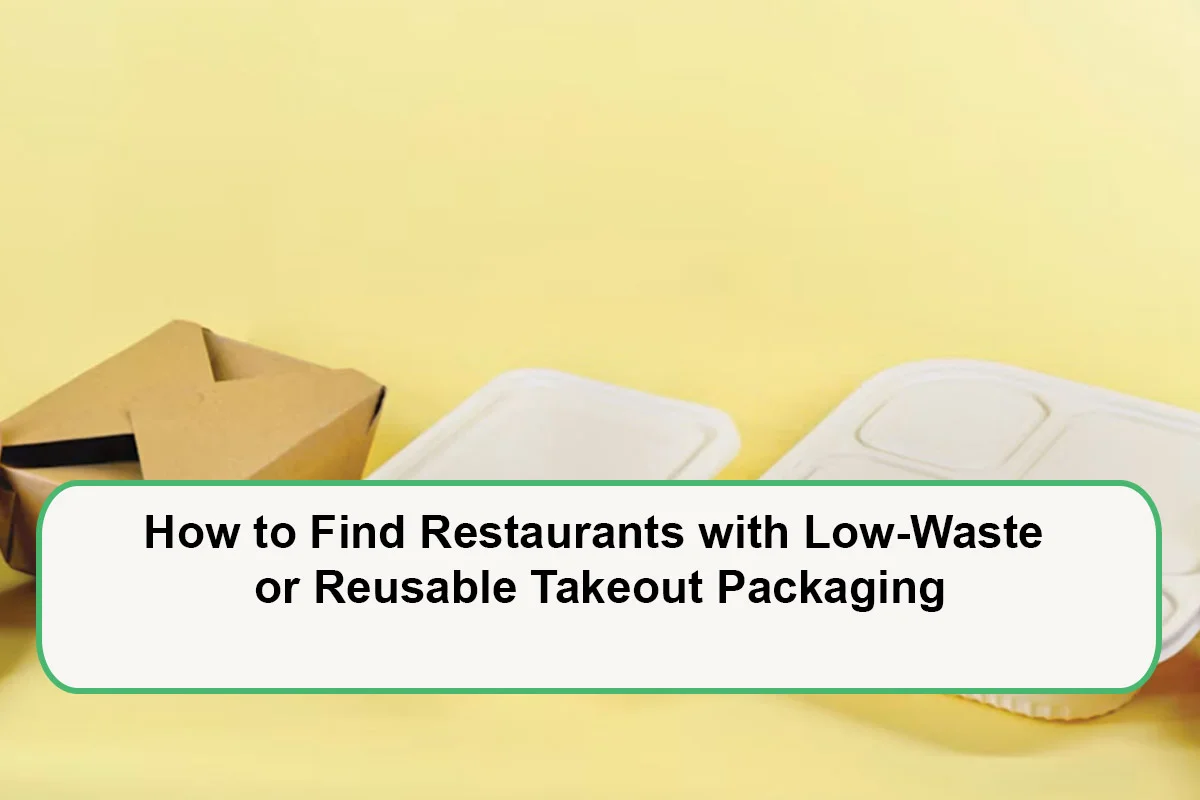
Takeout and delivery have become an everyday part of American dining, and so has the pile of containers, bags, lids, utensils, sauce cups, and napkins that comes with every order. Much of it is used for twenty minutes and then thrown away. A growing number of restaurants, cities, and states are changing that, with reusable container programs, compostable packaging, foam bans, and laws that make utensils and condiments available only on request.
This guide explains how to find restaurants with low waste or reusable takeout packaging, what the new rules mean for diners, how to judge packaging claims, and simple habits that cut waste from every order.
To find low waste takeout, look for restaurants that participate in reusable container programs (such as DeliverZero, available through Uber Eats in several metro areas), use compostable or recyclable packaging, offer discounts for bringing your own cup or container, and default to no utensils or extras. Ask before you order, check the restaurant's website or app, and decline extras you do not need.
Every takeout order uses several single use items, and the format of modern delivery multiplies them: separate containers for each dish, sauce cups, plastic bags, utensils, napkins, and drink lids. Much of it is not recyclable in practice because it is contaminated with food or made from mixed materials. Foam containers, in particular, are difficult to recycle and break into small pieces that persist in the environment. That is why many cities and states are now regulating takeout packaging directly.
Packaging rules vary by state and city, but several trends are clear:
These laws make the low waste choice the default in many places, but the most effective changes still depend on restaurants and diners.
| Rule | Where | What it does |
|---|---|---|
| Foam takeout container ban | New York State (from January 1, 2026) and many other states and cities | Prohibits foam takeout containers |
| AB 1276 | California | Utensils, condiments, and accessories only on request, including through delivery apps |
| Skip the Stuff | New York City (2023) | Utensils, napkins, condiments, and extra containers only on request; fines up to $250 |
| Skip the Stuff style law | New Jersey (effective August 1, 2026) | Single use utensils and condiments only on request; reusable utensils for on site diners at larger full service restaurants |
Reusable container programs work much like a library. You order from a participating restaurant, your food arrives in a durable container, and you return it for washing and reuse. The best known in the United States is DeliverZero, which partnered with Uber Eats to offer reusable packaging in New York and its suburbs, Boulder, Denver, Los Angeles, and the San Francisco Bay Area. Customers choose the reusable option before checkout for a small fee, typically about one dollar, then receive a text with return options: drop the containers at the original restaurant or any participating restaurant, or schedule a pickup in some areas.
Other programs operate in individual cities, campuses, and stadiums, and some restaurants run their own deposit systems, charging a refundable deposit for a durable bowl or cup. Availability changes quickly, so check delivery apps and local restaurant websites for current options in your area.
The most sustainable container is the one that is used many times, followed by the one your local system can actually compost or recycle.
Many coffee shops offer a small discount for bringing your own cup, and some restaurants will pack leftovers or takeout into a container you bring. Rules vary by state and local health department, and many restaurants decide case by case, so ask first. Make sure your container is clean, and expect staff to fill it in a way that avoids touching the rim to serving utensils. Bringing your own container for leftovers when you dine in is usually the easiest place to start.
Packaging is the visible part of takeout waste, but uneaten food is a major part of the problem. Ordering realistic portions, sharing dishes, and saving leftovers in reusable containers all help. Many restaurants also reduce waste behind the scenes by buying whole ingredients, using trimmings creatively, and composting kitchen scraps. Our guide to farm to table dining explains how some restaurants build menus around reducing waste.
Low waste ordering does not change tipping norms. Delivery drivers still deserve a fair tip, even when the containers are reusable. See our guides on tipping on delivery and tipping on takeout.
For restaurant operators, reducing packaging can cut costs as well as waste. Practical steps include defaulting to no utensils and extras, offering reusable container programs, choosing packaging that local facilities can actually compost or recycle, right sizing containers to portions, offering discounts for customer owned cups, and explaining packaging choices clearly on menus and websites. Restaurants that communicate these efforts often find that diners value them.
Delivery only restaurants, sometimes called ghost kitchens, rely entirely on packaging, so their choices have an outsized impact. When ordering from a delivery only brand, check whether it offers reusable or compostable packaging. Our guide to what a ghost kitchen is explains how these businesses work.
Low waste takeout is becoming easier, thanks to foam bans, laws that make utensils and condiments available only on request, and reusable container programs such as DeliverZero. To find low waste restaurants, check delivery apps and restaurant websites, ask about packaging, choose pickup or dine in, bring your own cup or container where allowed, and decline extras you do not need. For more dining guidance, explore our dining guides and concepts collection.
Reviewed and verified by the Restaurant Listings Editorial Team for accuracy and relevance. Our content is researched using official restaurant sources, public records, government agencies, and recognized food safety and hospitality industry resources.
Last reviewed: October 2026