
 Dining Etiquette
What Is Corkage, and How Does BYOB Etiquette Work?
Published On 18-09-2026
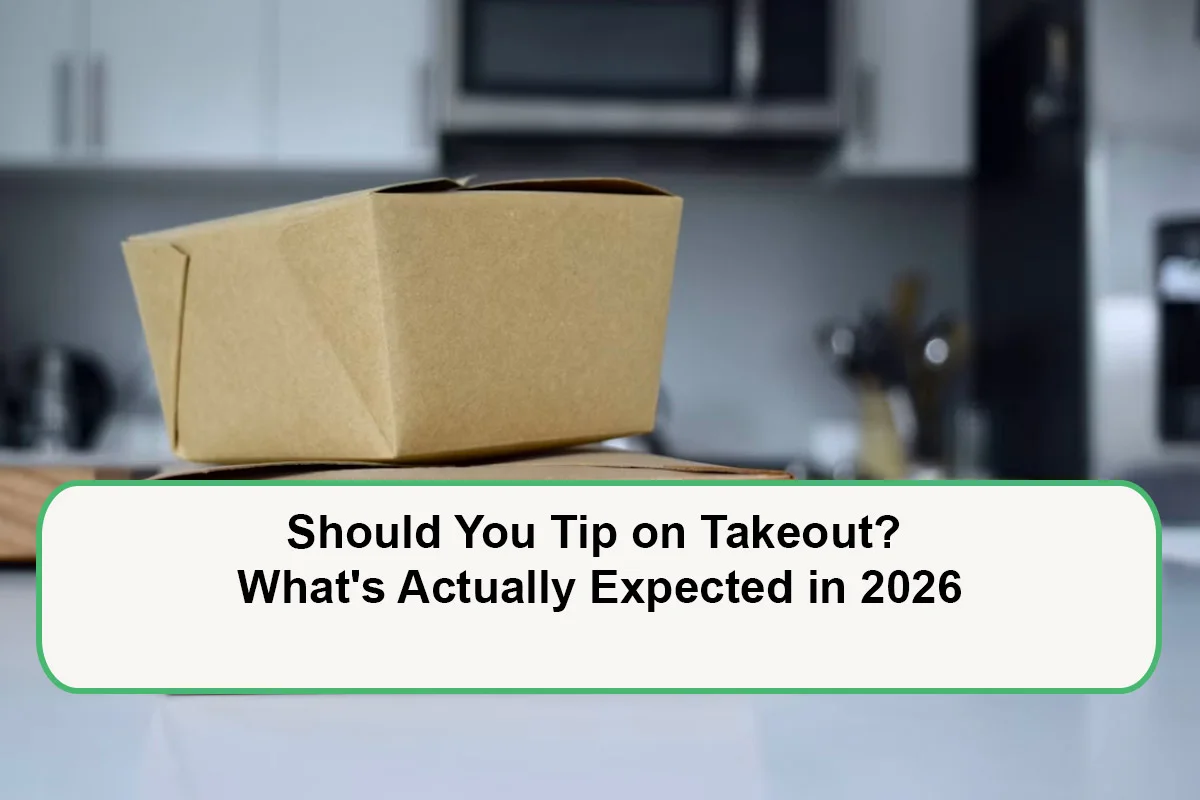
That moment when a cashier flips the screen around at the pickup counter, three buttons staring back at you for an order you're carrying out yourself, has become one of the more genuinely confusing rituals in American dining. Unlike a sit-down meal, where the 18 to 20 percent standard is well established, takeout tipping sits in a real gray area, one where even etiquette experts don't fully agree, and where actual customer behavior has been shifting in a couple of different directions at once. For the full-service dining standard this compares against, see our guide to how much you should tip.
Etiquette guidance cited by the Associated Press holds that customers can decide whether and how much to tip on takeout without feeling embarrassed about leaving a small amount or nothing at all. That's the core of it: tipping on takeout is not required the way it is for full-service, sit-down dining. At the same time, it's no longer unusual to leave something. A decade ago, tipping on takeout was genuinely rare; today, after pandemic-era norms reshaped a lot of tipping behavior, leaving roughly 10 percent has become a common, if not universal, practice at many sit-down restaurants offering pickup.
Real payment data gives a clearer picture than etiquette guidance alone. Guests who tipped digitally on takeout orders at restaurants using Toast's point-of-sale system averaged 13.7 percent in the first quarter of 2026, a meaningful amount, but still noticeably lower than the roughly 19.4 percent average tip on full-service, sit-down orders. That gap makes sense: takeout involves less labor and no ongoing table service, so a lower average tip reflects a genuine difference in the work being done, not just customer stinginess.
| Situation | Suggested Tip |
|---|---|
| Small, routine pickup order | $1 to $5, or skip it entirely |
| Standard takeout order | Around 10% |
| Large, complicated, or curbside order | 15%, closer to the full-service standard |
If you do decide to tip, calculate it from the food subtotal before tax, the same convention used for sit-down dining. It's also worth checking the receipt for an included gratuity or service charge before adding a tip on top, since some restaurants have started folding a small service fee into takeout pricing directly.
Takeout can genuinely involve more work than simply handing over a bag, and that work is exactly what a tip is meant to recognize. Employees preparing a to-go order may need to check modifiers, label individual meals, add the right utensils and condiments, carefully package food to survive the trip home, and coordinate pickup timing, real tasks that go beyond what a counter order at a fast-food chain typically requires. Etiquette expert Nikesha Tannehill Tyson of The Swann School of Protocol puts it plainly: tipping isn't necessarily required when picking up takeout, but it's a welcome, thoughtful gesture when the service genuinely earned it.
The clearest distinction to draw is between full-service restaurants offering takeout, where a real staff member is assembling and handling your specific order, and counter service at fast-food or fast-casual chains, where employees are typically paid a standard hourly wage without the same reliance on tips that traditional table-service staff have.
It's worth knowing that pushback against expanding tip prompts is real and measurable, not just internet complaining. A 2025 Bankrate survey found that 41 percent of Americans believe tip culture has gotten out of control, and the same survey found that digital tip request screens actually prompt many people to tip less, not more, a kind of quiet rebellion against being asked to tip in situations that didn't traditionally call for it. This backlash specifically targets the expansion of tip prompts into counter service and takeout scenarios that weren't part of tipping culture a decade ago, not a rejection of tipping for actual table service.
Given that reality, etiquette guidance has adjusted accordingly: giving a couple of dollars or simply rounding up is considered perfectly acceptable, regardless of whatever percentage a screen defaults to. The advice from etiquette professionals is to be intentional rather than reactive, basing the decision on the actual level of service involved rather than feeling pressured by whatever number happens to be pre-selected on the screen.
Takeout and delivery are genuinely different situations, even though they're often lumped together. Delivery involves a driver dedicating real time and their own vehicle exclusively to getting your order to your door, work that carries a much stronger tipping expectation than a simple pickup does. For the full breakdown on that side of the equation, including why the tip amount can directly affect how quickly your order gets picked up, see our guide to tipping on delivery.
A few trends are likely to keep shaping how takeout tipping evolves:
Reviewed and verified by the Restaurant Listings Editorial Team for accuracy and relevance. Our content is researched using official restaurant sources, public records, government agencies, and recognized food safety and hospitality industry resources.
Last reviewed: September 2026
Dining Etiquette
 Dining Etiquette
 Dining Etiquette