 Restaurant Types
The Difference Between Fast Food and Fast Casual Restaurants
Published On 21-09-2026
Order delivery from an app tonight and there is a decent chance the meal never passed through a restaurant with tables, a host stand, or a dining room at all. It came from what the industry calls a ghost kitchen, a business model that has grown from a pandemic era workaround into a permanent and fast growing piece of how Americans eat.
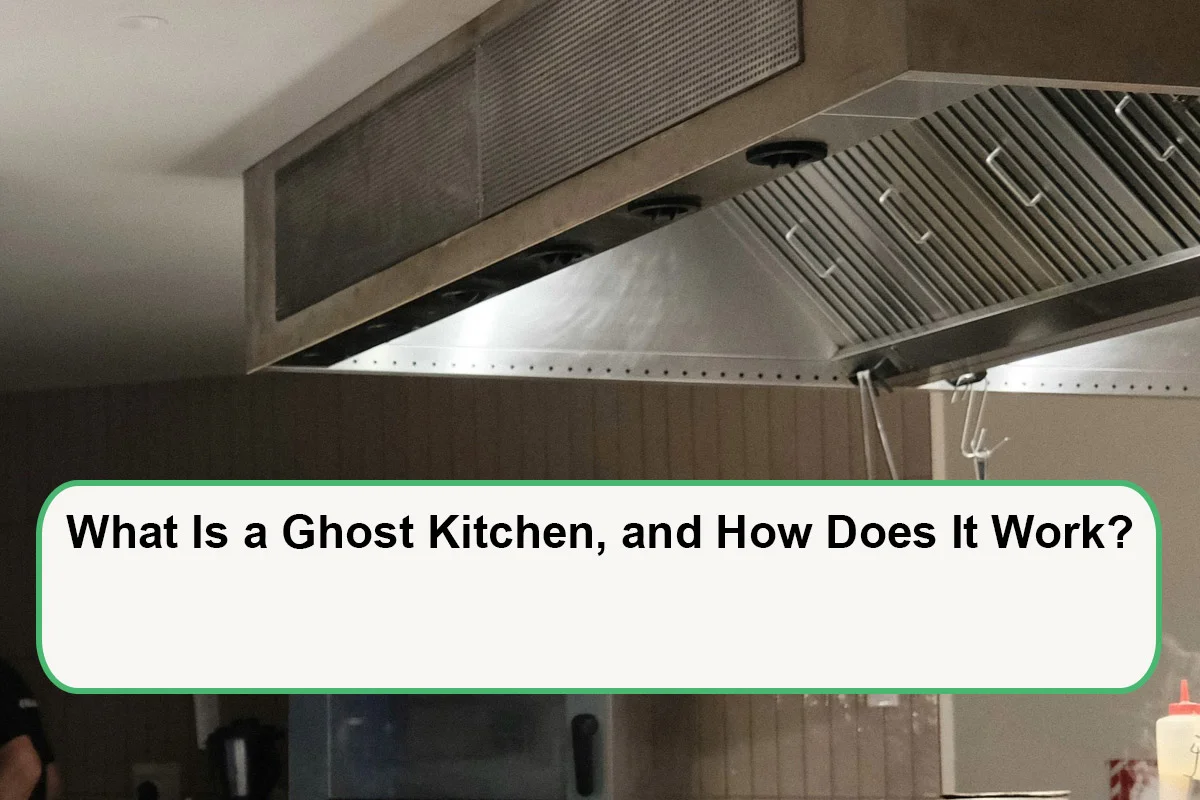
A ghost kitchen, also called a dark kitchen or cloud kitchen, is a professional food preparation facility built exclusively for delivery and takeout. There is no dining room, no host stand, and typically no front of house staff at all. Orders arrive digitally, through third party delivery apps like DoorDash, Uber Eats, and Grubhub, or through a restaurant's own website, and the kitchen's only job is to cook, package, and hand the food to a driver or a pickup customer. Removing the dining room also removes the biggest fixed costs of running a restaurant, prime retail rent, a full front of house staff, and an expensive dining room buildout, which is exactly why the model has expanded so quickly.
The process looks simple from the customer's side and is more coordinated than it appears behind the scenes. A customer finds the brand through a delivery app, a website, or a social media post, places an order, and pays online. The order lands directly in the kitchen's system, staff prepare and package the food, and a driver, either from a third party platform or the restaurant's own delivery service, picks it up and delivers it. Since there is no dining room to manage, the entire operation is built around speed, consistency, and food that survives a trip in a bag or box, rather than food that needs to be finished tableside or served the instant it leaves the pass.
These terms get used almost interchangeably, but they describe slightly different things.
| Term | What It Means |
|---|---|
| Ghost kitchen, dark kitchen, cloud kitchen | The physical facility itself, a commercial kitchen space built or rented specifically for delivery only cooking |
| Virtual restaurant, virtual brand | A delivery only menu and brand that may run out of an existing restaurant's kitchen during slow hours, rather than a separate facility |
| Delivery only restaurant | A general term for any restaurant, ghost kitchen or not, that has no dine in option at all |
In practice, a single ghost kitchen facility often hosts several virtual brands at once, each with its own name, menu, and listing on delivery apps, all cooked out of the same physical space. A restaurant that already has a working kitchen can also launch a virtual brand of its own during slower hours, turning idle kitchen capacity into extra revenue without opening a second physical location.
This is not a niche trend anymore. The global ghost kitchen market was valued at roughly 97 to 99 billion dollars in 2025 and is projected by multiple industry researchers to more than double by the early 2030s. In the United States, off premises dining, meaning delivery, takeout, and curbside pickup combined, now accounts for close to three quarters of total restaurant traffic according to National Restaurant Association research, a shift that has made ghost kitchens less of an experiment and more of a standard tool operators reach for when demand outpaces their physical dining room capacity.
The shift toward ghost kitchens is a direct response to how much dining has moved off premises. Younger diners in particular treat takeout as a routine part of how they eat rather than an occasional convenience, with roughly two thirds of Gen Z and millennial consumers describing takeout as essential to their lifestyle. Building a ghost kitchen instead of a traditional restaurant lets an operator meet that demand without taking on the cost of a storefront, a full dining room buildout, or a large front of house team, which matters more than ever given high commercial rent and a tight labor market.
Not every menu translates to delivery well, and the kitchens that succeed tend to share a few traits. Food has to hold up for twenty minutes or more in a bag without turning soggy, wilting, or arriving at the wrong temperature, which rules out a lot of dishes meant to be eaten the moment they leave the kitchen. Burgers, wings, pizza, bowls, sandwiches, and tacos travel well, while anything that needs tableside finishing generally does not translate. Menus also tend to stay tighter and more focused than a full sit down restaurant, since a smaller menu is easier to execute quickly and consistently without a dining room's worth of staff to lean on. Photography matters more than most diners realize too, since a delivery app listing is effectively the only storefront a ghost kitchen has, and a weak photo can cost an order that a traditional restaurant would have won on smell, ambiance, or a passerby glancing through the window.
Ghost kitchens existed in small numbers before 2020, but the model exploded during the pandemic, when dining rooms across the country closed or operated at reduced capacity for extended periods and delivery became, for many restaurants, the only way to generate revenue at all. Operators who might never have considered a delivery only concept were forced to rethink their entire business almost overnight, and many discovered that a stripped down, delivery focused operation could actually be more profitable per square foot than a traditional dining room, especially in expensive urban markets. What started as a survival strategy for existing restaurants evolved into a deliberate business model that new companies built from scratch, without ever intending to open a dining room in the first place.
The model is not without pushback. Some diners and food writers have raised concerns about transparency, since a delivery app listing rarely discloses whether a brand has its own dedicated kitchen, shares space with several other virtual brands, or is simply a side menu launched by an existing restaurant to capture extra delivery orders. Critics also point out that removing the dining room removes a layer of accountability that used to come from being a visible, walk in business in a neighborhood, since a delivery only brand can launch, underperform, and quietly disappear without the kind of community reputation a physical restaurant builds over years. None of that makes ghost kitchens inherently lower quality, but it is part of why some diners now specifically look for restaurants with an actual storefront when trying a new place for the first time.
Yes. A ghost kitchen is still a licensed commercial kitchen and is subject to the same local health department inspections, permitting, and letter grading as any restaurant with a dining room, even though there is no public facing space for a customer to walk into. If you are curious about how that inspection and grading process actually works, see our guides on how restaurant health inspections are done and what restaurant letter grades mean.
For diners, the biggest practical takeaway is that a delivery app listing does not guarantee a brand has its own building. Two different sounding restaurants on the same app might be cooked in the exact same kitchen by the same staff, just under different names and menus. That is not necessarily a problem, food quality depends far more on sourcing and execution than on whether a kitchen happens to have a dining room attached, but it does explain why some delivery only brands seem to appear and disappear quickly, or why a restaurant you love for takeout might not actually have a location you can walk into and sit down at.
For a look at how different restaurant formats compare more broadly, see our guides on what makes a gastropub different, what a supper club is, and the difference between a bistro and a cafe.
Almost certainly not entirely, and most people inside the industry do not expect them to. Dining rooms still offer something ghost kitchens cannot replicate, atmosphere, service, and the simple experience of being cooked for in a specific place, which is exactly why plenty of full service restaurants have added a delivery only virtual brand on the side rather than closing their dining room to chase the model completely. The more realistic picture is a restaurant industry where both formats coexist, with traditional dining rooms continuing to serve people who want to eat out, and ghost kitchens quietly filling the enormous and growing demand for food that never needs to leave a kitchen to reach someone at home.
Reviewed and verified by the Restaurant Listings Editorial Team for accuracy and relevance. Our content is researched using official restaurant sources, public records, government agencies, and recognized food safety and hospitality industry resources.
Last reviewed: September 2026