
 Beverage History
What Is Vietnamese Coffee?
Published On 13-11-2026
Vietnamese coffee is unlike anything on a typical American cafe menu. It is dark, bold, and intensely flavored, dripped slowly through a small metal filter, and often sweetened with thick condensed milk and poured over ice. The result is a drink that is strong and sweet at the same time, with notes of chocolate and caramel. Once found mainly in Vietnamese restaurants and banh mi shops, it now appears on menus at specialty cafes across the United States.
This guide explains what Vietnamese coffee is, where it comes from, how it is brewed, the most popular varieties, how it compares with other coffee drinks, and how to order it at a restaurant.
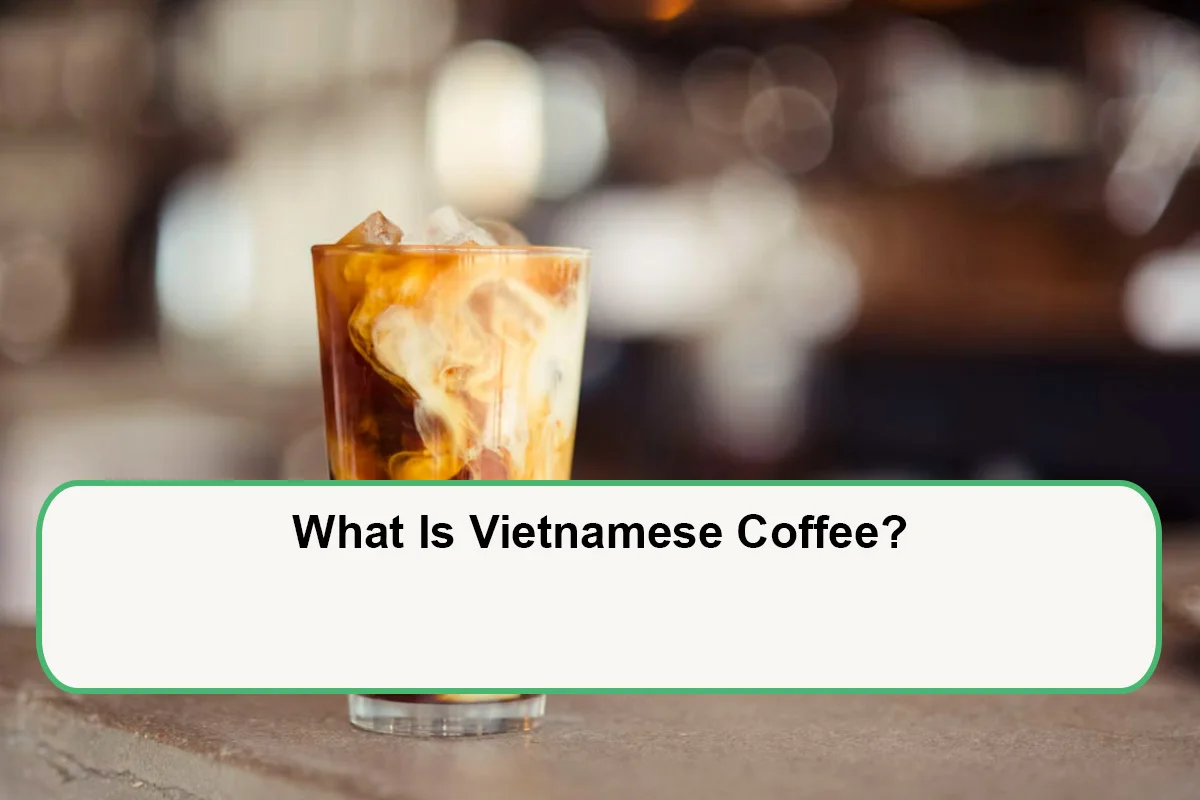
Vietnamese coffee is strong, dark roasted coffee, traditionally made with robusta beans, brewed slowly through a small metal drip filter called a phin. It is most often served as ca phe sua da, iced coffee with sweetened condensed milk, or ca phe den, black coffee, hot or iced. Its bold, bittersweet flavor and high caffeine come from robusta beans and a dark roast, softened by the rich sweetness of condensed milk.
Coffee arrived in Vietnam with French colonists in the nineteenth century; missionaries are usually credited with planting the first coffee trees in the 1850s. Plantations later spread into the Central Highlands, where the climate and volcanic soil suited robusta coffee. Fresh milk was scarce and spoiled quickly in the tropical climate, so sweetened condensed milk, which keeps without refrigeration, became the natural partner for coffee. That pairing defines Vietnamese coffee to this day.
After economic reforms in the 1980s, Vietnam's coffee industry grew rapidly. Today Vietnam is one of the largest coffee producers in the world, second only to Brazil, and the world's leading producer of robusta. Coffee culture is everywhere in Vietnam, from tiny sidewalk stalls with plastic stools to stylish cafes. To learn how coffee spread from Ethiopia and Yemen around the globe, read our article on where coffee originated.
Most coffee served in American cafes is arabica, prized for its bright acidity and complex aromas. Vietnam grows mostly robusta, a hardier species with a bolder, earthier, more bitter flavor, lower acidity, and roughly twice the caffeine of arabica. Robusta's strength stands up well to sweet condensed milk. Many Vietnamese blends mix robusta with some arabica for balance.
Vietnamese coffee is typically roasted very dark, producing chocolatey, smoky, caramelized flavors. Some traditional roasters add butter, sugar, or other flavorings during roasting, giving certain blends a distinctive aroma.
The phin is a small metal drip filter that sits on top of a cup or glass. It has four parts: a perforated bottom plate, a chamber for the grounds, a press or screen that sits on top of the grounds, and a lid. Hot water is poured in, and the coffee drips slowly into the cup below, usually over four to five minutes. The slow drip produces a concentrated, full bodied coffee, somewhere between drip coffee and espresso in strength.
Condensed milk is milk cooked down and sweetened with sugar until thick. Spooned into the bottom of the glass before brewing, it creates a dramatic layered look and a rich, creamy sweetness when stirred in.
| Drink | Vietnamese name | What it is |
|---|---|---|
| Iced coffee with condensed milk | Ca phe sua da | Phin coffee stirred into condensed milk and poured over ice; the most famous version |
| Hot coffee with condensed milk | Ca phe sua nong | The same drink served hot, often in a cup set in hot water |
| Black coffee | Ca phe den | Strong phin coffee, hot (den nong) or iced (den da), sometimes with sugar |
| Milky coffee | Bac xiu | More milk than coffee, a lighter, sweeter drink popular in Saigon |
| Egg coffee | Ca phe trung | Coffee topped with a thick, sweet foam of whipped egg yolks and condensed milk, a Hanoi specialty |
| Coconut coffee | Ca phe cot dua | Coffee blended or topped with sweet coconut cream |
| Salt coffee | Ca phe muoi | Coffee topped with lightly salted cream, associated with Hue |
| Yogurt coffee | Sua chua ca phe | Vietnamese yogurt with a pour of coffee |
Egg coffee is one of Vietnam's most surprising drinks. It is widely credited to Nguyen Van Giang, a bartender at a Hanoi hotel in the 1940s who whipped egg yolks with sugar and condensed milk to replace scarce fresh milk. The foam tastes like a light, custardy meringue or tiramisu cream floating on strong coffee. His family's cafe in Hanoi still serves it, and Vietnamese cafes in the United States increasingly offer it too. If you enjoy tiramisu, read our article on where tiramisu originated.
Vietnamese coffee tastes very strong because of the dark roast and concentrated phin brew, and robusta beans contain more caffeine than arabica. A single serving uses a lot of coffee for a small amount of liquid, so a glass of Vietnamese coffee can deliver a hefty dose of caffeine. If you are sensitive to caffeine, consider ordering bac xiu, which has more milk, or ask for a smaller serving. Caffeine varies widely by bean, blend, and recipe.
Black Vietnamese coffee is nearly calorie free. Sweetened condensed milk is rich in sugar and calories, so ca phe sua da is a sweet treat; a couple of tablespoons of condensed milk adds well over 100 calories and a significant amount of sugar. To lighten it, ask for less condensed milk, try ca phe den with a little sugar, or enjoy a smaller glass. Vegan versions using coconut condensed milk are increasingly available. Our guide to hidden dairy ingredients notes that condensed milk appears in many Southeast Asian drinks and desserts.
| Drink | Beans and brew | Milk and sweetness | Flavor |
|---|---|---|---|
| Vietnamese iced coffee | Dark roast robusta, phin drip | Sweetened condensed milk | Bold, bittersweet, chocolatey, very sweet |
| Iced latte | Espresso, often arabica | Cold milk, optional syrup | Mild, creamy |
| Cold brew | Coarse grounds steeped cold for hours | Usually none | Smooth, low acidity |
| Thai iced coffee | Strong coffee, sometimes spiced | Condensed or evaporated milk, sugar | Sweet, creamy |
| Cuban coffee | Dark roast espresso | Whipped sugar foam | Intense, very sweet |
For more about espresso drinks and cafe orders, see our guides to types of coffee drinks, latte versus cappuccino, and who invented espresso.
Vietnamese coffee spread across America with Vietnamese American communities that settled in places such as Orange County and San Jose in California, Houston, the Washington, D.C. area, Seattle, and New Orleans after the 1970s. Vietnamese restaurants, pho shops, and banh mi bakeries made ca phe sua da a familiar order. In the Gulf Coast region, many Vietnamese American cafes have long used locally available dark roast coffee blended with chicory, which echoes the bold flavor of Vietnamese coffee. In recent years, a new generation of Vietnamese American roasters and cafes has introduced specialty Vietnamese beans, egg coffee, salt coffee, and coconut coffee to a much wider audience.
Vietnamese coffee pairs perfectly with a banh mi sandwich, a bowl of pho, or pastries. Many Vietnamese families enjoy coffee with breakfast, including noodle soups and baguette sandwiches, a legacy of French influence. Our article on where pho originated explains Vietnam's most famous dish, and our guide to where croissants originated explores the French pastry tradition that also shaped Vietnamese bakeries.
Many Asian restaurants serve Vietnamese coffee alongside pho and banh mi. Browse our Thai restaurants near you and Chinese restaurants near you directories, where many Southeast Asian and pan Asian menus include Vietnamese dishes and drinks, and check each listing's menu before you go.
Vietnamese coffee is strong, dark roasted coffee, usually made with robusta beans and brewed slowly through a phin filter. Its best known form, ca phe sua da, combines that bold coffee with sweet condensed milk over ice, while ca phe den, bac xiu, egg coffee, coconut coffee, and salt coffee show the drink's range. It is stronger and sweeter than most American coffee drinks and makes a perfect partner for pho or banh mi. For more food and drink basics, explore our food knowledge collection.
Reviewed and verified by the Restaurant Listings Editorial Team for accuracy and relevance. Our content is researched using official restaurant sources, public records, government agencies, and recognized food safety and hospitality industry resources.
Last reviewed: November 2026