
 Food Knowledge
Restaurant Menus with Plant-Based Protein Alternatives: Nutr...
Published On 30-10-2026
Latte and cappuccino are two of the most ordered drinks in American coffee shops, and they are made from the same two ingredients: espresso and steamed milk. So why do they taste and feel so different? The answer lies in the proportions of espresso, milk, and foam, the texture of that foam, and the size of the cup.
This guide explains the difference between a latte and a cappuccino, how each is made, how they compare in strength, calories, and flavor, and how to order exactly what you want.
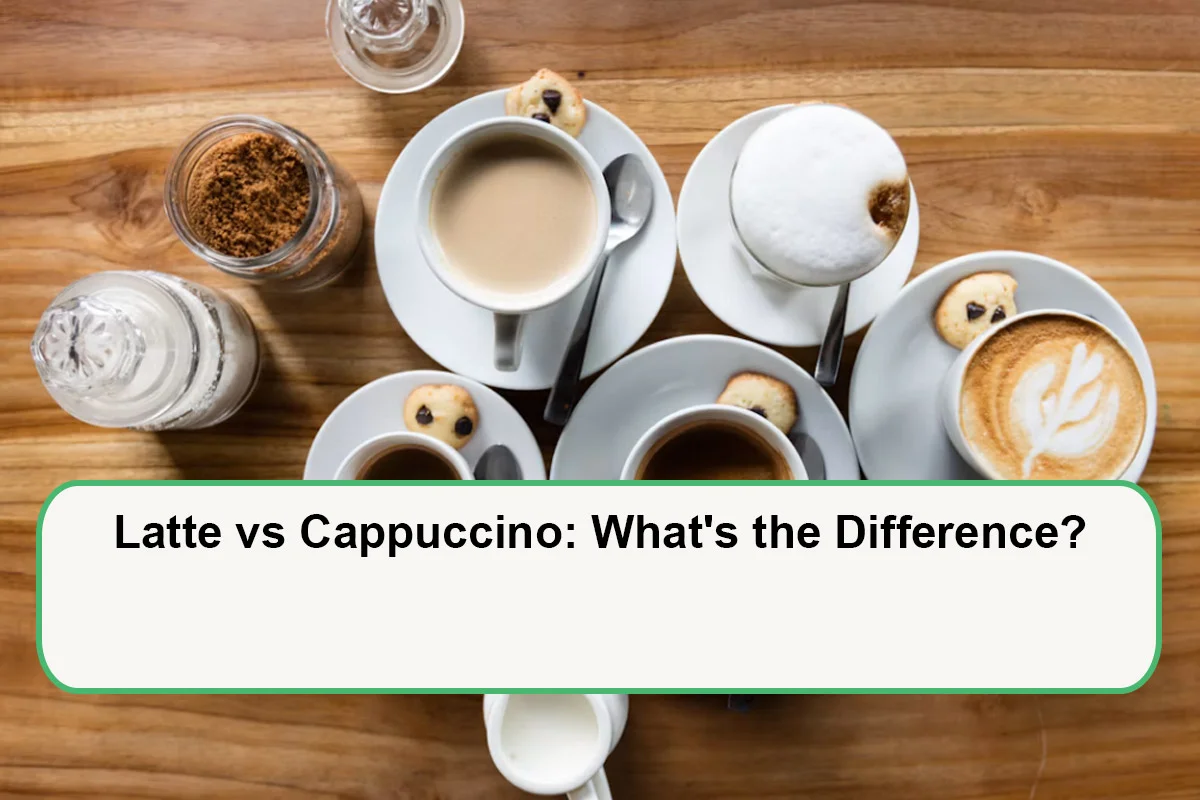
A cappuccino is a smaller drink with roughly equal parts espresso, steamed milk, and thick milk foam, giving it a stronger coffee flavor and a light, airy texture. A latte is larger, with the same espresso but much more steamed milk and only a thin layer of silky foam, making it creamier, milder, and smoother.
| Feature | Cappuccino | Latte |
|---|---|---|
| Espresso | Single or double shot | Single or double shot |
| Steamed milk | Less | Much more |
| Foam | Thick, airy layer | Thin layer of silky microfoam |
| Traditional size | About 5 to 6 ounces in Italy | Larger, often 8 to 16 ounces or more |
| Coffee flavor | Stronger, more pronounced | Milder, milk forward |
| Texture | Light and foamy | Creamy and smooth |
| Latte art | Possible, less detailed | Ideal for detailed designs |
| Calories (same size, same milk) | Lower, because there is less milk | Higher, because there is more milk |
A cappuccino is an Italian espresso drink traditionally made with a shot of espresso topped with steamed milk and a thick cap of foam, often described as roughly one third each. In Italy it is served in a small, wide ceramic cup of about 5 to 6 ounces, and it is considered a morning drink, rarely ordered after lunch. The name is often linked to the Capuchin friars, whose brown hooded robes resemble the color of the drink.
The foam gives a cappuccino its character: it feels light in the mouth, holds heat well, and lets the espresso's flavor come through clearly. Some coffee shops dust the top with cocoa powder or cinnamon.
Caffe latte means "milk coffee" in Italian. A latte is a shot or two of espresso with a large amount of steamed milk and a thin layer of velvety microfoam on top. It is creamier and milder than a cappuccino, and its smooth, glossy microfoam is ideal for latte art such as hearts, tulips, and rosettas. Lattes are served in larger cups or glasses and are the foundation for many flavored drinks, such as vanilla, caramel, and seasonal lattes.
A note for travelers: in Italy, ordering a "latte" may get you a glass of plain milk. Ask for a "caffe latte" instead.
Coffee with milk is far older than the espresso machine. Europeans were mixing coffee and milk by the 1600s, and the Viennese coffeehouse tradition produced drinks such as the Kapuziner, coffee lightened with cream to the brown color of a Capuchin friar's habit, which is one likely ancestor of the cappuccino's name. The modern cappuccino took shape in Italy in the twentieth century, after commercial espresso machines with steam wands made it possible to heat and froth milk quickly. Machines that pushed water through coffee at high pressure, introduced after World War II, produced the rich crema that makes espresso and milk drinks taste the way they do today.
The large American latte is a more recent creation. Specialty coffee bars in Seattle and the Bay Area popularized big, milky lattes in the 1980s and 1990s, and national chains carried them into every shopping center and airport. The latte became the default espresso drink in the United States, the base for flavored and seasonal drinks, and the canvas for latte art, which spread with the third wave coffee movement and barista competitions.
The single biggest technical difference between the two drinks is the milk texture. When a barista steams milk, the wand does two jobs: it injects air (stretching) and it spins the milk to break large bubbles into tiny ones (texturing).
Milk is usually steamed to about 140 to 155 degrees Fahrenheit. Hotter milk loses its natural sweetness and can taste flat or scalded, which is why many baristas gently push back on "extra hot" requests.
If both drinks use the same number of espresso shots, they contain the same caffeine. The cappuccino tastes stronger because there is less milk diluting the espresso. A large latte with a single shot will taste milder than a small cappuccino with a double shot, even if the caffeine difference is small. If you want more caffeine, ask for an extra shot in either drink.
Because a latte contains more milk, it usually has more calories and more protein than a cappuccino of the same cup size made with the same milk. The type of milk matters most: whole milk adds the most calories, skim the fewest, and plant milks vary widely. Flavored syrups and whipped cream add sugar quickly. For lighter choices, order a cappuccino, choose a smaller size, or skip the syrup. Our guide to healthy restaurant breakfasts discusses coffee drinks as part of a balanced morning. If you avoid dairy, see our guide to hidden dairy in restaurant meals for notes on syrups and toppings.
For a full tour, see our guide to types of coffee drinks.
Iced lattes are very popular: espresso and cold milk poured over ice. A true iced cappuccino is harder to make because hot foam does not hold up over ice, so many coffee shops top iced espresso and milk with cold foam instead.
American coffee chains often serve cappuccinos in the same large cup sizes as lattes, which blurs the difference. A large chain cappuccino may contain much more milk than a traditional Italian cappuccino. If you want a classic cappuccino, order the smallest size, or ask for a "dry" cappuccino to keep the foam to milk ratio high.
In Italy, cappuccino and other milky coffees are breakfast drinks, usually enjoyed with a pastry such as a cornetto. After meals, Italians typically order a plain espresso. Our article on where croissants originated covers the pastry side of the classic breakfast, and our guide to where coffee originated explains how coffee spread around the world.
Lattes and cappuccinos share the same ingredients but differ in balance. A cappuccino is smaller and foamier, with a stronger coffee flavor; a latte is larger and creamier, with more steamed milk and a thin layer of silky microfoam. Same shots mean the same caffeine, but the latte usually has more calories because of the extra milk. Choose based on whether you want bold and airy or smooth and mellow. For more food and drink basics, explore our food knowledge collection.
Reviewed and verified by the Restaurant Listings Editorial Team for accuracy and relevance. Our content is researched using official restaurant sources, public records, government agencies, and recognized food safety and hospitality industry resources.
Last reviewed: October 2026