
 Dining Etiquette
What Is Corkage, and How Does BYOB Etiquette Work?
Published On 18-09-2026
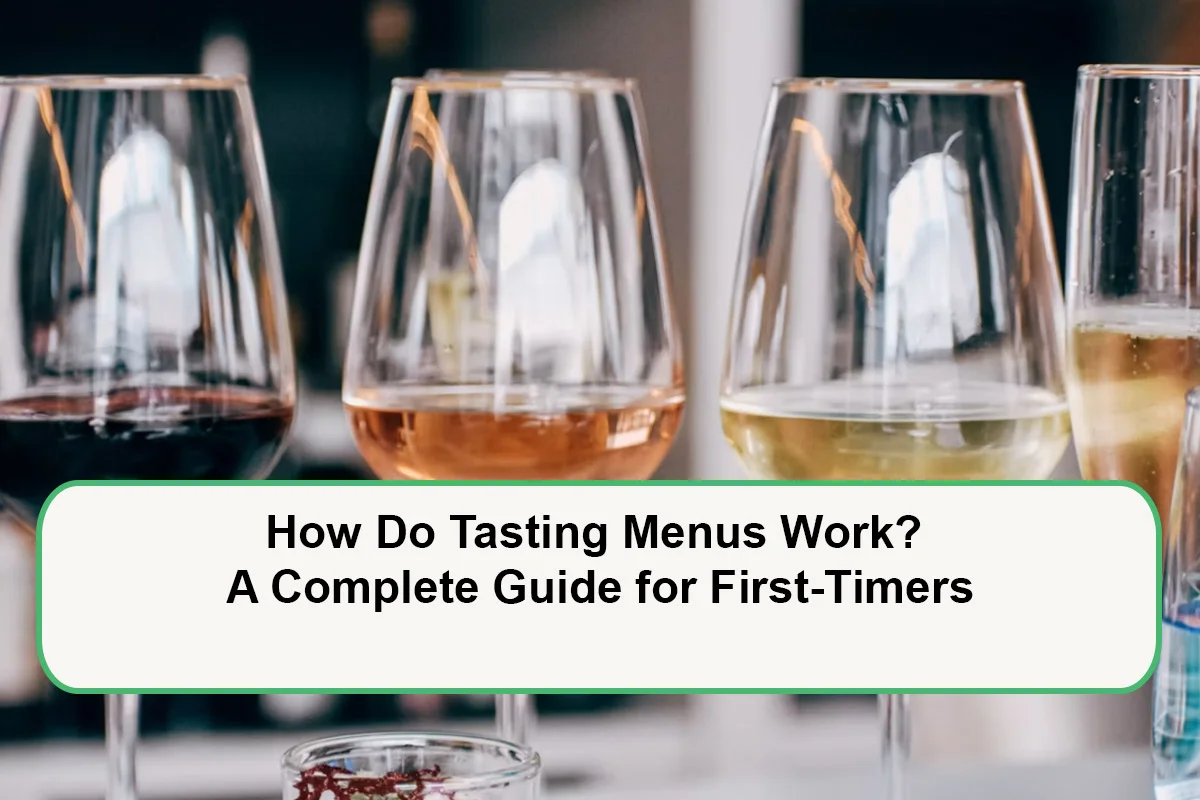
A tasting menu asks you to give up something most diners take for granted: choice. Instead of scanning a menu and picking what sounds good, you hand the meal over to the chef and let a fixed sequence of small courses unfold over several hours. For first-timers, that surrender of control is exactly what makes the format feel intimidating. Once you understand the actual mechanics, though, it's one of the more relaxing ways to eat out, precisely because there's very little left for you to decide.
A tasting menu is a single, fixed sequence of small courses, sold at one set price, designed and curated entirely by the chef. Rather than choosing individual dishes, you're essentially agreeing to eat whatever the kitchen has planned for that specific menu, in the order the kitchen has planned to serve it. Some of the world's most acclaimed restaurants, places like Eleven Madison Park in New York or Noma in Copenhagen, work with a tasting menu as their primary or only offering, treating it not as one option among several but as the entire concept of the restaurant.
The tasting menu as it's understood today traces back to the 1970s and the birth of nouvelle cuisine in France, a movement that shifted French cooking away from heavier, more elaborate classical technique toward lighter, more precise, chef-driven dishes. That original French format, generally at least four courses, each just a few bites, saw the chef take considerably more authority over the guest's experience than had been typical before. The prestige of the French chefs who popularized this new format, combined with the growing reach of culinary media, helped establish the tasting menu as a genuine showcase for a chef's creativity and technique, a reputation that only grew over the following decades as chefs like Thomas Keller, Ferran Adrià, and Charlie Trotter pushed the format further.
This is where tasting menus differ most sharply from a normal restaurant meal. In many cases, you won't have any individual dish choices at all. If a restaurant offers a single seven-course tasting menu, that's simply what you're getting, no substitutions, no swaps, no à la carte alternative. Some restaurants offer more flexibility than that, including:
One detail worth knowing before you book: if a restaurant offers both à la carte and a tasting menu, the whole table often has to choose the same format. It's common for restaurants to require everyone at one table to order either the tasting menu or à la carte, rather than mixing the two within the same party.
Tasting menus generally follow a deliberate arc rather than a random assortment of dishes, moving the palate through a specific progression:
| Stage | What It Typically Includes |
|---|---|
| Opening | Amuse-bouche or a light, palate-awakening bite to start the meal |
| Early courses | Delicate starters, often seafood or vegetable-forward dishes |
| Middle courses | Progressively richer dishes, building toward the most substantial course |
| Palate cleanser | A light, often citrus-based bite or sorbet to reset the palate before the final savory courses |
| Main course(s) | The richest, most substantial dish or dishes of the meal |
| Closing | Cheese course, dessert, and often a final round of petits fours |
This light-to-rich-and-back-to-light structure is intentional, designed to keep every course distinct and prevent flavor fatigue over what can be a genuinely long meal.
Eating ten or twenty separate courses might sound like an overwhelming amount of food, but restaurants scale portions specifically so that diners don't fill up halfway through. Many individual courses amount to just a couple of bites, which is exactly what allows a kitchen to serve so many distinct dishes across one meal without leaving guests uncomfortably full.
Pacing follows its own professional standard as well. Kitchens generally aim for roughly ten to fifteen minutes between courses, giving guests time to actually experience and discuss each dish rather than being rushed through the sequence. A five-course tasting menu typically runs about two to two and a half hours, while a seven-course or longer menu can extend to three hours or more, meaning a tasting menu reservation is a genuine time commitment, not something to fit into a quick weeknight dinner.
Tasting menus tend to carry premium pricing relative to à la carte dining, and that pricing isn't arbitrary. Beyond ingredient cost, a tasting menu holds a table for significantly longer than a typical meal, meaning the restaurant is effectively selling both food and table time at once. Because of that extended table occupation, kitchens and restaurant operators generally treat each additional course as needing to justify considerably more than its own ingredient cost in the final menu price, since a longer meal directly reduces how many total guests a restaurant can serve in an evening.
After decades of tasting menus growing longer and more elaborate, a genuine counter-trend has emerged among some chefs in recent years. Chef Brian Kim of bōm, an intimate Korean chef's counter in Manhattan, deliberately trimmed his menu down and has spoken publicly about why: enjoyment tends to diminish as the number of courses increases, and he's noticed less food waste along with better service flow since making the change. This reflects a broader shift some fine dining chefs are embracing, moving away from the three-plus-hour, fifteen-to-twenty-course marathon that defined much of the 2010s fine dining era, toward shorter, more accessible tasting menus that still deliver a complete, considered experience without demanding an entire evening.
For a closer look at one specific tasting menu tradition built entirely around the chef's judgment, see our guide to what omakase is. And for more on formal dining conventions generally, see our fine dining guide and our broader dining etiquette collection.
A few trends are likely to keep shaping how tasting menus evolve at U.S. restaurants:
Reviewed and verified by the Restaurant Listings Editorial Team for accuracy and relevance. Our content is researched using official restaurant sources, public records, government agencies, and recognized food safety and hospitality industry resources.
Last reviewed: September 2026
Dining Etiquette
 Dining Etiquette
 Dining Etiquette