
 Dining Etiquette
What Is Corkage, and How Does BYOB Etiquette Work?
Published On 18-09-2026
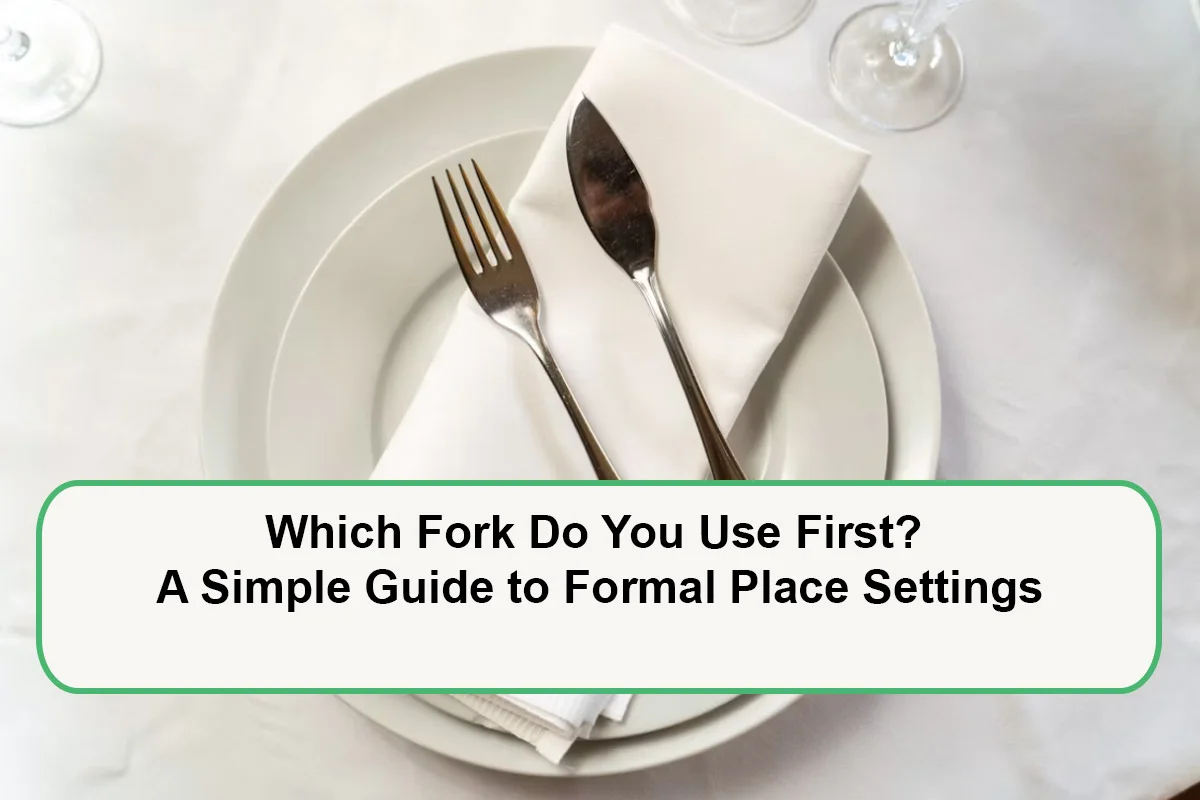
A formal table setting can look genuinely intimidating: three or four forks, a couple of knives, more than one spoon, and a small, mysterious utensil that doesn't look like anything you've used before. The good news is that the entire system runs on one consistent rule, and once you know it, you'll never have to guess again, no matter how many pieces of silverware are lined up next to your plate.
Work from the outside in. That's it. According to etiquette expert Nikesha Tannehill Tyson of The Swann School of Protocol, the general rule at a formal table is simple: start with the utensils placed farthest from your plate, and work your way inward as each course arrives. This applies to forks specifically, but it also applies to knives and spoons on the other side of the plate, so once you've got the fork logic down, you already understand the whole table.
In practice, this means the outermost fork on your left is almost always meant for the first course, commonly a salad or appetizer. As each subsequent course is served, you simply move one utensil inward. By the time dessert arrives, you're using the fork and spoon closest to your plate, or the ones placed just above it, depending on how the table was set.
The outside in rule exists because formal table settings are arranged specifically around the order courses will be served, not randomly. According to etiquette resource Emily Post, utensils are placed in the order of use, from the outside in, and forks go to the left of the plate while knives and spoons go to the right, with only a small number of exceptions. Because the table is essentially set as a built in map of the meal, you don't actually need to identify each utensil by name or function. You just need to know where you are in the meal and reach for the next one in line.
| Position | Typical Utensil | Used For |
|---|---|---|
| Far left (outermost fork) | Salad fork | First course, typically salad or a light starter |
| Next fork inward | Dinner fork | Main course |
| Above the plate, or brought with dessert | Dessert fork and spoon | Final course |
| Far right (outermost knife or spoon) | Soup spoon | Soup course, if served |
| Right side, closest to the plate | Dinner knife | Main course |
| Far right, small fork | Oyster fork | Shellfish or shrimp cocktail; the one fork placed on the right side instead of the left |
That oyster fork is worth calling out specifically, since it's the one genuine exception to "all forks go on the left." Its small size and narrow, three tine design make it easy to spot even if you don't recognize it by name, and its placement on the right, rather than the left, is intentional rather than a table setting mistake.
Most American dining, even at nicer restaurants, doesn't actually involve the full formal spread. According to one etiquette specialist consulted on the subject, genuinely elaborate settings with four or more forks are rare in practice, even at upscale dinners; two or three forks is far more typical. When you're only working with two, the logic is even simpler: the smaller fork on the outside is for salad, and the larger fork closer to the plate is for your entrée. If you're ever unsure which course is coming next, a quick glance at what's actually in front of you, or a moment's patience before reaching for anything, will usually clear it up.
Utensil placement isn't just about starting a course, it's also how you communicate with your server without saying a word. Crossing your fork and knife on your plate signals that you're taking a break but aren't finished yet. Placing your fork and knife parallel to each other, angled together at roughly the four o'clock position on the plate, signals that you're completely done and the plate can be cleared. This small detail genuinely matters in a fine dining setting, since attentive staff are trained to read it and will time their service around those signals rather than interrupting you mid meal.
Since fork order tends to come up alongside a handful of other formal dining questions, a few quick, closely related rules are worth having on hand:
Most everyday dining in the U.S. doesn't call for navigating a four fork place setting, but understanding the outside in logic still pays off in a few real situations: business dinners, wedding receptions, holiday gatherings, and the small but growing number of destination fine dining restaurants where a full formal setting is part of the experience. Knowing the rule ahead of time means you can focus on the meal and the company in front of you instead of quietly worrying about which piece of silverware to pick up next.
For more on what separates a genuinely formal dining experience from a casual one, see our fine dining guide.
Reviewed and verified by the Restaurant Listings Editorial Team for accuracy and relevance. Our content is researched using official restaurant sources, public records, government agencies, and recognized food safety and hospitality industry resources.
Last reviewed: September 2026
Dining Etiquette
 Dining Etiquette
 Dining Etiquette