
 Food History & Origins
Chicago Tavern-Style Pizza: Neighborhood Traditions and Wher...
Published On 15-10-2026
Published by Restaurant Listings Editorial Team
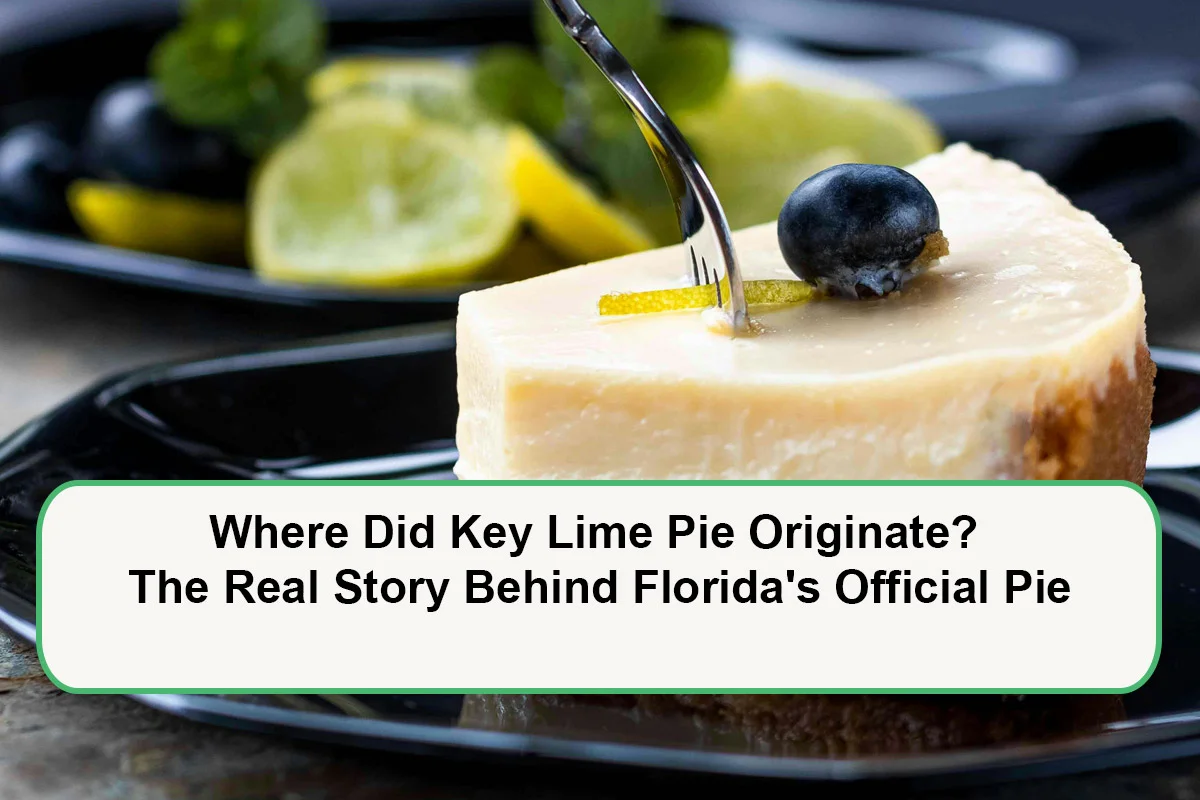
Key lime pie is the official pie of the State of Florida, the signature dessert of Key West, and one of the few desserts that is truly, entirely American. It is tart, creamy, pale yellow (never bright green), and built on just three filling ingredients: Key lime juice, egg yolks, and sweetened condensed milk.
Its origin story is also one of the most romantic in American food: a cook named Aunt Sally, a millionaire named William Curry, and sponge fishermen at sea in the 1800s. The trouble is that historians have found almost no evidence for it. The documented history points somewhere else entirely, to a condensed milk company's marketing kitchen in New York. Here is what we actually know about where Key lime pie originated.
A traditional Key lime pie has a short list of components:
Because the filling contains no cornstarch or gelatin, a real Key lime pie depends on chemistry rather than long cooking. That is why it is often called an "icebox pie" and why it became so popular in hot climates.
None of this works without sweetened condensed milk, and that ingredient has a clear history. Gail Borden received a patent for his condensed milk process in 1856. The product, milk with most of the water removed and sugar added, kept for long periods without refrigeration, and it became a staple during the Civil War. Its long shelf life later made it valuable in places like the Florida Keys, where fresh milk and refrigeration were limited before the Overseas Highway and modern infrastructure arrived.
That practical detail is the heart of every Key lime pie origin story: an isolated island community with plenty of limes and canned milk, but little fresh dairy, combined the two into a dessert that needed no oven or icebox to set.
The most widely repeated story says that in the late 1800s, a cook known as "Aunt Sally," who worked for Key West's first millionaire, William Curry, created the pie. In some versions, she adapted a recipe from local sponge fishermen, who supposedly mixed limes, canned milk, and eggs on their boats while spending days at sea.
It is a charming story, but it has a problem. According to food historians, the oldest known version of the Aunt Sally tale appeared only in 1995, in promotional materials for a bed and breakfast operating in Curry's former house. No nineteenth century document has been found that mentions Aunt Sally's pie, and a 1927 Key West Women's Club cookbook did not include a Key lime pie recipe at all, which would be strange if the dish were already a local institution.
The more likely origin was popularized by pastry chef and food historian Stella Parks in her 2017 book BraveTart. In 1931, the Borden company, the same firm founded on Gail Borden's condensed milk, published a promotional recipe called "Magic Lemon Cream Pie." It was credited to Jane Ellison, a fictional spokesperson for the company's test kitchen. The "magic" was that the filling set without cooking, just as Key lime pie does.
The idea seems to have spread quickly in Florida, where cooks swapped in local limes. On April 15, 1933, the Miami Herald printed a "Tropical Lime Chiffon Pie" using condensed milk and egg yolks, the earliest documented Florida version. By 1935, an "icebox lime pie" was being described as a Florida Keys specialty, and a recipe titled "Key Lime Pie" appeared by 1940. By the 1950s, Florida was promoting the pie as one of its most famous treats.
In other words, Key lime pie was very likely born from a corporate recipe adapted by Florida home cooks with the fruit growing in their yards. That is not less interesting than the legend; it is a classic example of how American regional food often mixes local ingredients with national brands.
| Year | Event |
|---|---|
| 1856 | Gail Borden patents his condensed milk process |
| 1926 | The Miami hurricane devastates commercial Key lime groves in Florida |
| 1927 | A Key West Women's Club cookbook includes no Key lime pie |
| 1931 | Borden publishes "Magic Lemon Cream Pie," which sets without cooking |
| 1933 | The Miami Herald prints a "Tropical Lime Chiffon Pie" with condensed milk |
| 1935 | "Icebox lime pie" is described as a Florida Keys specialty |
| 1940 | A recipe titled "Key Lime Pie" appears in print |
| 1965 | A proposed bill to require real Key limes in Key lime pie fails |
| 1995 | Earliest known version of the Aunt Sally origin story appears |
| 2006 | Florida names Key lime pie its official state pie |
There is an irony at the center of this dessert: most Key lime pies today are not made with Florida Key limes. Florida's commercial Key lime groves were devastated by the 1926 Miami hurricane, and growers replanted largely with Persian limes, which are larger, seedless, thicker skinned, and easier to ship. Key lime trees still grow in backyards across South Florida and the Keys, but commercial supplies of Key limes and bottled Key lime juice usually come from Mexico and other parts of Latin America.
Floridians have tried to protect the pie's identity. In 1965, State Representative Bernie Papy Jr. reportedly introduced a bill that would have fined anyone advertising Key lime pie that was not made with real Key limes. The bill failed. In 2006, after years of friendly debate, the Florida Legislature passed a law designating Key lime pie as the official state pie.
If you see a bright green Key lime pie, it almost certainly contains food coloring. Real Key lime juice is pale, and the egg yolks and condensed milk give the filling a soft creamy yellow color. Many Florida bakers and restaurants treat the color as a quick authenticity test. Persian lime juice can produce a decent pie, but it tastes sharper and less floral than true Key lime.
If you love tracing desserts back to their real origins, you may also enjoy our histories of cheesecake, chocolate cake, and tiramisu, all of which have their own contested legends.
Because the base recipe is so simple, chefs and bakers love to riff on it. Some of the most common variations include:
Purists will tell you that none of these are true Key lime pie, and they have a point. The classic version, with real Key lime juice, condensed milk, yolks, and a simple crust, remains the benchmark every variation is measured against.
Key West is still the spiritual home of the dessert, with bakeries, cafes, and restaurants competing to serve the best slice, and some sell it frozen and dipped in chocolate on a stick. Across South Florida, seafood restaurants and classic diners treat it as the default dessert after a meal of grouper or stone crab. Outside Florida, you will find it on menus at seafood houses, Southern restaurants, and American restaurants nationwide. Ask whether the restaurant uses real Key lime juice; the best ones are glad to tell you.
Key lime pie is a Florida creation, but its documented origin is likely a 1931 Borden condensed milk recipe adapted by Florida cooks in the early 1930s, not a nineteenth century invention by a millionaire's cook in Key West. The Aunt Sally story remains part of the pie's folklore, and it is fun to tell, but the evidence points to a blend of corporate marketing, local limes, and home cooks who made the recipe their own. For more dessert stories, explore our dessert history collection.
Reviewed and verified by the Restaurant Listings Editorial Team for accuracy and relevance. Our content is researched using official restaurant sources, public records, government agencies, and recognized food safety and hospitality industry resources.
Last reviewed: October 2026
Food History & Origins
 Food History & Origins
 Food History & Origins