
 Food Origins
The History of Irish Cuisine
Published On 18-09-2026
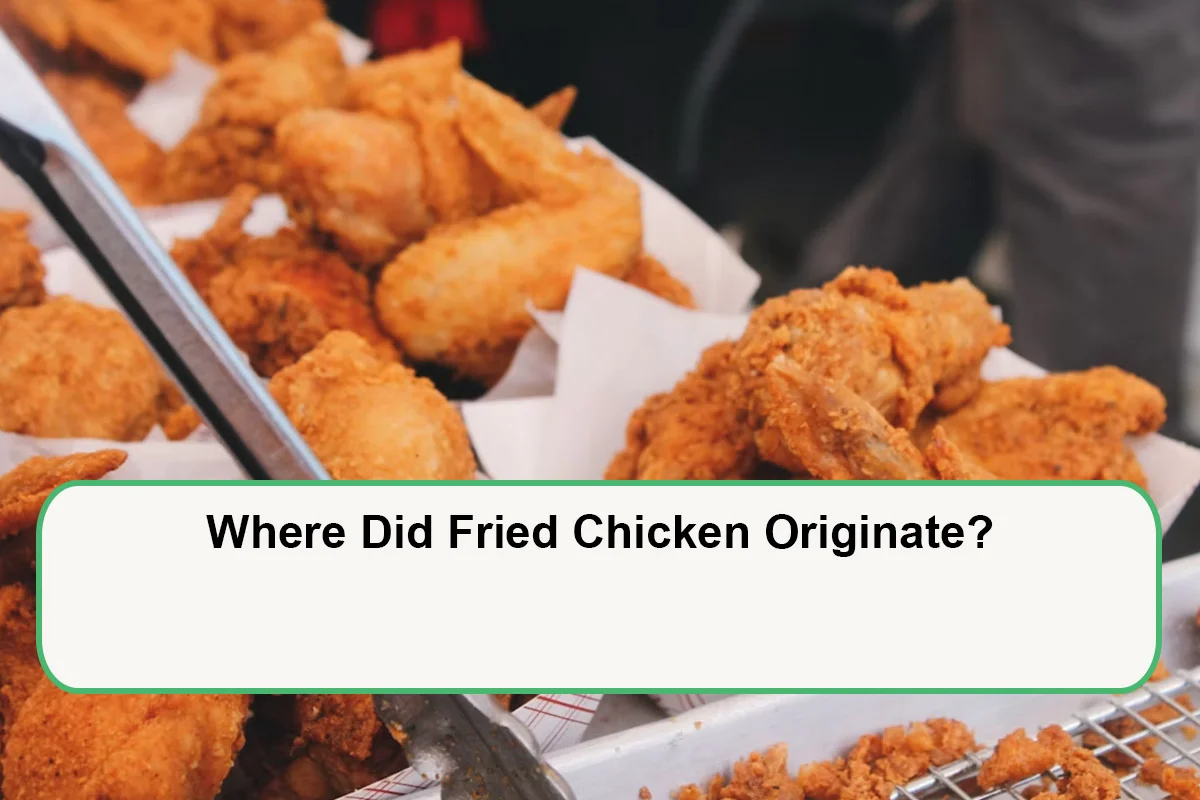
Fried chicken is treated as one of the most quintessentially American dishes in existence, deeply tied in the popular imagination to the South and, through a long and painful history of stereotype, to Black American culture specifically. The real origin story is more layered than either assumption suggests, and it starts, somewhat surprisingly, in Scotland.
The earliest documented evidence linking fried chicken to Scottish cooking traces to a 1747 British cookbook, The Art of Cookery Made Plain and Easy, by Hannah Glasse. While Glasse herself was not Scottish, the recipe reflects a method already practiced in Britain, coating chicken in a thick batter of flour, eggs, and butter and frying it in lard, nearly 80 years before the first widely recognized American fried chicken recipe appeared in print. Further evidence comes from an essay by Stana Nenadic, an 18th century history professor at the University of Edinburgh, which references a 1773 diary entry from Scottish writer James Boswell describing fried chicken for dinner while visiting the Isle of Skye. Unlike other European countries, where chicken was traditionally boiled, roasted, or made into a fricassee, Scotland had a documented tradition of deep frying chicken in fat dating back to the medieval period, a practice sometimes referred to as making fritters.
Scottish immigrants carried that frying tradition with them when they crossed the Atlantic in the 1700s, with many settling in Virginia and South Carolina ahead of the height of the American slave trade. The rest of the broader European immigrant population in America generally preferred their chicken boiled or baked and did not particularly take to the Scottish approach, according to food historians researching the period. It was in the American South specifically, where Scottish settlers had concentrated, that the deep frying method found fertile ground and began to take root as a regional practice rather than staying a niche immigrant custom.
Fried chicken's transformation into the dish recognized today happened primarily through the labor and skill of enslaved African cooks working in Southern kitchens through the 1800s. Chickens held particular significance for enslaved communities specifically because they were among the only livestock enslaved people were permitted to keep for themselves, being small, inexpensive to raise, and less likely to draw the attention or restriction that larger livestock would. That practical reality meant enslaved cooks developed deep, specific expertise with chicken out of necessity, and applied their own seasoning traditions and technique to the Scottish frying method they encountered on Southern plantations, producing something distinct from either its Scottish or West African precedents alone. A parallel West African frying tradition has also been documented, with dishes resembling fried chicken, sometimes called poulet frit, appearing in French Louisiana cookery as early as the 18th century, suggesting fried chicken's roots may be better understood as a genuine convergence of separate culinary traditions rather than a single clean lineage.
Fried chicken's association with Black Americans did not emerge purely from genuine culinary history. A significant part of the stereotype linking Black Americans specifically and often derogatorily to fried chicken traces to the 1915 silent film The Birth of a Nation, which depicted a racist caricature of a Black legislator eating fried chicken in a government hall, an image that helped cement a demeaning trope that persisted for decades afterward, entirely separate from the dish's genuine and significant place within Black Southern culinary tradition. That history matters, since the same dish carries both a real, deep cultural significance within Black American food traditions and a legacy of being weaponized as a racist stereotype, two things that are not contradictory but do require holding both realities at once.
Early Southern fried chicken differed in meaningful ways from the version most Americans recognize today, both in method and occasion. Because whole chickens and cooking fat were both relatively costly for much of the 19th century, fried chicken was often reserved for special occasions, Sunday dinners, and celebrations, rather than treated as an everyday meal the way it is now. Cast iron skillets, well suited to the deep frying method and already common in Southern kitchens, became the standard tool for the dish, and that pairing of technique and equipment remained largely unchanged for well over a century even as the dish's ingredients and availability shifted considerably.
| Date | What Happened |
|---|---|
| 1736 | An English cookbook mentions a fried chicken preparation as a marinade of chickens |
| 1747 | Hannah Glasse's British cookbook documents a fried chicken style recipe |
| 1773 | James Boswell records eating fried chicken in Scotland in a personal diary |
| 1824 | Mary Randolph's The Virginia Housewife publishes the first widely accepted American fried chicken recipe |
| 1830s onward | The specific term fried chicken enters common American usage |
Fried chicken did not become popular across the entire United States for a very long time after it took hold in the South. It remained largely confined to the South and to Black communities specifically until after World War II, when the end of legal segregation and the rise of fast food both contributed to its spread into mainstream American dining more broadly. That gap between the dish's Southern roots and its national popularity is significant, roughly a century and a half, a reminder that fried chicken's current status as a universally recognized American food is a relatively recent development compared to how long the dish had already existed.
Food historians remain genuinely divided over how much weight to give the Scottish precedent versus West African cooking traditions in explaining fried chicken's development, and the debate is not purely academic. Some scholars have pushed back directly against what they view as an oversimplified narrative that credits enslaved cooks with merely perfecting a Scottish technique, arguing instead that West African frying traditions deserve recognition as a genuinely independent contributing source rather than a secondary influence layered onto a European method. That disagreement reflects a broader challenge in food history: written records from the era were disproportionately produced by and for white audiences, meaning enslaved cooks' own contributions and techniques were rarely documented directly in their own words, leaving historians to reconstruct much of the story through indirect evidence.
American fried chicken consumption has grown dramatically in recent decades, rising from an average of 28 pounds per person annually in 1960 to more than 100 pounds by the early 2020s, a shift driven largely by the rise of fast food chains built specifically around the dish. That growth has not stayed confined to the United States either. Fried chicken has become a genuine global phenomenon, with millions of people in Japan eating it as a Christmas tradition and China hosting some of the largest fried chicken restaurant chains in the world, evidence of just how far a dish with such a specific, contested regional origin story has ultimately traveled.
For more on other Southern dishes with similarly layered origin stories, see our guides to the history of Carolina barbecue and who really invented the hamburger.
Reviewed and verified by the Restaurant Listings Editorial Team for accuracy and relevance. Our content is researched using official restaurant sources, public records, government agencies, and recognized food safety and hospitality industry resources.
Last reviewed: September 2026