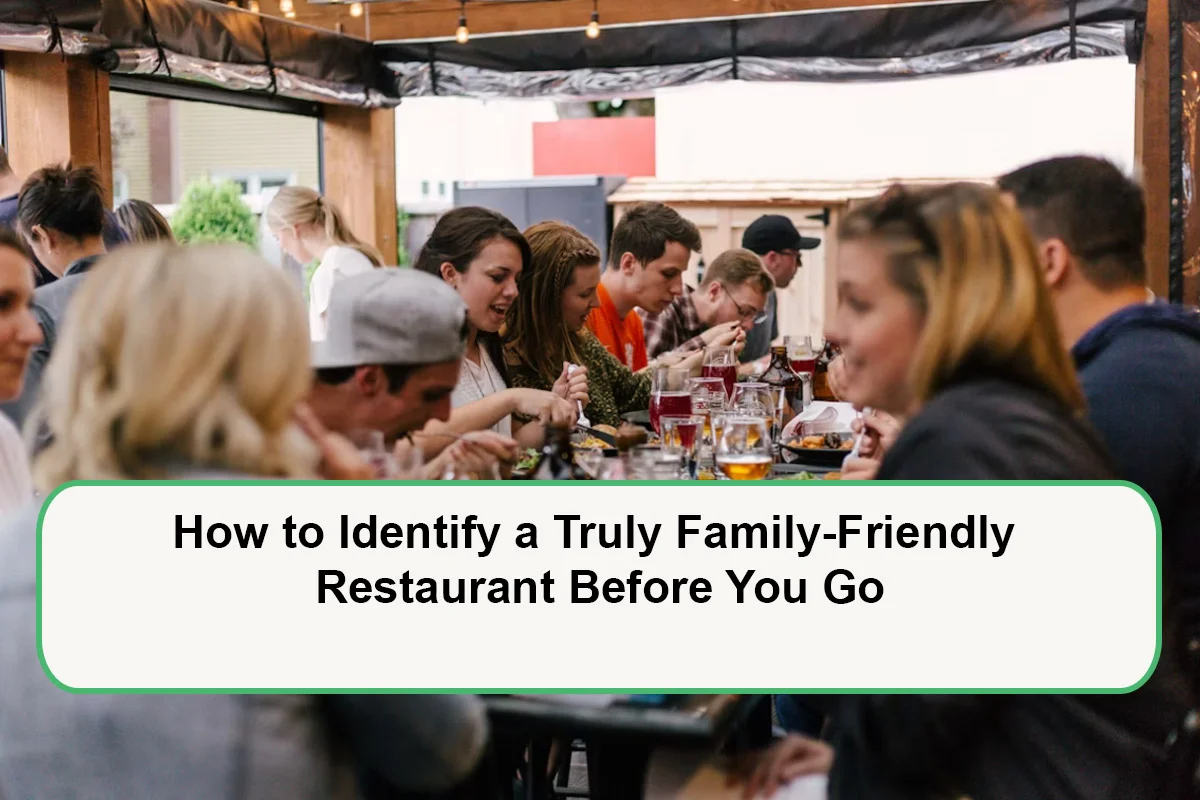
A kids menu on a restaurant's website tells you almost nothing useful. Plenty of restaurants that technically offer chicken tenders are genuinely miserable places to bring a toddler, while some restaurants with no dedicated kids menu at all turn out to be wonderfully accommodating once you're actually seated. The real signals of a family-friendly restaurant show up before you ever walk through the door, if you know where to look.
The single most underrated factor in a successful family meal isn't the food, it's timing. A 45 minute wait for an entree is a minor inconvenience for an adult and a genuine crisis for a hungry four year old. Before booking or walking in, it's worth calling ahead and simply asking how long food typically takes to come out, especially during peak hours. Restaurants with efficient kitchens that can fire food in roughly 15 to 20 minutes have a real structural advantage here, which is part of why fast casual concepts, order at the counter, food delivered to the table, tend to work so well for families: the entire format is built around minimizing the exact wait that derails a meal with young kids.
This might sound like a strange thing to verify from the outside, but it's a genuinely revealing signal. Industry research has found that 43 percent of parents let their kids pick which restaurant to visit, meaning a meaningful share of family dining decisions are already being driven by what feels welcoming and fun to a child, not just convenient for a parent. A restaurant that shows up repeatedly in "kid's choice" contexts, mentioned by name in local parenting groups, family blogs, or school pickup line conversations, is a stronger signal of genuine family friendliness than a formal kids menu listed on a corporate website.
A two minute phone call before you go can save an entire evening. Worth asking directly:
- "Do you have high chairs and booster seats available?" A surprising number of restaurants run out during peak weekend hours, and knowing in advance means you can plan around it or bring your own.
- "How long does food typically take during a normal dinner rush?" A specific answer, rather than a vague "not too long," tells you whether the kitchen genuinely understands the question you're actually asking.
- "Do you have a changing table or family restroom?" This is easy to overlook until you actually need it, and asking ahead avoids an awkward mid-meal scramble.
- "Can the kitchen do a smaller or simpler portion for a young child, even if it's not on the kids menu?" Restaurants that answer yes without hesitation are signaling real flexibility, a better indicator of family friendliness than the printed menu itself.
A generic five star review tells you almost nothing about how a restaurant handles families specifically. Skim recent reviews for concrete mentions: did a server bring crayons without being asked, did the kitchen accommodate a specific allergy without a fuss, was there room for a stroller, did staff seem genuinely warm toward a child rather than just tolerant. These small, specific details, when they show up repeatedly across multiple reviews, are considerably more reliable than an overall star average, which averages together family experiences with couples' date nights and solo business lunches that have nothing to do with what you actually need to know.
Even a genuinely great family restaurant can turn into a stressful experience if you show up at the wrong moment. Arriving early, generally between 5:00 and 5:30 p.m. for dinner, tends to mean shorter waits, a kitchen that isn't yet backed up, and servers who aren't already stretched thin handling a packed dining room. This timing advantage applies even at restaurants that are perfectly capable of handling families well during a rush, since even the best staff and kitchen have real limits once a dining room fills up completely.
A restaurant that's genuinely set up for families usually shows it in small physical details, not just a printed kids menu:
- Spacing between tables generous enough to accommodate a stroller or high chair without squeezing past other diners.
- Visible, easily accessible high chair storage, rather than chairs stacked awkwardly in a corner, suggesting the restaurant treats family seating as a routine part of operations rather than an afterthought.
- A somewhat separated family seating area, which benefits everyone: families get more breathing room to relax, and other diners aren't seated directly next to the noise.
- Non-slip flooring in high traffic areas, a small but meaningful safety detail for a restaurant that's genuinely thought through what happens when young kids are moving around the space.
Health conscious parents increasingly look for genuine allergy transparency, not just a generic "we accommodate most requests" answer. A restaurant confident in its family friendliness should be able to speak specifically to how it handles common allergens, whether it has a dedicated preparation process for gluten free or dairy free requests, and whether staff are actually trained to take those requests seriously rather than treating them as an inconvenience.
- A host who seems visibly reluctant when you mention young kids at booking. This early reaction is often a genuine preview of the service to come.
- No clear answer on wait times or kitchen speed. Vagueness here usually means the kitchen hasn't actually thought through family-paced service.
- A kids menu that's clearly an afterthought, limited to a single item with no real variation, which can suggest the rest of the restaurant's family accommodations are similarly minimal.
For a deeper look at everything beyond the kids menu that actually separates a genuinely family-friendly restaurant from one that simply tolerates children, see our companion guide, Beyond the Kids Menu: What Makes a Restaurant Family-Friendly.
- "A kids menu on the website is a reliable sign of family friendliness." A printed kids menu says little about kitchen speed, staff attitude, or physical layout, the factors that actually determine whether a family meal goes well.
- "Star ratings tell you everything you need to know." An overall rating blends together reviews from very different types of diners; specific mentions of family-related details in the text of reviews are far more useful.
- "Any restaurant can be made to work with the right timing." Timing helps significantly, but it can't fully compensate for a restaurant that genuinely isn't set up for families in terms of layout, staff training, or kitchen pacing.
- "Calling ahead is unnecessary if a restaurant lists high chairs as an amenity." Amenities listed online aren't always guaranteed to be available, especially during peak hours, making a quick confirmation call worthwhile.
A few trends are likely to keep shaping how parents evaluate restaurants before booking:
- Growing reliance on detailed, family-specific reviews and parenting community recommendations over generic star ratings.
- Increased use of pre-visit digital tools, including online wait time estimates and mobile pre-ordering, to reduce uncertainty before arriving.
- Rising expectations around allergy transparency, as more parents specifically screen for this before choosing where to eat.
- Continued growth of fast casual formats as a default, lower-risk choice for families prioritizing speed and predictability over a full-service sit-down experience.
Frequently asked questions
Kitchen speed. Restaurants that can fire food in roughly 15 to 20 minutes have a major advantage, since long waits are far more disruptive for young children than adults.
Not necessarily. A kids menu says little about kitchen speed, staff attitude, or physical layout, the factors that actually determine whether a family meal goes smoothly.
Ask about high chair and booster seat availability, typical food wait times during busy periods, changing table or family restroom access, and whether the kitchen can accommodate smaller portions for young children.
Arriving early, generally between 5:00 and 5:30 p.m. for dinner, typically means shorter waits, a less backed-up kitchen, and staff who aren't yet stretched thin handling a full dining room.
Specific details within reviews, like mentions of accommodating staff or stroller-friendly seating, are far more useful than an overall star rating, which blends together very different types of dining experiences.
Generous spacing between tables, visible and accessible high chair storage, a somewhat separated family seating area, and non-slip flooring in high-traffic areas.
Reviewed and verified by the Restaurant Listings Editorial Team for accuracy and relevance. Our content is researched using official restaurant sources, public records, government agencies, and recognized food safety and hospitality industry resources.
Last reviewed: September 2026
Related articles

 Restaurant Types