
 Food Origins
The History of Irish Cuisine
Published On 18-09-2026
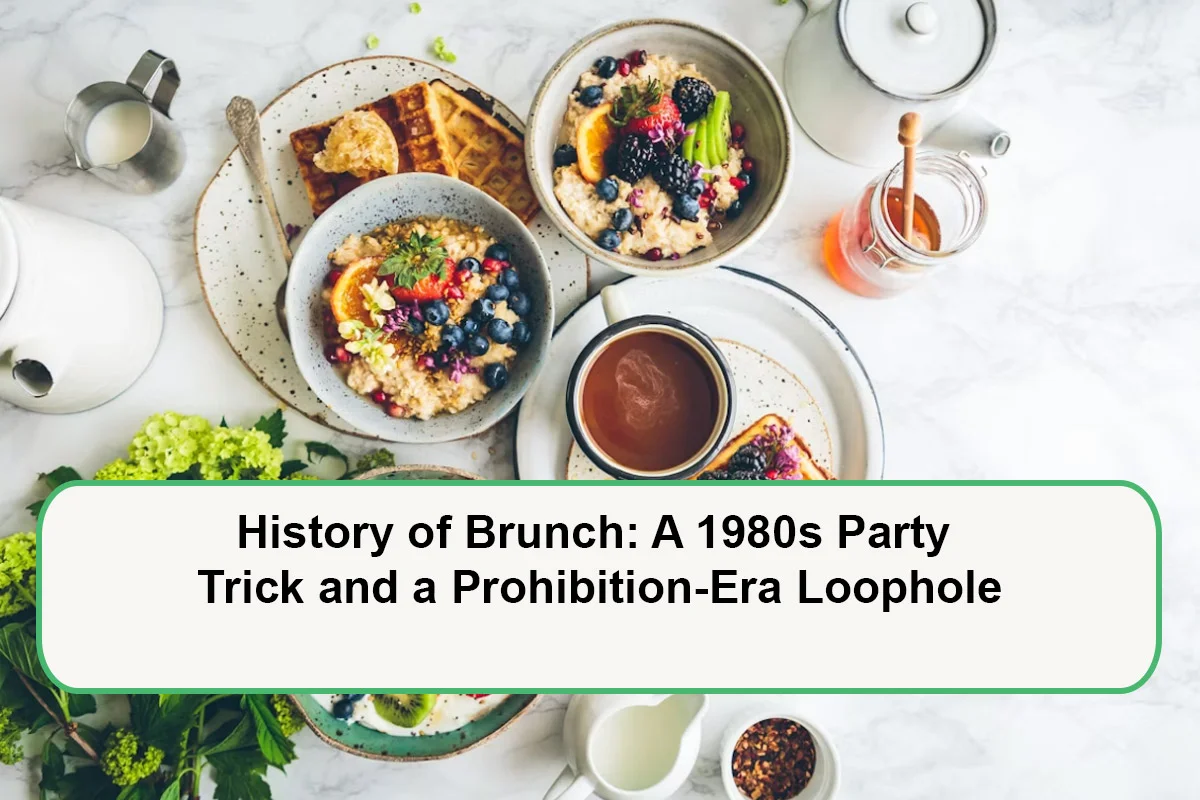
Brunch feels like it should be an old, settled American tradition, the kind of thing that's simply always existed. In reality, the word itself is barely 130 years old, it was coined as a hangover cure for British partygoers, and its explosively boozy American reputation traces back to a very specific legal loophole designed to curb Sunday drinking, not encourage it. Understanding brunch's real history explains a lot about why the meal still comes wrapped in bottomless mimosas today.
Brunch is generally credited to Guy Beringer, a British writer who coined the term in an 1895 essay titled "Brunch: A Plea," published in the London periodical Hunter's Weekly. Beringer's pitch was straightforward: rather than forcing hungover Saturday night revelers through a heavy, formal post-church Sunday dinner, why not replace it with a lighter, later, more sociable meal served around midday. In his own words, brunch was "cheerful, sociable and inciting," the kind of meal that "sweeps away the worries and cobwebs of the week." He also specifically suggested serving alcohol alongside it, tea and coffee optionally swapped for whiskey and beer, a detail that turned out to be remarkably prophetic given where the meal eventually landed in American culture.
The word crossed the Atlantic almost immediately. In 1896, an American publication called The New Oxford News and Notes for Women described the emerging "fad" of eating between breakfast and lunch, introducing the concept to U.S. readers just a year after Beringer's original essay.
Not every food historian credits Beringer alone. Some trace an earlier, separate strand of brunch history to New Orleans in the late 1800s, where a German immigrant chef working in French-Creole kitchens is sometimes credited with serving a similar late-morning, multi-course combined meal independently of anything happening in London. Wikipedia's own summary of brunch history notes that the meal "first appeared" in American food culture in New Orleans in the late 1890s, around the same general period as Beringer's essay, before becoming a fixture of upper-class New York dining in the early 1920s. Whether this represents a genuinely separate American invention or simply an early American adoption of Beringer's British concept remains a real point of historical debate.
Here's the detail that explains more about modern brunch than almost anything else in its history: brunch's now-inseparable association with day drinking traces directly back to a New York law that was explicitly designed to limit Sunday alcohol sales, not expand them. The Raines Law, passed in New York in 1896, prohibited the sale of liquor on Sundays, with one significant exception: hotels were exempt, as long as the alcohol being served accompanied an actual meal. Because many hotels met the law's minimum room requirement, this created a legal path for well-heeled New Yorkers to keep drinking on Sundays, provided they ordered food alongside it. Sunday brunch, served in hotel dining rooms with drinks attached to a plate of eggs, became the direct beneficiary of that loophole, embedding alcohol into the meal's identity from a genuinely early stage in its American history.
For its first few decades in America, brunch remained largely a luxury experience, served in fancy hotels to the social elite rather than something an average household would host. Etiquette writer Emily Post is recorded brunching on oysters, eggs, and caviar at a posh hotel in the 1920s, reflecting brunch's status at the time as an upscale, occasion-driven meal rather than a casual weekend habit.
Hollywood helped push brunch toward the mainstream in the 1930s. Movie stars making transcontinental train trips frequently stopped in Chicago for a late Sunday morning meal between connections, and hotels there were happy to accommodate the demand. Restaurants soon followed the same pattern, and by 1939, The New York Times had declared Sunday a "two-meal day," formally recognizing brunch's place in the American dining week.
The version of brunch most Americans actually recognize today, lavish buffets, bottomless drink specials, a genuinely central weekend social ritual, took shape specifically in the 1980s. That decade's broader culture of conspicuous consumption brought elaborate brunch buffets back into fashion, echoing brunch's earlier American identity as a meal for the wealthy, but this time extending it to a much wider, aspirational middle-class audience rather than keeping it confined to hotel dining rooms for the elite.
Brunch's continued prominence in American culture owes a real debt to television. The meal's central role in shows like Sex and the City helped cement brunch as a specific kind of social occasion, less about the food itself and more about the ritual of gathering with friends, in the American cultural imagination. That association has stuck: Food & Wine magazine has named New York City the best brunch city in the United States, a title that traces a fairly direct line back through the meal's earliest American roots in the city's elite hotel dining rooms.
A few consistent elements separate brunch from either breakfast or lunch alone:
A few trends are likely to keep shaping brunch's next chapter in the U.S.:
Reviewed and verified by the Restaurant Listings Editorial Team for accuracy and relevance. Our content is researched using official restaurant sources, public records, government agencies, and recognized food safety and hospitality industry resources.
Last reviewed: September 2026