
 Food History & Origins
Chicago Tavern-Style Pizza: Neighborhood Traditions and Wher...
Published On 15-10-2026
Published by Restaurant Listings Editorial Team
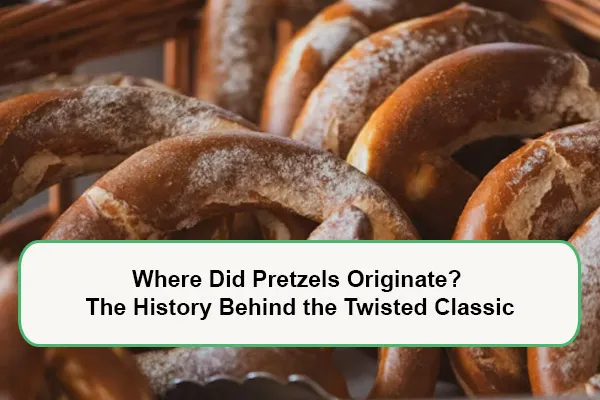
Pretzels show up everywhere from ballpark concession stands to German beer halls to artisan bakery cases, and their distinctive twisted shape is instantly recognizable no matter where you find them. But that shape isn't just decorative it's tied to one of the oldest and most debated origin stories in baking, one that reaches back to medieval European monasteries centuries before pretzels ever crossed the Atlantic.
Pretzels are generally traced back to early medieval Europe, with most food historians placing their origin somewhere between the 6th and 8th centuries. The most widely repeated account credits Christian monks, likely in what is now France, Italy, or southern Germany, with creating the pretzel's distinctive shape as a reward for children who had learned their prayers correctly.
The shape itself is often described as representing arms crossed in prayer, a detail that ties directly into the pretzel's religious origin story. Some historians also connect this symbolism to why pretzels became strongly associated with Lent and other periods of Christian fasting: their simple ingredient list flour, water, and salt, without butter, eggs, or dairy made them acceptable food during fasting periods when richer ingredients were restricted.
While pretzels' earliest origins point to a broader early medieval European context, it was in the German-speaking regions of Central Europe where the pretzel became a defining culinary symbol. Over centuries, German bakers refined pretzel-making into a distinct trade, complete with guild traditions; the pretzel shape itself became a common symbol for bakeries and baking guilds throughout German-speaking Europe, sometimes displayed outside shops the way a barber's pole once signaled a barbershop.
This is also where the lye-dipped, deep brown crust most people associate with a "German-style" or "Bavarian" pretzel developed. Dipping the shaped dough briefly in a food-safe lye solution before baking creates the pretzel's signature dark, glossy crust and distinctive flavor, a technique that remains central to traditional pretzel-making today.
Pretzels arrived in North America with German immigrants, particularly those who settled in Pennsylvania beginning in the 17th and 18th centuries. This wave of settlement is directly responsible for the strong association between pretzels and Pennsylvania that persists today, especially in Lancaster County, an area sometimes referred to as part of the country's "pretzel belt."
For a long time after arriving in America, pretzels remained soft essentially the same style of dough-forward, chewy pretzel found in German bakeries. The hard, shelf-stable pretzel most commonly found in grocery stores today came later, credited to innovations by Pennsylvania bakers who figured out how to bake pretzels longer to remove moisture, making them last far longer and travel much further than soft pretzels could.
These two pretzel styles aren't just different snack formats; they represent two distinct branches of the same baking tradition, each shaped by different priorities:
| Style | Texture | Primary Purpose |
|---|---|---|
| Soft pretzel | Chewy, tender crumb, best eaten fresh and warm | Closest to the original European format; short shelf life |
| Hard pretzel | Crisp, dry, snappable | Developed in Pennsylvania for shelf stability and shipping |
The hard pretzel's long shelf life is what allowed pretzel companies to expand distribution far beyond local bakeries, eventually turning pretzels into a mass-market snack food sold nationwide rather than a product tied to a single region.
Because pretzels range from mall food-court snacks to carefully made bakery items, quality varies enormously. A few markers tend to separate bakeries and restaurants treating pretzel-making as a real craft from those serving a shortcut version:
These are useful markers for diners evaluating pretzel quality, and they're the kind of detail that separates a surface-level restaurant listing from one that actually helps guests understand what they're ordering.
Pennsylvania remains the clearest throughline in American pretzel history, home to some of the country's oldest and most recognized pretzel bakeries:
A few trends are likely to keep shaping how pretzels appear on American menus and bakery shelves:
Reviewed and verified by the Restaurant Listings Editorial Team for accuracy and relevance. Our content is researched using official restaurant sources, public records, government agencies, and recognized food safety and hospitality industry resources.
Last reviewed: August 2026
Food History & Origins
 Food History & Origins
 Food History & Origins