
 Food Knowledge
Gluten-Free Pizza at Restaurants: Dedicated Ovens vs Shared...
Published On 15-10-2026
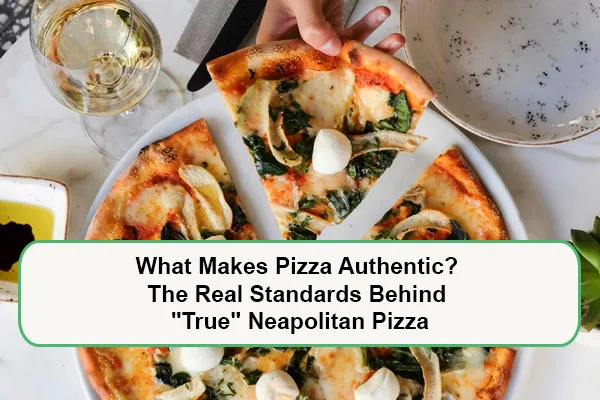
"Authentic" is one of the most overused words on a pizza menu, and one of the least regulated, except in one very specific case. There's an actual certifying body that determines whether a pizza can legitimately be called true Neapolitan pizza, with detailed, enforced standards covering everything from oven temperature to which two tomato varieties are permitted. Understanding those standards makes it a lot easier to separate genuine authenticity from a menu simply borrowing the word.
The Associazione Verace Pizza Napoletana, generally known as the AVPN, is an official body recognized by the Italian government, established specifically to protect and promote true Neapolitan pizza worldwide. Neapolitan pizza itself carries UNESCO recognition as part of humanity's intangible cultural heritage, and the AVPN's role is to certify pizzerias globally that meet the style's original, strictly defined standards, rather than simply approximating them.
This matters because "Neapolitan-style" and genuinely AVPN-certified Neapolitan pizza are not the same claim. Plenty of excellent pizzerias take inspiration from the style without pursuing or qualifying for formal certification, but the certification itself represents a specific, verifiable standard rather than a loosely applied descriptor.
AVPN certification isn't based on taste alone; it's built around detailed, specific technical requirements covering nearly every part of the pizza-making process:
| Element | Required Standard |
|---|---|
| Oven | Wood-fired, heated to approximately 900°F to 1,000°F |
| Dough ingredients | Only four ingredients: flour, salt, yeast, and water, with no shortcuts or additives |
| Mixing method | A mixer that replicates hand-forming motion, or genuine hand-kneading |
| Tomatoes | Only San Marzano or Roma varieties, both specifically Italian |
| Cheese | Fior di latte or Mozzarella di Bufala Campana, sourced from Italy's Campania and Lazio regions |
| Other toppings | Limited to fresh basil, extra-virgin olive oil, and occasionally a light dusting of Parmesan |
Every one of these elements is inspected and verified as part of the certification process, not simply self-reported by the pizzeria. That level of specificity is exactly why so few American pizzerias actually hold the certification, even among places that genuinely aim for an authentic result.
The scale of the gap is striking. Of the roughly 80,000 pizzerias operating across the United States, fewer than 100 currently hold official AVPN certification. That scarcity isn't primarily about skill; it's about the sheer difficulty of consistently sourcing specific Italian ingredients, maintaining a genuine wood-fired oven at the required temperature, and passing detailed technical inspection, all while running a commercially viable restaurant.
Industry historians note that even some of the earliest Neapolitan-inspired pizzerias in America, dating back over a century, likely wouldn't meet today's AVPN standard, since they relied on American flour, American dairy, and coal-fired rather than wood-fired ovens. Authenticity, in the AVPN's strict sense, has always been a genuinely high bar, not a loosely interpreted style descriptor.
One detail that catches many American diners off guard: authentic Neapolitan pizza is intentionally soft and foldable in the center, a texture Italians describe as "al fazzoletto," meaning "like a handkerchief." This isn't a flaw or a sign of an undercooked crust; it's the expected, correct result of extreme oven heat meeting properly fermented dough over a very short cook time, generally 60 to 90 seconds. Diners expecting the sturdier, crisper crust common on American-style pizza sometimes mistake this authentic softness for a mistake, when it's actually one of the clearest signs the pizza was made correctly.
It's worth knowing that AVPN pizzeria certification and individual pizzaiolo (pizza maker) training are related but technically separate systems. A related organization focuses specifically on training and certifying individual pizza makers in proper technique, while the AVPN certifies the pizzeria itself, its equipment, ingredients, and processes. A restaurant can hold AVPN certification while also employing individually certified pizzaioli, but the two credentials represent different things: one certifies the establishment, the other certifies the individual craftsperson's technique.
Whether or not a pizzeria pursues formal AVPN certification, a few markers consistently separate serious, craft-driven pizza-making from a shortcut version:
These are useful markers for diners evaluating pizza quality, and they're the kind of detail that separates a surface-level restaurant listing from one that actually helps guests understand what they're ordering.
Serious, award-recognized pizza-making has developed a genuine national footprint, though certain cities remain particularly concentrated:
A few trends are likely to keep shaping how authenticity is understood and marketed:
Reviewed and verified by the Restaurant Listings Editorial Team for accuracy and relevance. Our content is researched using official restaurant sources, public records, government agencies, and recognized food safety and hospitality industry resources.
Last reviewed: August 2026
