
 Restaurant Reservations
Why Restaurants Require Credit Cards for Reservations
Published On 21-09-2026
Published by Restaurant Listings Editorial Team
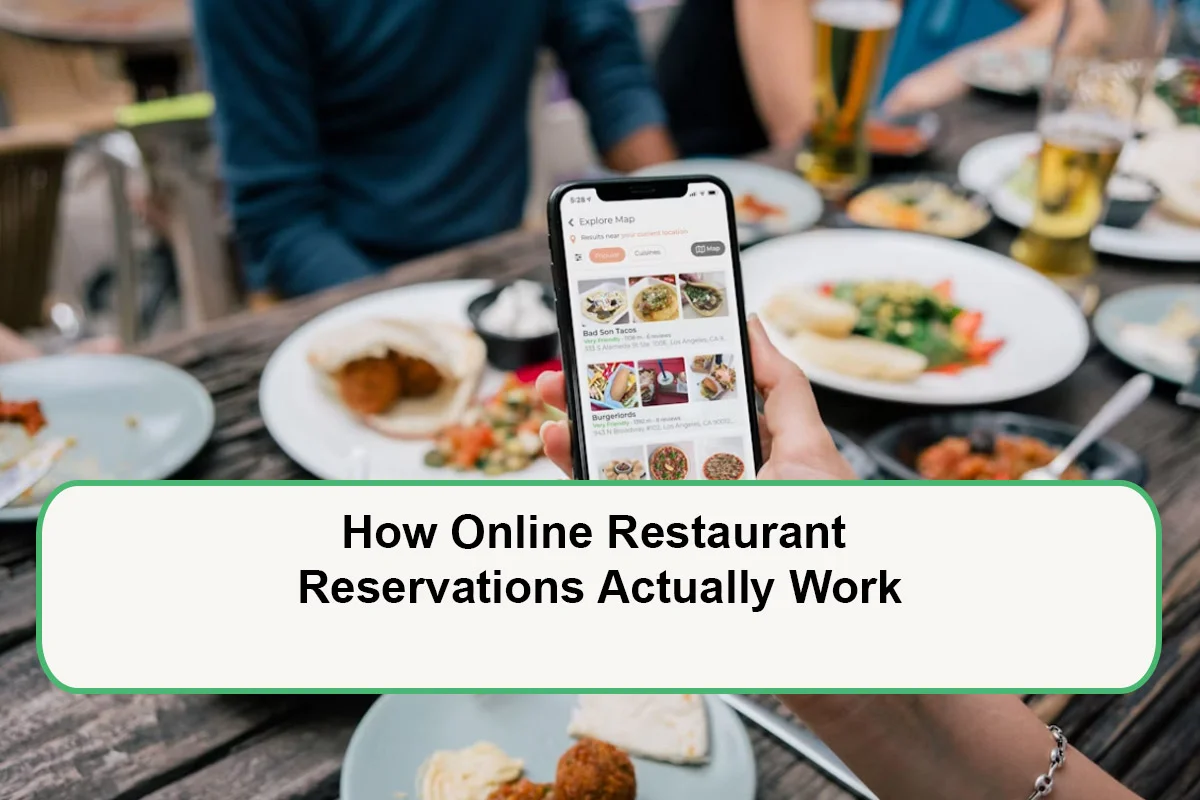
Tapping "confirm" on a restaurant reservation feels instantaneous, but there's a genuinely more complex system running underneath that simple action, one that involves real-time table inventory, commission-based business models, and, for the most sought-after restaurants in major cities, an actual arms race between diners using automated booking software to grab tables the second they're released. Here's what's actually happening behind the screen.
When you search for availability on a platform like OpenTable or Resy, you're not looking at a static calendar, you're querying a live table management system that tracks the restaurant's actual floor plan, table sizes, and existing bookings in real time. When you select a time and confirm, the system checks that a table matching your party size is genuinely available at that moment and locks it in, updating the restaurant's internal system instantly so the same table can't be double-booked by another guest a few seconds later.
This live-inventory approach is why availability can shift within seconds, a table that showed as open when you loaded the page can disappear by the time you finish entering your details, especially at in-demand restaurants during peak booking windows.
Major reservation platforms generally operate on a commission or subscription model, and understanding it explains a lot about how restaurants prioritize different booking channels. OpenTable, for example, charges restaurants a marketplace commission ranging roughly from $1 to $7.50 per seated guest booked through its network, on top of a base subscription fee. At a restaurant seating 300 covers a month through the platform, that commission alone can run between $300 and $2,250, a real, recurring cost layered on top of whatever monthly software fee the restaurant already pays. Resy generally charges lower per-cover fees, though it uses a broadly similar commission-based structure.
This fee model is exactly why many restaurants also promote direct booking through their own website or a simpler booking widget, since a reservation made outside the marketplace app typically doesn't carry the same per-cover commission cost.
A modern reservation system does considerably more than just record your name and time. After you confirm a booking, the system typically:
For the most exclusive, hardest-to-book restaurants in cities like New York, Los Angeles, and Miami, getting a table has become enough of a competitive problem that an entire category of automated booking tools has emerged specifically to solve it. Services with names like AutoRes monitor a guest's chosen restaurant continuously and book a table automatically the instant it becomes available, whether that's a newly released reservation window or a last-minute cancellation, often completing the booking in a fraction of a second, faster than any human could realistically click through the process themselves.
These tools work by connecting directly to a guest's own Resy or OpenTable account, then running continuous, automated checks against the restaurant's live availability, the same system a regular diner would be manually refreshing. Some are commercial paid services covering a curated list of exclusive restaurants across major cities; others exist as open-source projects built by individual developers frustrated with manually refreshing a page at midnight hoping to catch a newly released reservation window. The stated intent behind most of these tools, at least the ones operating in good faith, is leveling the playing field for regular diners against restaurants that release extremely limited availability, not enabling commercial reservation scalping, though the ethics and restaurant-side reaction to this practice remain genuinely contested.
Reservation platforms and restaurants aren't unaware of automated booking activity, and some have begun adjusting policies specifically in response. Tactics include requiring credit card holds at the time of booking to discourage bot-driven reservations that guests never intend to honor, releasing new availability windows at less predictable times to make automated monitoring harder, and, in some cases, directly limiting or banning API-level access that booking bots depend on. This is an evolving, actively contested area of restaurant technology, and policies continue to shift as both platforms and third-party developers adjust to each other.
It's worth understanding that not every online reservation tool works the same way. Full-scale platforms like OpenTable and Resy manage live floor plans, table assignments, and point-of-sale integration, essentially running a restaurant's entire seating operation. Simpler booking widgets, increasingly built with AI chat tools, instead connect to a basic calendar system, like Google Calendar, without syncing to a restaurant's actual floor plan or POS system. These are common at smaller, independent restaurants that want direct, commission-free booking without the operational complexity, and cost, of a full reservation platform.
For more on deciding whether to book ahead at all, see our guide to whether you should make restaurant reservations, and for what happens once you've booked, see our guide to how early you should arrive.
A few trends are likely to keep shaping how online reservations work going forward:
Reviewed and verified by the Restaurant Listings Editorial Team for accuracy and relevance. Our content is researched using official restaurant sources, public records, government agencies, and recognized food safety and hospitality industry resources.
Last reviewed: September 2026
Restaurant Reservations
 Restaurant Reservations
 Restaurant Reservations