
 Food Knowledge
Gluten-Free Pizza at Restaurants: Dedicated Ovens vs Shared...
Published On 15-10-2026
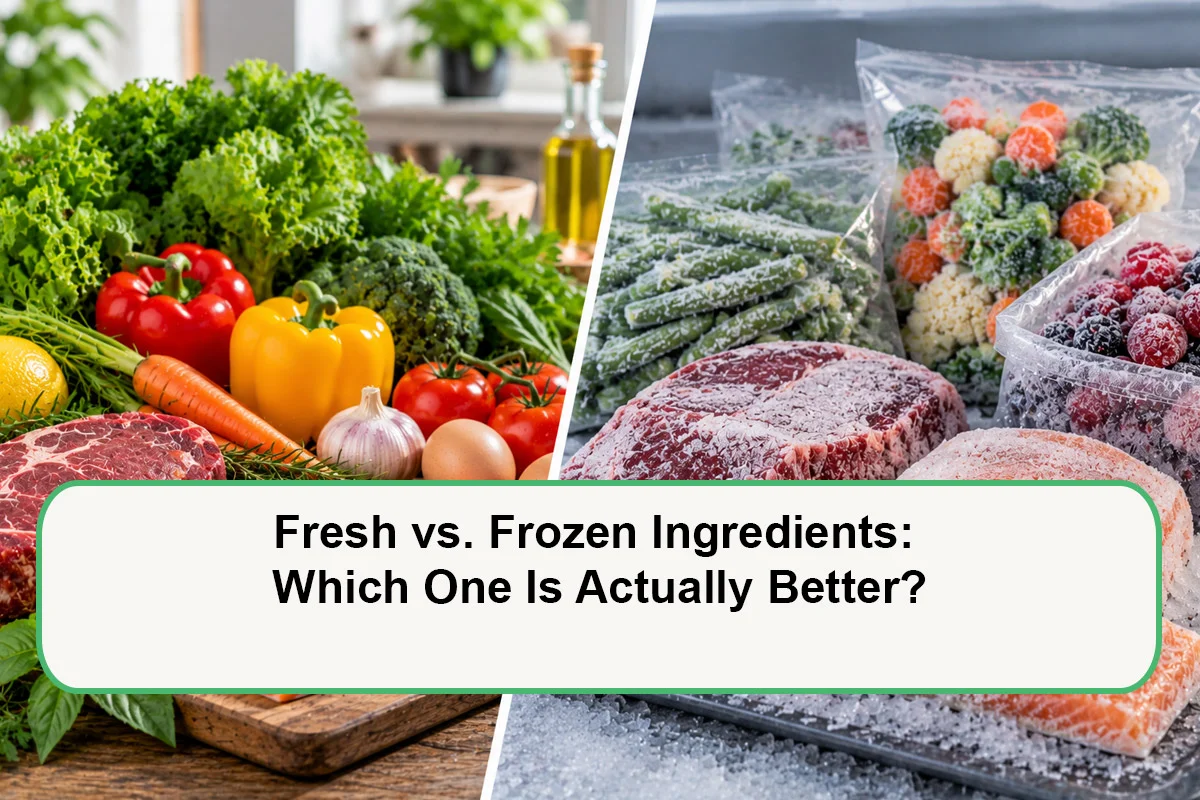
"Fresh" sits on menus like a built in seal of approval, while "frozen" still carries a faint whiff of compromise, something a restaurant resorts to rather than chooses. The actual food science tells a more complicated, more interesting story. Depending on the ingredient, the season, and how the freezing was actually done, frozen can genuinely outperform fresh, and plenty of serious chefs now freeze ingredients on purpose rather than in spite of quality standards.
Here's the detail that upends most people's assumptions: frozen fruits and vegetables are typically picked and frozen at peak ripeness, often within hours of harvest, while produce labeled "fresh" in a grocery store has frequently spent days, sometimes over a week, traveling from farm to shelf. Berries, carrots, and spinach are commonly cited examples of frozen produce that retain more of their original vitamins and minerals than fresh versions that have sat in transit and storage. Nutritionally, that timing gap matters more than the word "fresh" printed on the packaging.
This is also why professional chefs increasingly freeze produce at peak season specifically to use it year round, treating properly frozen ingredients as a way to lock in better flavor and nutrition than an out of season "fresh" alternative flown in from thousands of miles away. The distinction that actually matters isn't fresh versus frozen, it's peak season versus out of season, and freezing is simply the tool that lets a kitchen access peak quality on a longer timeline.
Not all frozen food is created equal, and the reason comes down to ice crystals. When food freezes slowly, as it does in a standard home freezer, water inside the food's cells forms large ice crystals that physically rupture the cell walls. That structural damage is what causes the mushy texture, watery mess, and diminished flavor that give frozen food its bad reputation. When you thaw a slowly frozen strawberry and it turns to soggy pulp, that's cellular damage, not an inherent flaw in freezing as a concept.
Commercial blast freezing and flash freezing solve this problem through sheer speed. Industry standards generally define blast freezing as bringing a food's core temperature down to negative 18 degrees Celsius or lower within about four hours, using powerful, fast moving cold air, compared to the many hours a standard freezer takes to reach the same point. Some flash freezing methods, including individual quick freezing (IQF), move even faster, and research published in the Journal of Food Engineering has found that faster freezing can reduce ice crystal size by roughly 90 percent compared to conventional freezing. Smaller ice crystals mean far less cellular damage, which is why properly flash frozen food can genuinely preserve texture, flavor, and nutrients in a way that slow home freezing simply can't replicate.
| Method | Typical Speed | Effect on Ice Crystals | Where It's Used |
|---|---|---|---|
| Standard home freezer | Several hours to reach full freeze | Large crystals, more cellular damage | Home kitchens, leftover storage |
| Blast freezer | Around four hours to core temperature | Smaller crystals, less damage | Restaurants, food processors, bakeries |
| Individual quick freezing (IQF) | Faster than blast freezing, item by item | Minimal crystal formation, best texture preservation | Berries, peas, shrimp, diced produce |
This is exactly why a bag of individually frozen peas from a reputable producer holds its shape and flavor so well, while a home cooked dish frozen in a single dense container often comes out watery and dull after reheating. The equipment and speed behind the freeze matter just as much as the fact that freezing happened at all.
Beyond flavor and nutrition, there's a genuine operational case driving more U.S. restaurants toward frozen ingredients. According to the American Frozen Food Institute, restaurant operators have increasingly turned to frozen ingredients specifically to manage ongoing labor shortages and supply chain disruptions, since frozen products typically arrive ready to cook, reducing the amount of prep labor a kitchen needs to maintain consistent output. For a restaurant managing unpredictable staffing or unreliable fresh deliveries, a freezer full of properly sourced, high quality frozen ingredients can be the difference between a consistent menu and a constantly changing one.
Frozen ingredients also offer a genuine food waste advantage. An estimated 30 to 40 percent of the food supply in the United States goes to waste, much of it fresh produce that spoils before it's ever used. Frozen ingredients, with their dramatically longer shelf life, let restaurants and households buy and store exactly what they need without the same spoilage risk hanging over every delivery.
None of this means frozen is universally better, and it's worth being precise about where fresh still has a real, meaningful edge:
The honest takeaway is that fresh wins when the supply chain is genuinely short, and frozen wins when the alternative is fresh produce that traveled a long distance or sat too long before use. Treating one as automatically superior in every situation misses how both actually perform in practice.
A few trends are likely to keep shaping how restaurants and shoppers think about this comparison:
Reviewed and verified by the Restaurant Listings Editorial Team for accuracy and relevance. Our content is researched using official restaurant sources, public records, government agencies, and recognized food safety and hospitality industry resources.
Last reviewed: September 2026
