
 Restaurant Reservations
Why Restaurants Require Credit Cards for Reservations
Published On 21-09-2026
Published by Restaurant Listings Editorial Team
Yes, many restaurants will let you bring your own bottle of wine, but "yes" comes with real conditions: a fee, a set of unspoken etiquette rules, and, depending on which state you're in, laws that range from welcoming to outright prohibitive. Understanding how corkage actually works turns what could be an awkward moment at the table into a smooth, genuinely enjoyable way to drink something special with your meal.
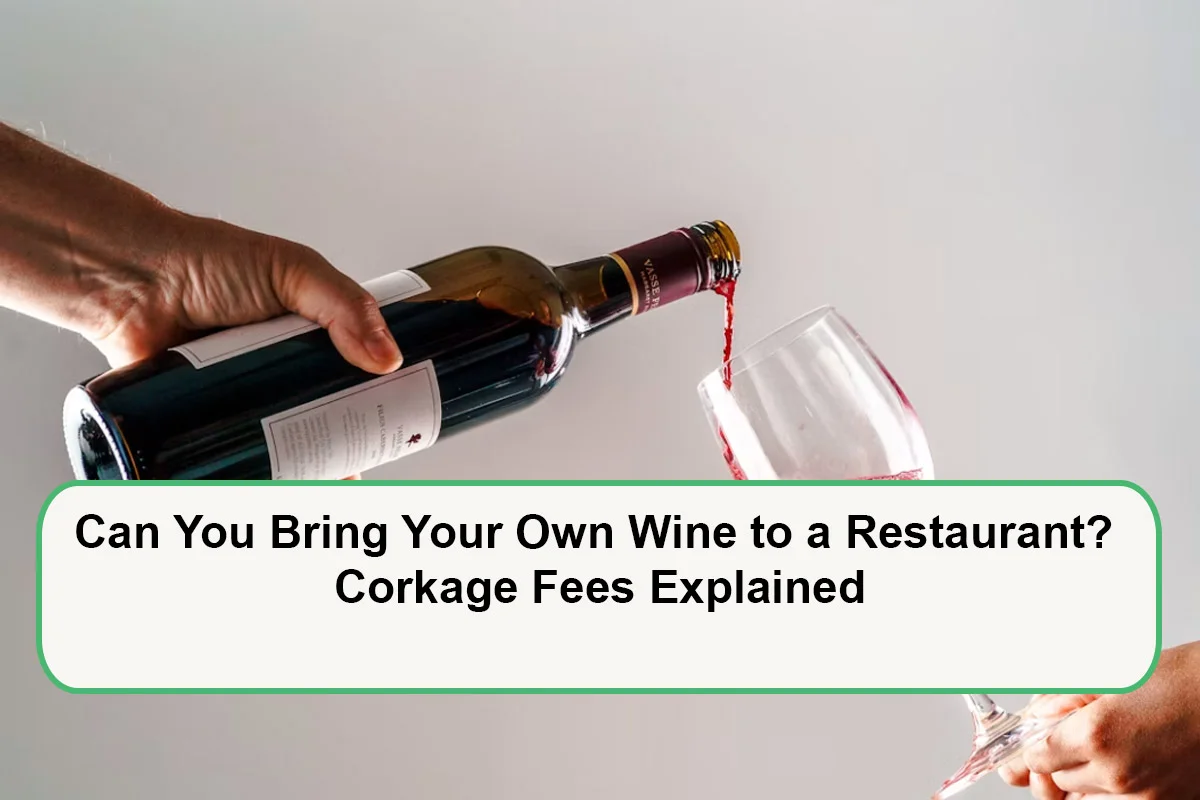
A corkage fee is the charge a restaurant applies when a guest brings their own bottle of wine to drink with a meal. The fee compensates the restaurant for the wine service itself, opening the bottle, providing glassware, and pouring, as well as for the lost revenue that would have come from selling a bottle off their own wine list instead. Corkage is generally offered at restaurants that already serve alcohol themselves, treating the practice as a courtesy extended to guests rather than a standard, universally available option.
It's worth keeping this distinct from casual BYOB, which typically refers to restaurants that don't hold a liquor license at all and simply allow guests to bring their own alcohol, often with a minimal fee or none. Corkage specifically applies at licensed establishments that already maintain their own curated wine program.
Corkage fees typically fall between $15 and $30 per bottle at a standard restaurant, though the range varies considerably by establishment type and location. At high-end fine dining restaurants, particularly in major cities like San Francisco or New York, corkage can exceed $100, especially when the wine service includes decanting, special stemware, or dedicated sommelier attention. Most restaurants apply a flat, standardized fee regardless of the specific bottle's price or quality, meaning the same charge applies whether you bring a $20 bottle or a $500 one.
It's easy to assume a corkage fee is just an easy upcharge for opening a bottle, but the real financial logic runs deeper. Food margins at most restaurants are notoriously thin, often barely covering ingredient cost and prep labor, while the beverage program is frequently where a restaurant's real profit comes from. A guest who brings their own bottle isn't ordering from the restaurant's wine list, the highest-margin part of the menu, which is exactly what the corkage fee is designed to offset.
This is the detail most diners don't realize: the legality of bringing your own wine, and of restaurants charging a corkage fee for it, varies significantly by state and sometimes by local jurisdiction. States including California, Illinois, Texas, New York, Oregon, and Pennsylvania commonly permit BYOW at licensed restaurants, generally with the restaurant's own discretion over whether to allow it and what to charge. Other states maintain much stricter liquor laws; Utah, for example, has regulations that can prohibit guests from bringing outside alcohol into a licensed establishment altogether. Bringing your own bottle is also generally treated as a privilege granted with the restaurant's permission, not an automatic right, meaning a restaurant in a state that technically allows BYOW can still decline the practice entirely.
Because of this variation, it's genuinely worth calling ahead or checking a restaurant's website before assuming you can bring a bottle, rather than finding out at the table.
A handful of informal but widely respected rules separate a welcomed guest from an awkward one:
Sometimes, but not always, and it's worth doing the simple math before assuming BYOW is the cheaper route. If you bring a bottle that retails for $20 and the corkage fee is $25, you're effectively paying $45 for a fairly ordinary bottle, likely more than you'd spend simply ordering something from the restaurant's own by-the-glass or entry-level wine list. Corkage genuinely makes sense for a bottle meaningfully more valuable than the fee itself, particularly something rare, well-aged, or sentimentally significant that the restaurant simply doesn't carry, not as a routine way to drink cheaply while dining out.
Many restaurants have started offering a genuinely useful middle-ground policy: waiving the corkage fee entirely if you also purchase a bottle from their own wine list. This arrangement benefits both sides, the restaurant still captures beverage revenue from the purchased bottle, while the guest gets to enjoy their personal bottle without an added fee. If a restaurant doesn't advertise this option directly, it's worth simply asking, since it's become common enough that many restaurants will accommodate the request even without posting it as a formal policy.
Sentiment toward corkage among restaurant staff is genuinely mixed, but it leans more positive than most guests assume. When guests follow the unspoken etiquette, avoiding wines already on the list, offering a taste, treating the fee as reasonable rather than resented, servers and sommeliers often see it as a real opportunity to taste or enjoy something genuinely special themselves, not just an inconvenience layered onto their shift.
A few trends are likely to keep shaping how restaurants handle BYOW:
For more on wine ordering etiquette generally, see our guide to who should order wine, and browse our full dining etiquette collection for more on formal dining conventions.
Reviewed and verified by the Restaurant Listings Editorial Team for accuracy and relevance. Our content is researched using official restaurant sources, public records, government agencies, and recognized food safety and hospitality industry resources.
Last reviewed: September 2026
Restaurant Reservations
 Restaurant Reservations
 Restaurant Reservations